Apr 30, 2026
Selecting the correct water tank for fire protection directly determines whether a sprinkler system or fire department connection will have the water it needs during an emergency. The fire water storage tank requirements are clear: capacity must match the building hazard, construction must comply with NFPA 22, materials must withstand site conditions, and underground water storage tanks for fire protection must meet additional structural and corrosion standards. The answer starts with getting the size right and following the code, then refining the design for the installation environment.
Content
The most important water storage tanks fire protection decision is capacity. NFPA 22 requires the tank to supply the full sprinkler demand for the duration required by the occupancy hazard. A light hazard office building may need only 3,000 to 5,000 gallons, while an extra hazard facility can require 60,000 gallons or more. The table below provides a starting point based on common hazard classes.
| Occupancy Hazard | Minimum Duration | Typical Sprinkler Flow (gpm) | Approximate Tank Capacity |
|---|---|---|---|
| Light Hazard | 30-60 min | 100-150 | 3,000 - 9,000 gal |
| Ordinary Hazard Group 1 | 60-90 min | 150-250 | 9,000 - 22,500 gal |
| Ordinary Hazard Group 2 | 90-120 min | 250-500 | 22,500 - 60,000 gal |
| Extra Hazard | 120-240 min | 500+ | 60,000 gal and up |
These values assume a single sprinkler riser and no simultaneous interior hose stream allowance. Adding standpipes or foam systems increases the total volume. The final design must also account for the lowest expected water level at the anti-vortex plate, not the tank’s total storage.
NFPA 22, Water Tanks for Private Fire Protection, governs all fixed fire water storage tank requirements in the United States. The standard applies equally to above-ground and underground installations and addresses structural integrity, connections, and freeze protection. Key mandatory provisions include:
Tanks that supply automatic sprinkler systems must be able to deliver the demand without relying on replenishment from a municipal supply during the fire. That means the reserve volume cannot be shared with domestic or process water unless a low-water alarm is installed and the fire reserve is independently protected.
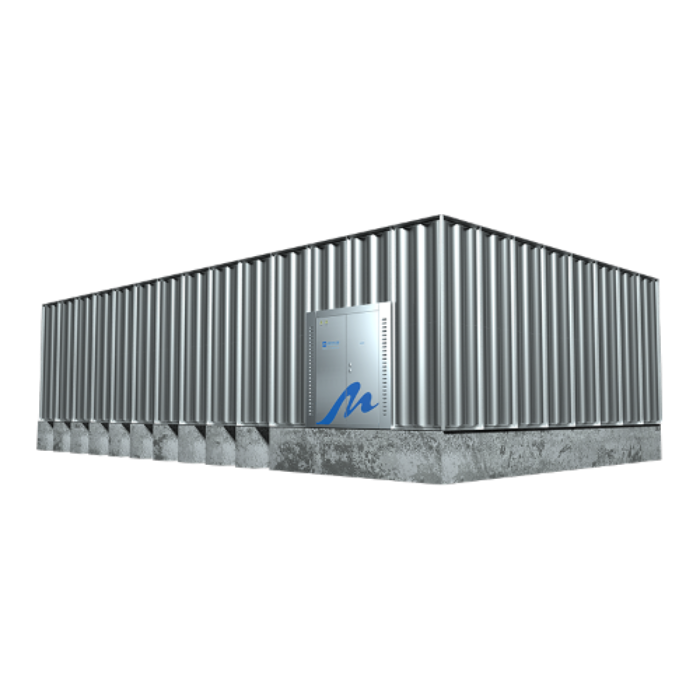
The choice between above-ground and underground water storage tanks for fire protection turns on space, climate, and security. Each configuration carries distinct engineering demands.
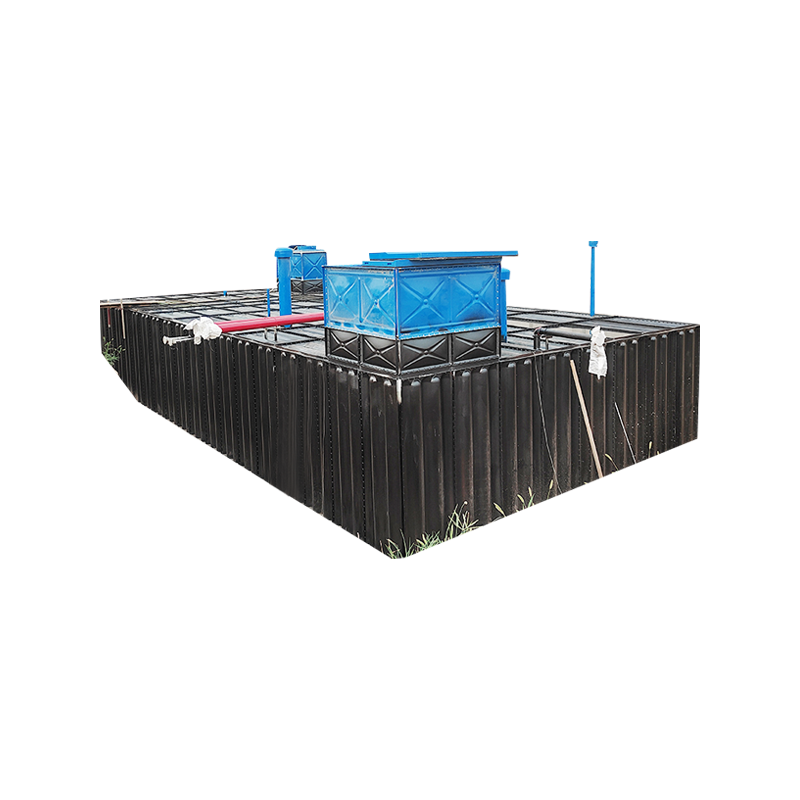
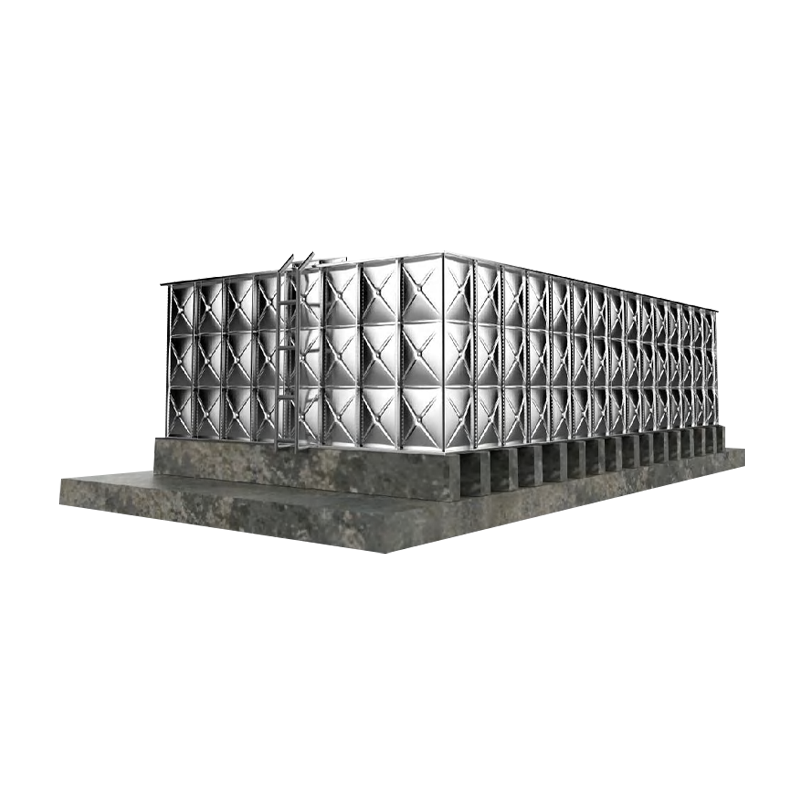
Steel welded or bolted tanks are the most common above-ground option. Advantages include lower excavation cost, easy visual inspection, and direct access for pump suction piping. They require a separate enclosure or security fencing and, in cold climates, an immersion heater or recirculation loop. Foundation loads must be verified; a full 30,000-gallon tank imposes roughly 250,000 lb of dead load plus seismic and wind forces.
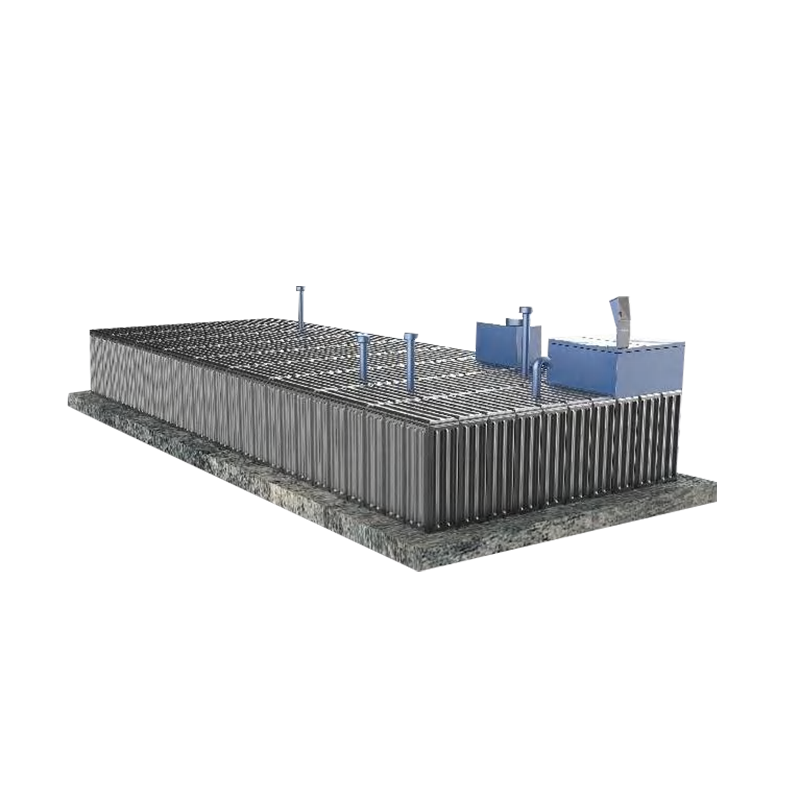
Underground water storage tanks for fire protection excel where visibility is a concern or a shallow water table threatens buoyancy above ground. Buried concrete, fiberglass, and coated steel tanks naturally resist freeze-thaw cycles and vandalism. The trade-off is more complex structural design. The tank must withstand earth and traffic loads, be protected against corrosion, and include watertight access risers that extend above grade. The top of the tank is typically placed at least 2.5 feet below the maximum frost depth, and a minimum 6-inch layer of compacted granular backfill must surround the walls to prevent point loading.
Material performance directly affects longevity and code compliance. No single material is best for every site.
Seismic performance also influences material choice. NFPA 22 references ASCE 7 for seismic loads, and restraint systems must prevent sliding or overturning in both above-ground and underground installations.
Even a correctly sized tank will fail if placed on inadequate soil or not tested properly. For underground water storage tanks for fire protection, the excavation base must be over-excavated and replaced with a compacted stone leveling pad. The pipe connections to the tank must include flexible couplings to accommodate differential settlement.
NFPA 22 requires a 24-hour hydrostatic test at full water level after installation. The water level must not drop, and there must be no visible leakage at seams, fittings, or pipe penetrations. For buried tanks, the test is typically performed before backfill is complete, then repeated after settlement to confirm joint integrity.
NFPA 25 governs inspection, testing, and maintenance of water-based fire protection systems. Critical tasks for storage tanks include:
When these fire water storage tank requirements are followed precisely, the tank serves as a reliable, long-life component of the fire protection system.
Related Products

Contact us
Headquater Address
Room 901, Building 17, Lane 1088, Shen Hong Road, Minhang District, Shanghai
Factory Address
No. 1, Mingxing North Road, Tech Innovation Park, Jianhu County, Yancheng, Jiangsu, P. R. China
Amy@mxwatersupply.com
Amy@mxwatersupply.com
Telephone(Whatsapp/Wechat)
+86-18051685983
QR CODE

 English
 Français