Jul 24, 2026
Content
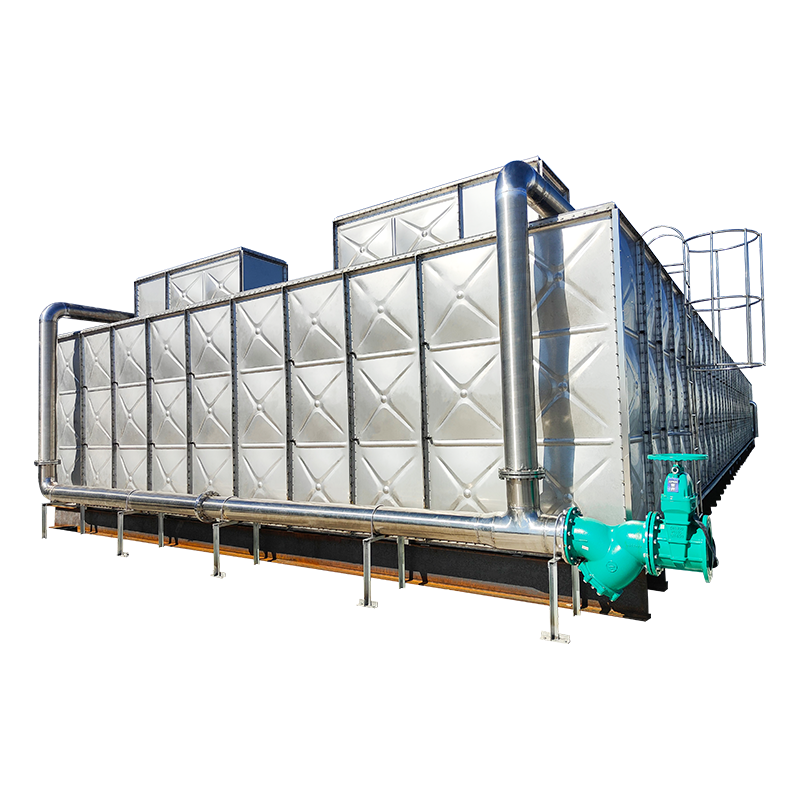
A 316 stainless steel welded water tank provides reliable storage in environments where standard 304 tanks fail rapidly. The defining difference is 2–3% molybdenum added to the austenitic alloy, which elevates the material’s resistance to pitting and crevice corrosion caused by chlorides. In coastal installations where airborne salt spray is present or in industrial applications handling brackish water, 316 retains structural integrity for decades while 304 can develop through-wall perforations in as little as 2–4 years.
The pitting resistance equivalent number (PREN) quantifies this advantage. Using the formula PREN = %Cr + 3.3(%Mo) + 16(%N), typical 316 stainless steel achieves a PREN of 24–28, compared to 18–20 for 304. For a welded water tank exposed to water with chloride concentrations above 200 mg/L—common in many groundwater sources—this difference means the tank shell remains intact without the rapid localized corrosion that undermines lower-grade stainless steels.
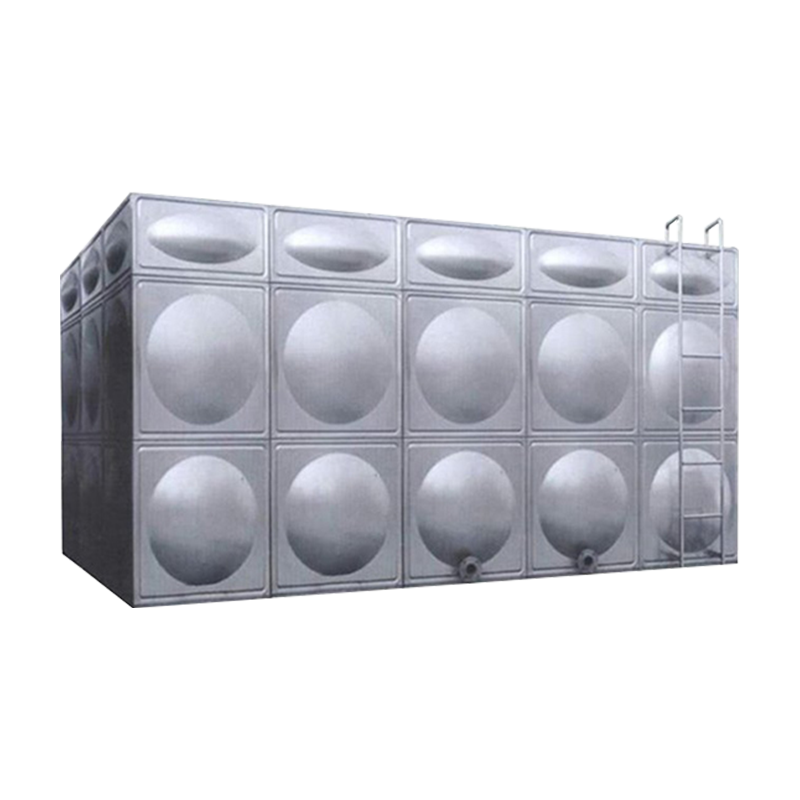
The mechanical properties of 316 stainless steel allow for lighter, thinner tank shells compared to carbon steel while maintaining equal or greater yield strength. Typical grade 316L—the low-carbon variant used for welded construction—offers a yield strength of 170–205 MPa and tensile strength of 485–515 MPa in the annealed condition. Shell plates generally range from 2.0 mm for small residential tanks to 8.0 mm or more for large industrial reservoirs exceeding 500 m³, with thickness determined by hydrostatic head and applicable design standards such as AWWA D103 or BS EN 14015.
| Property | 304 (1.4301) | 316 (1.4401/1.4404) |
|---|---|---|
| Molybdenum content | None | 2.0–3.0% |
| PREN range | 18–20 | 24–28 |
| Critical chloride threshold for pitting | ~100 mg/L at pH 7 | ~400 mg/L at pH 7 |
| Yield strength (annealed, MPa) | 205–210 | 170–205 (316L) |
| Typical tank shell thickness range (mm) | 1.5–6.0 | 2.0–8.0 |
The integrity of a welded 316 stainless steel water tank depends as much on the weld zones as on the parent metal. Gas tungsten arc welding (GTAW/TIG) is the preferred method for shell plate joints up to 3 mm, while gas metal arc welding (GMAW/MIG) handles thicker sections with higher deposition rates. The filler metal must be ER316L or E316L, selected to match or slightly over-alloy the parent material in molybdenum content. A common error is using 308L filler, which lacks molybdenum and creates a weld zone with significantly lower PREN than the surrounding plate, making it the site of preferential corrosion attack.
Heat input control is critical. Interpass temperature should not exceed 150°C to avoid carbide precipitation in the heat-affected zone, even with the low-carbon 316L grade. After welding, the entire joint zone undergoes pickling and passivation—a chemical treatment with nitric or citric acid solutions that removes heat tint and chromium-depleted layers, restoring the passive chromium oxide film. Without this post-weld treatment, visible blue or brown oxide scales on the weld are direct indicators of reduced corrosion resistance. In one documented case from a coastal desalination plant, a 316L tank that skipped post-weld passivation developed weld decay and pinhole leaks within 18 months, while an identical tank with proper passivation showed no measurable wall thinning after 10 years.
Welded stainless steel water tanks are typically designed to one of several recognized standards: AWWA D103 for factory-coated bolted steel tanks and AS 2304 for water storage tanks in some regions, but for fully welded stainless steel construction, design often follows the principles of BS EN 14015 or API 650 (with a stainless steel material appendix) adapted for smaller diameters. The shell thickness at each course is calculated based on hydrostatic pressure at the bottom of each shell ring, with joint efficiency factors of 0.70 to 1.0 depending on the extent of radiographic testing of weld seams.
Stiffening rings or wind girders are necessary when the tank height-to-diameter ratio exceeds approximately 1.5 or when wind speeds exceed 150 km/h at the installation site. For seismic zones, a ductile stainless steel structure provides inherent advantages over brittle carbon steel or fiberglass; the high elongation of 316L (40% minimum) allows the tank wall to absorb seismic energy without fracture. Roof designs include conical, dome, or flat styles, typically using the same 316 material and welded to a top angle ring. Bottom plates are lap-welded or butt-welded and must be continuously sealed to the shell with full-penetration welds.
The 316 stainless steel welded water tank is specified across industries where standard materials corrode unacceptably. Key deployment scenarios include:
Although the initial material cost of 316 stainless steel is 3–5 times higher than coated carbon steel, the welded stainless tank often proves more economical over a 30-year service window. Coated steel tanks require internal relining every 7–12 years depending on coating type and water chemistry, along with continuous cathodic protection system monitoring. A 500 m³ epoxy-lined carbon steel tank in an industrial park required recoating twice in 20 years at a combined cost exceeding 40% of the original tank price. The equivalent 316 welded tank required only periodic external inspection and occasional passivation of exterior weld zones.
Maintenance of a 316 stainless steel welded water tank is minimal but not zero. Annual external inspection for mechanical damage or discoloration, and internal inspection every 3–5 years for sediment accumulation or crevice corrosion at non-drained areas, are recommended. Tanks in service with chlorinated potable water should have free chlorine residuals kept below 2 mg/L to avoid accelerated surface etching. For tanks that will be periodically drained, the design must include a sump and sloped bottom to prevent standing water puddles that concentrate chlorides.
A fully welded 316 water tank can be shop-fabricated in sections or built entirely on site. Tanks under approximately 80 m³ are often shop-welded as a single unit and transported to the site, where site welds are minimized to a few circumferential seams. Larger tanks are erected on site with skilled welders using GTAW root passes and GMAW fill passes. Every weld seam is visually inspected for undercut, lack of fusion, and surface porosity. For critical joints, liquid penetrant testing or radiographic testing is performed to a specified percentage—commonly 10–25% of seam length for tanks designed to higher service categories.
The final hydrostatic test fills the tank to its maximum design liquid level and holds for a minimum of 24 hours, during which all welds are checked for leakage. This test simultaneously stresses the shell to verify design assumptions and seating of the bottom on the foundation. Only after a successful hydrotest and final passivation is the tank released for service.
Related Products

Contact us
Headquater Address
Room 901, Building 17, Lane 1088, Shen Hong Road, Minhang District, Shanghai
Factory Address
No. 1, Mingxing North Road, Tech Innovation Park, Jianhu County, Yancheng, Jiangsu, P. R. China
Amy@mxwatersupply.com
Amy@mxwatersupply.com
Telephone(Whatsapp/Wechat)
+86-18051685983
QR CODE

 English
 Français