Mar 24, 2026
Content
In the realm of industrial water storage, the transition from traditional materials to advanced composites has been driven by the need for longevity, hygiene, and structural efficiency. Glass Reinforced Plastic (GRP), often referred to as SMC (Sheet Molding Compound) water tanks, represents the pinnacle of modular storage technology. Unlike one-piece tanks, GRP sectional tanks are constructed from individual panels bolted together, allowing for immense flexibility in capacity and footprint. This engineering approach is specifically designed to meet the rigorous demands of global export markets, where transport logistics and on-site assembly constraints are primary considerations for B2B procurement.
The core of a high-quality GRP water tank lies in the SMC manufacturing process. This involves a high-pressure, high-temperature hydraulic press (typically 150°C and 100 kg/cm²) to create a uniform, homogeneous panel. The composite consists of unsaturated polyester resin, chopped glass fiber reinforcement, and mineral fillers. This precise combination results in a material that possesses an exceptional strength-to-weight ratio. From a technical perspective, the glass fibers provide the tensile strength, while the resin matrix offers chemical and environmental resistance. This makes the panels inherently immune to the oxidation processes that plague metallic storage solutions.
When selecting a water storage system for large-scale industrial or municipal projects, engineers must weigh the pros and cons of GRP against traditional galvanized steel and reinforced concrete.
| Feature | GRP (SMC) Sectional Tank | Hot-Dip Galvanized Steel | Reinforced Concrete |
|---|---|---|---|
| Corrosion Resistance | Excellent (Immune to rust) | Moderate (Relies on coating) | High (But prone to seepage) |
| Weight | Lightweight (Easy transport) | Heavy (High structural load) | Extremely Heavy |
| Installation Speed | Fast (Modular assembly) | Moderate | Slow (Curing time required) |
| Maintenance | Minimal | High (Coating repairs) | Moderate (Crack sealing) |
| Hygienic Rating | Food-grade / No Algae growth | Potential zinc leaching | Porous / Risk of bacteria |
| Design Life | 25 to 30+ Years | 10 to 15 Years | 20 to 25 Years |
The most significant advantage of GRP is its chemical inertness. Steel tanks, even when hot-dip galvanized, eventually succumb to the electrochemical process of rusting, especially in coastal or high-humidity environments. Concrete tanks, while sturdy, are susceptible to “concrete cancer” or carbonation, where the internal steel reinforcement corrodes and causes structural cracking. GRP avoids these failure modes entirely, ensuring that the structural integrity remains constant over decades without the need for expensive anti-corrosion treatments or repainting.
For rooftop installations or high-rise building integration, the weight of the storage vessel is a critical engineering constraint. GRP panels are approximately 1/4th the weight of steel and a fraction of the weight of concrete. This reduction in dead load allows architects to design leaner support structures, significantly reducing overall construction costs. Furthermore, the lightweight nature of GRP panels facilitates easier handling in remote sites or areas with restricted access where heavy cranes cannot operate.
In the GRP industry, there is a clear distinction between professional SMC hot-pressed panels and traditional hand lay-up (FRP) methods. Hand lay-up involves manual application of resin and fiber over a mold, which often results in inconsistent thickness, air bubbles (voids), and uneven resin distribution.
Hot-pressed SMC panels, however, offer:
For B2B clients in the food, beverage, and medical sectors, water purity is non-negotiable. GRP water tanks are engineered with a smooth, non-porous interior finish. This is vital because it prevents the adhesion of biofilm and inhibits the growth of algae and bacteria. Unlike concrete, which is naturally porous and can harbor microorganisms in microscopic cracks, GRP provides a sterile environment. Most high-end GRP tanks for export are manufactured using food-grade resins that meet international safety standards, ensuring no toxic leaching occurs even during long-term storage.
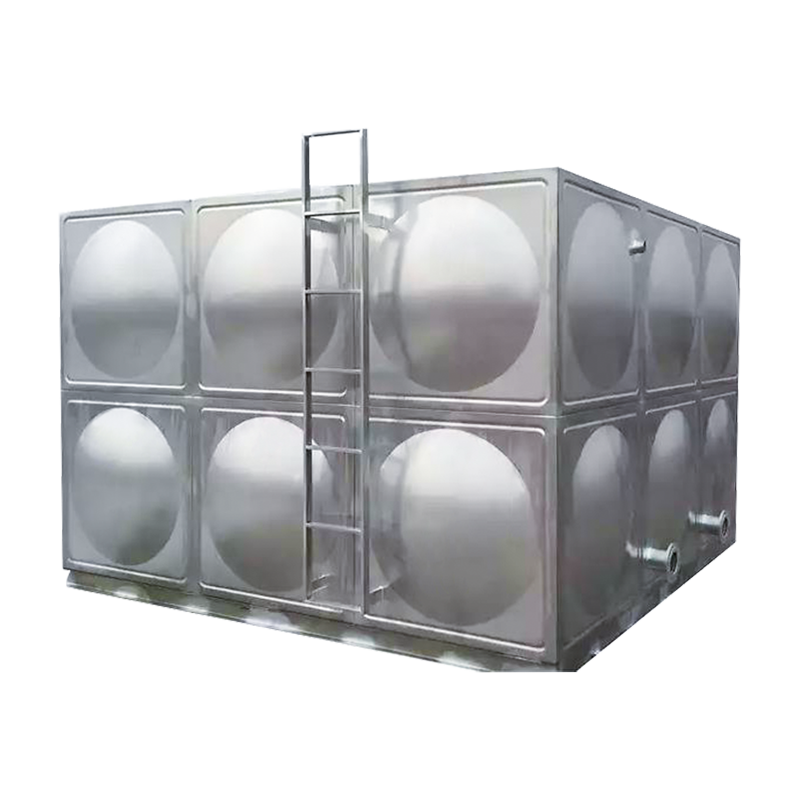
The modular nature of GRP tanks is supported by a sophisticated internal or external bracing system.
The sealing of these panels is achieved using specialized synthetic rubber gaskets or EPDM sealant strips, which are compressed between the panel flanges. This system allows the tank to expand and contract slightly with temperature fluctuations without developing leaks, a flexibility that rigid concrete tanks lack.
A professional GRP water tank installation starts with a precise foundation. The most common base is a concrete plinth or a series of parallel concrete walls.
While GRP tanks are marketed as low-maintenance, a routine inspection protocol ensures maximum service life.
For international trade, GRP tanks offer a distinct logistical advantage. A 1000-cubic-meter tank can be disassembled into compact pallets of panels and accessories, fitting into standard shipping containers. This “knock-down” format dramatically reduces shipping costs compared to cylindrical steel tanks, which involve shipping a large amount of “empty air.”
1. Can GRP water tanks be used for hot water storage?
Standard GRP panels are designed for cold water storage (up to 50°C). For applications requiring higher temperatures, specialized heat-resistant resins must be used during the SMC process to prevent panel deformation.
2. Are GRP tanks suitable for earthquake-prone regions?
Yes. The modular design and the inherent flexibility of the GRP material, combined with the bolted assembly,y allow the tank to absorb seismic vibrations more effectively than rigid, brittle concrete structures.
3. How do you prevent algae growth in a GRP tank?
The SMC panels are manufactured to be completely opaque. By blocking 100% of sunlight, photosynthesis is impossible inside the tank, which naturally prevents the growth of algae.
4. Can a GRP tank be expanded if our water needs increase?
One of the primary benefits of the sectional design is scalability. Panels can be added to increase the length or width of an existing tank, provided the foundation and bracing are adjusted to support the new volume.
5. What is the difference between GRP and FRP?
GRP (Glass Reinforced Plastic) is a specific subset of FRP (Fiber Reinforced Polymer). While the terms are often used interchangeably, GRP specifically denotes that glass fiber is the reinforcement material used.
Related Products

Contact us
Headquater Address
Room 901, Building 17, Lane 1088, Shen Hong Road, Minhang District, Shanghai
Factory Address
No. 1, Mingxing North Road, Tech Innovation Park, Jianhu County, Yancheng, Jiangsu, P. R. China
Amy@mxwatersupply.com
Amy@mxwatersupply.com
Telephone(Whatsapp/Wechat)
+86-18051685983
QR CODE

 English
 Français