Aug 24, 2026
Content
Choosing the right water storage tank starts well before comparing suppliers or price sheets — it starts with clearly defining what the water is for, how much of it needs to be stored, and what conditions the tank will face over its service life. Getting these fundamentals wrong is the single biggest reason tanks underperform or need premature replacement, so it's worth working through them systematically before narrowing down materials or construction styles.
The first factor is intended use. Potable water storage, fire protection reserves, industrial process water, and irrigation or agricultural storage all carry different requirements around material compatibility, internal coatings, and applicable codes. A tank built for one purpose isn't automatically suitable for another, even if the physical size and shape look similar on paper.
The second factor is capacity, which should be based on realistic peak demand or reserve requirements rather than rough estimates. Underestimating capacity creates supply shortfalls during peak use or emergencies, while oversizing adds unnecessary structural, foundation, and material cost. The third factor is material and construction method — steel (often hot-dip galvanized), stainless steel, fiberglass, and concrete each bring different strengths around cost, corrosion resistance, lifespan, and installation complexity.
Additional factors that deserve equal attention include site conditions (soil type, seismic zone, available footprint, and whether the tank will sit above or below ground), water quality and chemistry (which affects corrosion risk and coating requirements), local and industry-specific codes (particularly for fire protection storage, which is governed by strict standards), and long-term maintenance access, since a tank that's difficult to inspect or service becomes expensive to maintain regardless of how well it was built initially.
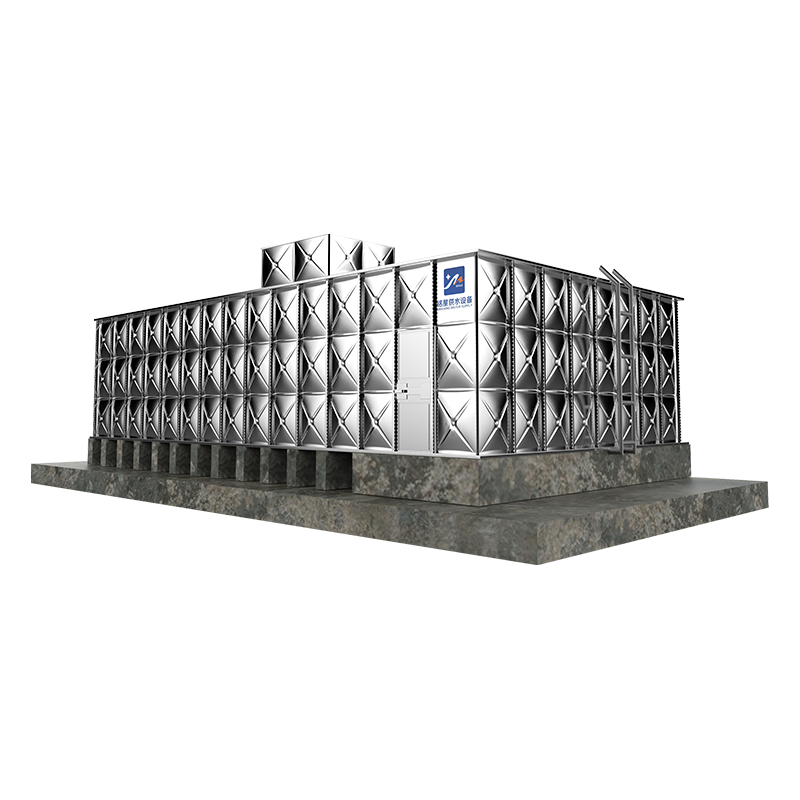
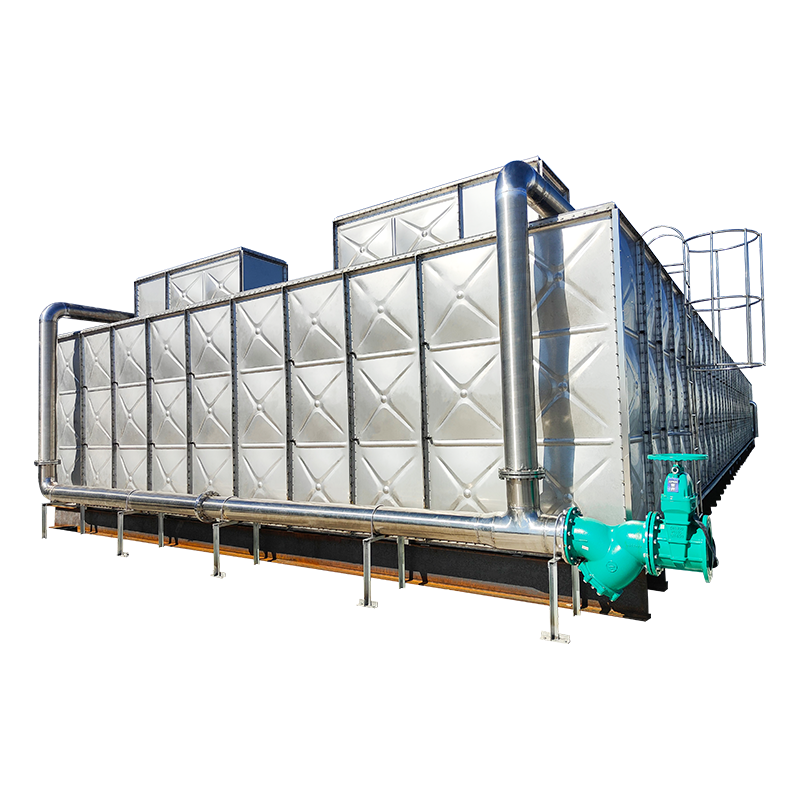
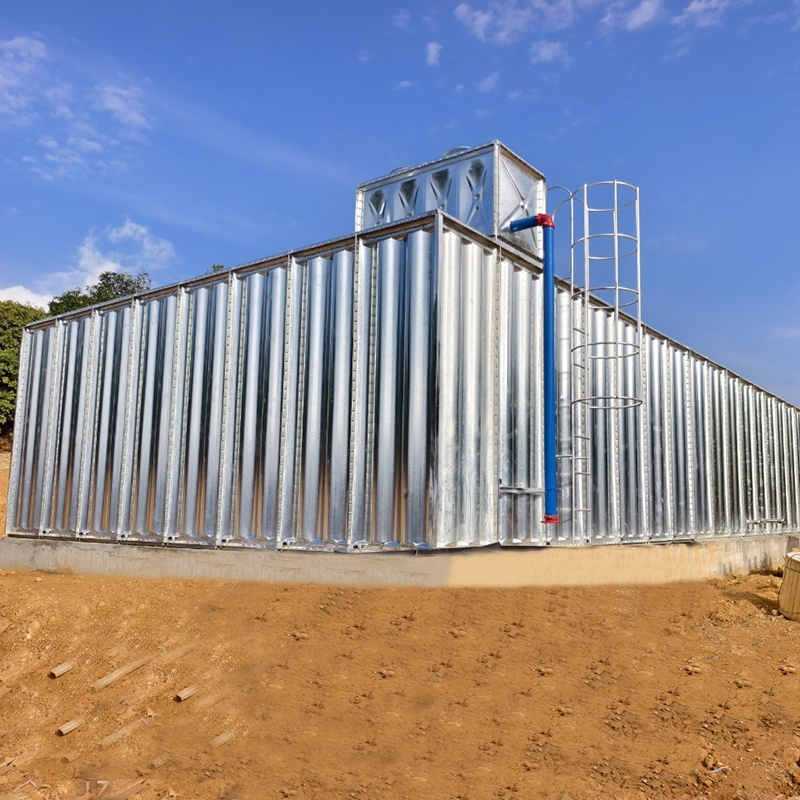
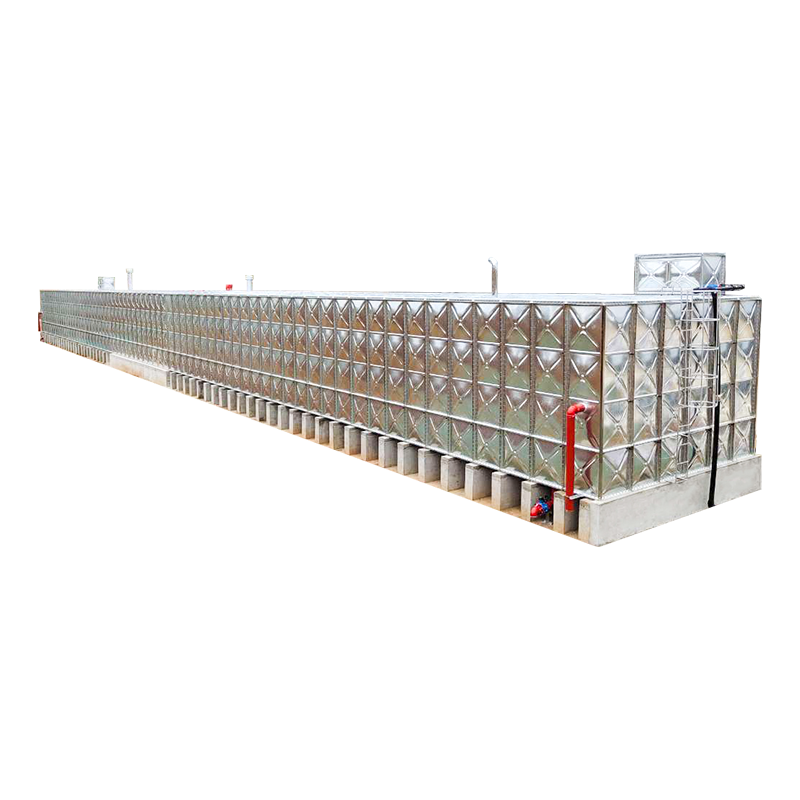
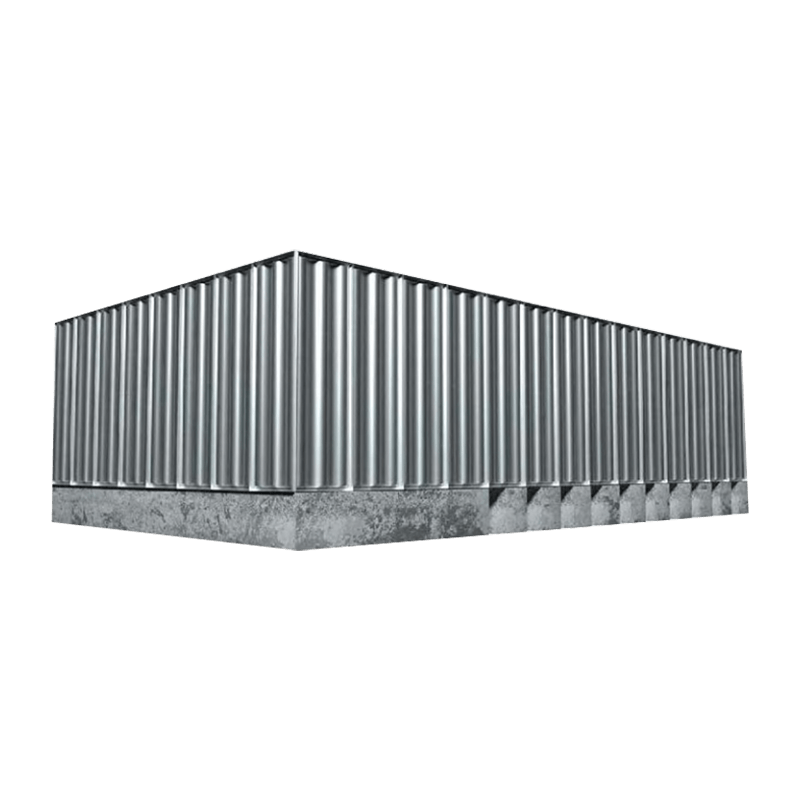
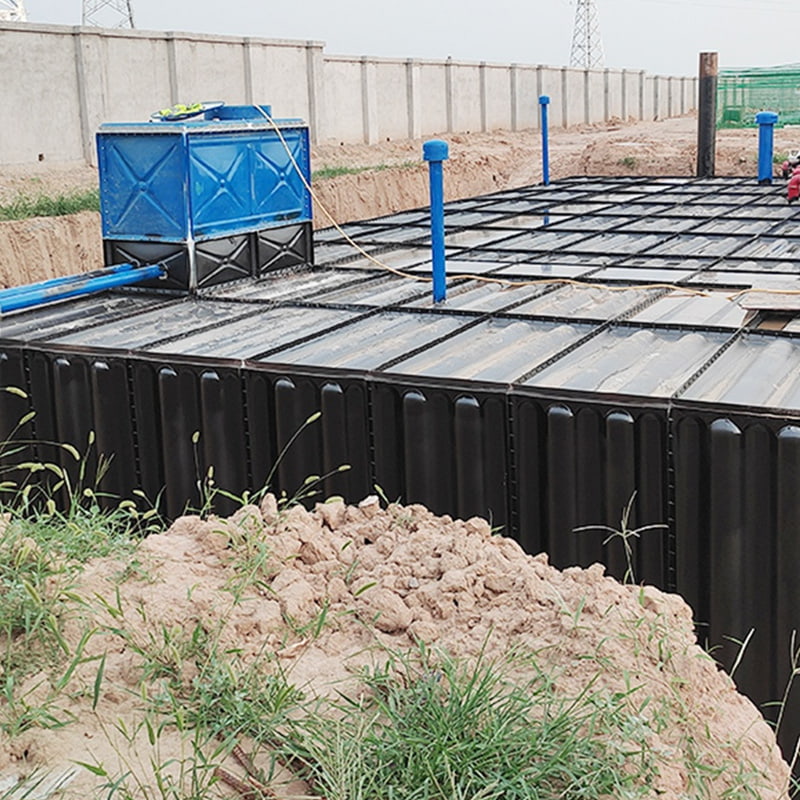
Hot-dip galvanized sectional tanks are assembled from individual steel panels that are coated with a zinc layer through hot-dip galvanization, then bolted together on site to form a complete tank structure. This construction method has become one of the most widely specified options for medium-to-large water storage projects because it combines strong corrosion resistance with practical logistics advantages that solid-welded or poured tanks can't match.
The hot-dip galvanizing process itself is what gives this tank type its defining characteristic: rather than a painted or sprayed coating sitting on top of the steel surface, hot-dip galvanizing creates a metallurgically bonded zinc layer that penetrates into the steel itself, forming a series of zinc-iron alloy layers that are significantly more resistant to chipping, abrasion, and mechanical damage than surface coatings. This bonded layer also provides sacrificial protection — if the coating is scratched or damaged, the surrounding zinc will corrode preferentially and protect the exposed steel underneath, rather than allowing rust to spread immediately at the damage point the way it would on a painted surface.
Because the panels are manufactured and coated off-site under controlled conditions, hot-dip galvanized sectional tanks tend to deliver more consistent coating quality than field-applied coatings on welded tanks, which is one reason they've become a default recommendation for projects that need reliable long-term corrosion resistance without the site logistics challenges of pouring concrete or welding a full tank shell on location.
Fire protection water storage carries a different set of priorities than general-purpose storage, because the tank's entire function is to sit largely unused for long periods and then deliver its full stored volume reliably and immediately the moment it's needed. That reliability requirement shapes nearly every selection decision, from capacity calculation to material choice to how the tank is monitored over its service life.
Capacity for fire protection storage is typically determined by fire flow requirements calculated according to the applicable fire code or insurance underwriting standard for the specific occupancy type, rather than by general water-use estimation. This means the tank size is often driven by regulatory or insurance requirements first, with the specific product selection built around meeting that mandated volume reliably.
Hot-dip galvanized water tanks for fire protection are widely used in this application because the durability of the zinc coating aligns well with a storage tank that may go years between major draw-down events, yet must remain structurally sound and leak-free the entire time. Unlike a tank in active daily use, a fire reserve tank doesn't get the natural "exercise" of regular fill-and-drain cycles that can help surface small problems early, so the coating and structural integrity need to hold up reliably over extended dormant periods with only periodic inspection.
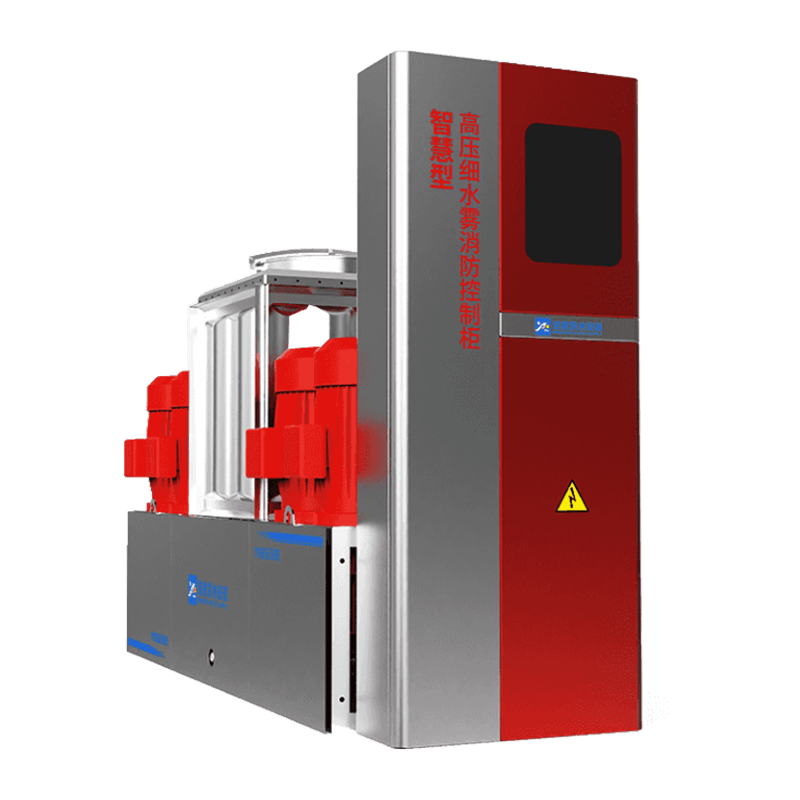
Other considerations specific to fire protection tank selection include freeze protection in cold climates (since a frozen fire reserve is functionally unavailable exactly when it might be needed most), integration with fire pump suction requirements, compliance with recognized fire protection standards for tank construction and installation, and a monitoring or inspection routine that verifies water level and structural condition on a defined schedule rather than relying on it being "out of sight, out of mind."
Determining what size water storage tank a project needs starts with identifying the demand pattern the tank is meant to serve, since sizing logic differs substantially between continuous-use applications and reserve or emergency-use applications. For continuous or daily-use storage — process water, potable water supply, or irrigation — sizing is generally based on peak daily demand plus a buffer for supply interruptions or maintenance downtime on the source feeding the tank.
For reserve applications like fire protection, sizing instead follows a fixed required volume set by code, insurance requirements, or engineering calculation, with little flexibility to reduce that number based on convenience or budget. Industrial process applications often fall somewhere between the two, requiring enough buffer capacity to smooth out fluctuations in supply or production demand without needing to hold an emergency-scale reserve.
Beyond the core demand calculation, a few additional variables commonly adjust the final sizing decision on real projects: available footprint and height restrictions at the installation site, which may push a project toward a taller, smaller-footprint tank or a wider, shorter one; future capacity needs, since expanding a modular sectional tank later is far simpler than resizing a poured or fully welded tank; and redundancy requirements, where some projects specify two smaller tanks instead of one large tank so that maintenance or inspection on one unit doesn't take the entire storage reserve offline.
Working from an accurate demand calculation, and then applying a reasonable safety margin rather than an arbitrary one, is what keeps a project from ending up with a tank that's either chronically insufficient during peak periods or needlessly oversized relative to actual usage.
Commercial buildings — office towers, hotels, hospitals, shopping centers, and multi-tenant residential developments — present a distinct set of requirements when selecting a sectional water tank, largely driven by the need to serve multiple end uses from a single storage system while fitting within tight rooftop, basement, or mechanical room footprints.
Sectional tanks are particularly well suited to commercial buildings because they can be assembled inside mechanical rooms or on rooftops without requiring a crane to lift a single large pre-built tank into place — panels can be brought up in an elevator or through a stairwell and assembled on site, which is often the deciding factor in projects where a solid-welded tank simply couldn't be installed without major structural modifications to get it into position.
Commercial building selection criteria typically include internal partitioning capability, since many buildings need to segregate potable water storage from fire protection reserve within separate compartments of the same tank structure; compliance with local plumbing and fire codes specific to the building's occupancy classification; noise and vibration considerations where the tank sits near occupied spaces; access panels and internal ladder systems that meet safety requirements for the periodic inspection and cleaning commercial water systems require; and coordination with the building's existing structural load capacity, particularly for rooftop installations where the combined weight of a full tank must be accounted for in the building's design loads.
Because commercial buildings often need to bring a sectional tank online with minimal disruption to ongoing operations, installation speed and the ability to phase assembly around building schedules frequently weigh as heavily in tank selection as the underlying material and construction quality.
Industrial water storage covers a wide range of applications — process cooling water, wastewater equalization, raw material water for manufacturing, and utility water for facility operations — and the "best" tank type genuinely depends on the specific chemistry, volume, and operational demands of the facility rather than any single universal answer.
Hot-dip galvanized steel sectional tanks are frequently the leading choice for large-volume industrial storage of non-aggressive water (process water, cooling water, general utility water) because they combine strong mechanical durability, cost-effective large capacity, and the installation flexibility of modular panel construction, all of which matter for industrial facilities that often need substantial storage volume without dedicating excessive capital or construction time to it.
For facilities storing more chemically aggressive water — highly acidic or alkaline process streams, water with high chloride content, or certain wastewater applications — stainless steel or specially lined tanks are often specified instead, since standard galvanized coatings can degrade faster under aggressive chemical exposure than they would in typical potable or fire protection service. Fiberglass and lined concrete tanks also see industrial use in specific applications where chemical resistance, very large-scale below-ground storage, or specific site conditions make them a better structural or economic fit than steel construction.
In practice, the tank type decision for industrial storage usually comes down to matching material chemistry compatibility first, then evaluating cost, installation logistics, and expected service life within that narrowed set of compatible options — which is why an experienced tank supplier will typically ask detailed questions about water chemistry and process conditions before recommending a specific construction type, rather than defaulting to a single "best" answer across every industrial application.
Related Products

Contact us
Headquater Address
Room 901, Building 17, Lane 1088, Shen Hong Road, Minhang District, Shanghai
Factory Address
No. 1, Mingxing North Road, Tech Innovation Park, Jianhu County, Yancheng, Jiangsu, P. R. China
Amy@mxwatersupply.com
Amy@mxwatersupply.com
Telephone(Whatsapp/Wechat)
+86-18051685983
QR CODE

 English
 Français