Aug 26, 2026
Content
The difference between galvanized and stainless steel water tanks comes down to how each material achieves corrosion resistance, and that underlying mechanism drives nearly every practical difference between them — cost, lifespan, maintenance needs, and which applications each one suits best. Understanding the fundamental distinction makes the rest of the comparison much easier to reason through rather than treating it as a simple price-versus-quality tradeoff.
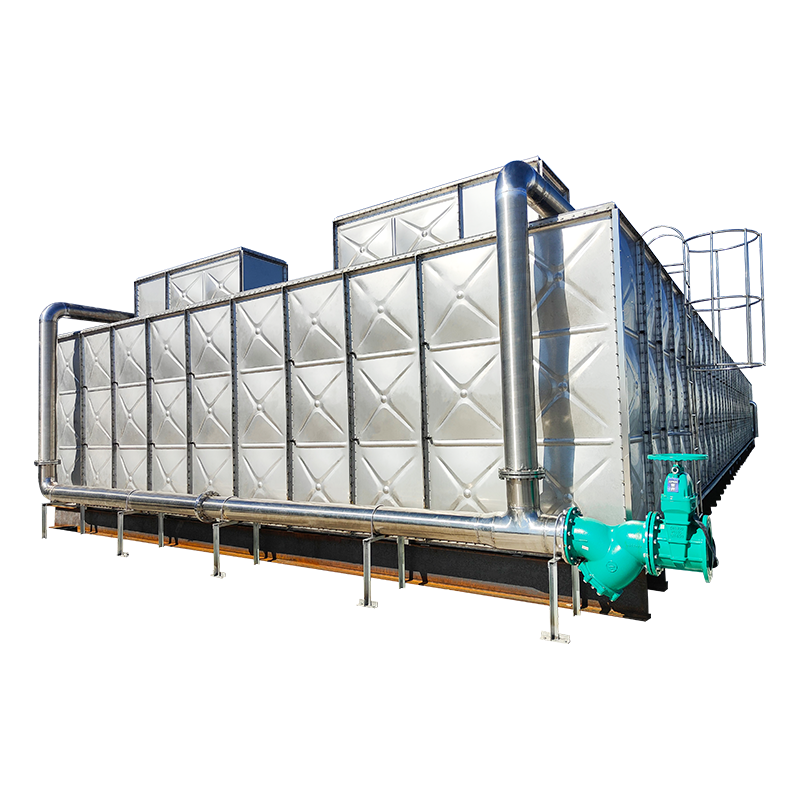
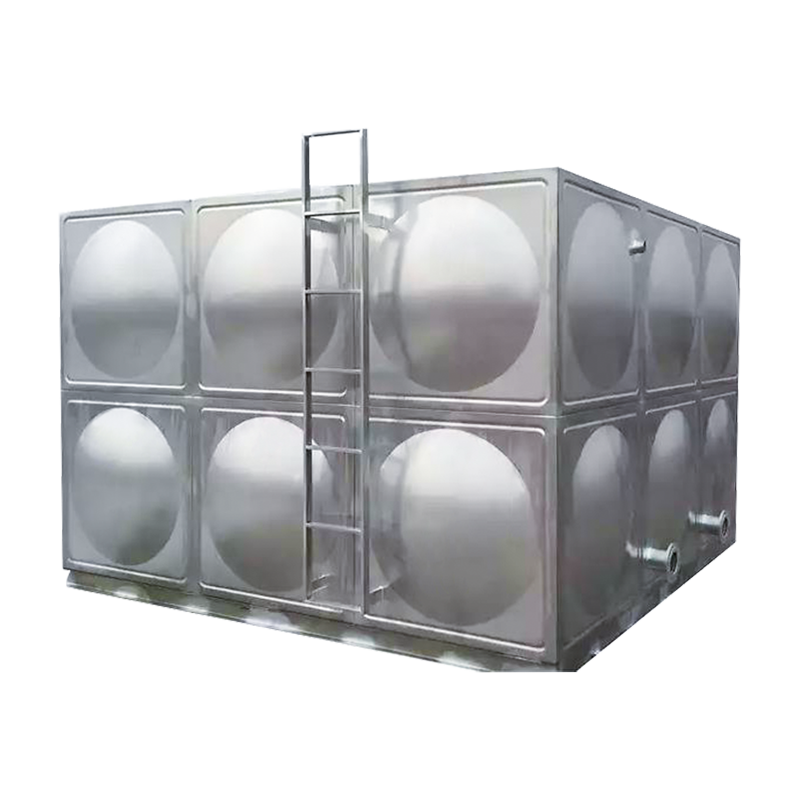
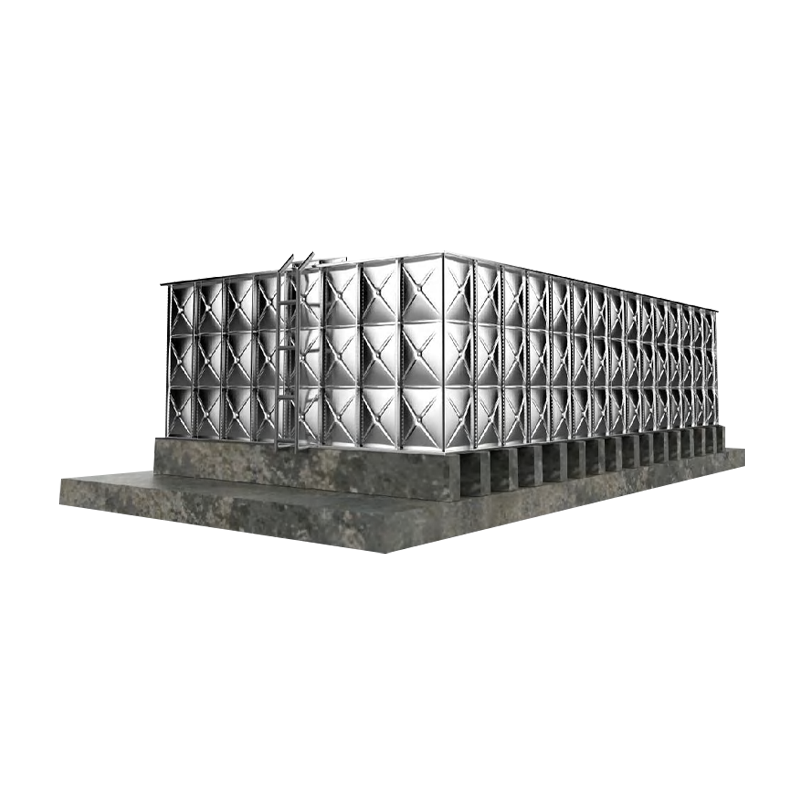
A hot-dip galvanized steel tank achieves corrosion resistance through an applied zinc coating, metallurgically bonded to the base steel during the galvanizing process. That zinc layer works two ways: it physically shields the steel from moisture and oxygen, and it provides sacrificial protection — if the coating is scratched, the surrounding zinc corrodes first and protects the exposed steel underneath, buying time before rust can spread. A stainless steel tank achieves corrosion resistance differently, through the alloy itself. Chromium content in the steel forms a thin, self-repairing oxide layer on the surface that resists corrosion from within the material, rather than relying on an external coating that can eventually wear through.
Hot-dip galvanized tanks are almost always the lower-cost option upfront, often by a substantial margin, since the base steel and galvanizing process cost considerably less than the raw material and fabrication costs associated with stainless steel, particularly the higher chromium/nickel grades used in tank construction. For large-capacity storage projects, this cost gap becomes a major factor in material selection, especially where budget constraints are tight relative to required volume.
Galvanized steel panels are generally lighter to handle during sectional assembly than comparably sized stainless steel panels of similar structural rating, which can translate into faster on-site assembly and lower handling equipment requirements, particularly relevant for rooftop or upper-floor installations in commercial buildings.
Stainless steel tends to hold an advantage in raw longevity, since its corrosion resistance doesn't depend on an external coating that can degrade or wear thin over decades of service. A well-specified hot-dip galvanized tank still delivers a long service life and performs reliably for many years, but the coating's protective performance is finite and will eventually require inspection, touch-up, or in extreme cases re-galvanizing, whereas stainless steel's resistance is inherent to the material throughout its full thickness.
| Factor | Hot-Dip Galvanized Steel | Stainless Steel |
|---|---|---|
| Corrosion resistance method | Sacrificial zinc coating | Self-repairing chromium oxide layer within the alloy |
| Typical upfront cost | Lower | Higher |
| Panel weight | Lighter | Heavier for comparable strength |
| Resistance to aggressive chemistry | Moderate | High, especially higher-grade alloys |
| Long-term maintenance | Periodic coating inspection | Minimal, mainly cleaning |
| Best-fit applications | Large-volume fire, process, and general storage | Potable water, food-grade, high-purity, or corrosive storage |
Hygiene and water purity requirements also factor into material choice. Stainless steel is widely favored for potable water and food-grade storage because it's inherently non-reactive and doesn't require an internal lining for water contact, while galvanized tanks used for potable water often incorporate an additional food-grade internal coating or lining to separate stored water from direct contact with the zinc surface, particularly for softer or more acidic water supplies where zinc leaching is more of a concern.
For projects prioritizing the longest possible service life with the least ongoing intervention, stainless steel generally has the edge, since its corrosion resistance doesn't depend on maintaining an external coating over time. In applications where the tank will be difficult to access for inspection or maintenance once installed — buried, in a remote location, or built into a structure that's costly to reopen — that reduced maintenance dependency can outweigh the higher upfront material cost over a multi-decade planning horizon.
That said, "long-term" storage suitability isn't only about material longevity in isolation — it also depends on whether the tank will receive routine inspection and upkeep as part of normal facility operations. A hot-dip galvanized tank that's part of a regularly maintained facility, with periodic coating checks built into standard maintenance schedules, can deliver a very long, reliable service life at a fraction of the material cost. The deciding factor often isn't which material is objectively "better" for long-term storage in a vacuum, but which material fits the realistic maintenance access and budget profile of the specific project.
Water chemistry also plays a role in long-term suitability. Storage of highly aggressive, high-chloride, or extreme pH water pushes the decision further toward stainless steel (or specific higher-grade alloys within the stainless family), since standard galvanized coatings degrade faster under sustained aggressive chemical exposure than they would in typical potable or general storage conditions.
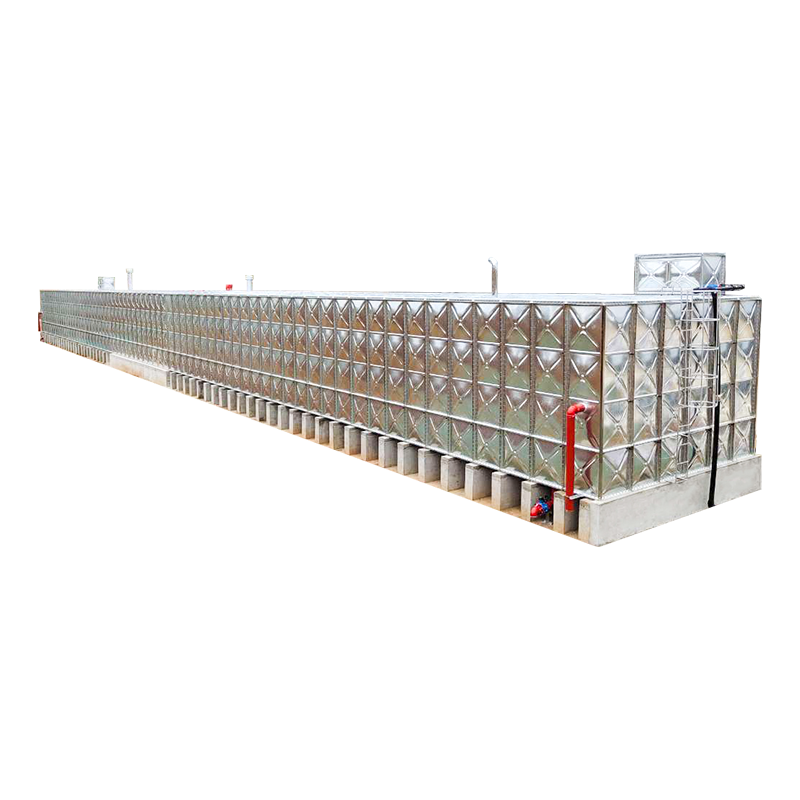
For fire protection water storage specifically, hot-dip galvanized sectional tanks are the more commonly specified option, and the reasoning ties directly back to the nature of fire reserve storage: large required volumes, cost sensitivity given that fire tanks are essentially insurance against an event that may never occur, and a use pattern involving long dormant periods rather than continuous active cycling.
Galvanized construction delivers the large-capacity, cost-effective storage that fire code volume requirements typically demand, while still providing corrosion protection adequate for the relatively stable, non-aggressive water conditions typical of a static fire reserve. Stainless steel is certainly capable of serving fire protection storage and is sometimes specified where a facility already standardizes on stainless for other water systems, where site conditions are particularly corrosive, or where a project's budget comfortably accommodates the higher material cost — but it isn't the default choice for fire reserve tanks in most cost-conscious commercial and industrial projects.
Regardless of material, fire protection tank selection should always be verified against the governing fire code and insurance underwriting requirements for the specific occupancy, since those requirements can influence not just capacity but also acceptable construction methods and material specifications.
Choosing between galvanized and stainless steel for industrial applications comes down primarily to what the tank will actually store and under what conditions, rather than a blanket preference for one material across all industrial use cases.
For general process water, cooling water, and non-aggressive utility water storage at industrial facilities, hot-dip galvanized sectional tanks are typically the more economical and practical choice, especially at large storage volumes where the cost difference against stainless steel becomes significant. These applications don't usually involve water chemistry aggressive enough to challenge a properly specified galvanized coating, making the added cost of stainless steel difficult to justify purely on performance grounds.
For industrial applications involving corrosive process streams, high-purity water requirements (such as pharmaceutical, food processing, or certain electronics manufacturing applications), or storage where any zinc contact with the stored medium is undesirable, stainless steel becomes the more appropriate — and often the only compliant — choice. In these cases, the higher material cost is simply a cost of meeting the process or regulatory requirement rather than a discretionary upgrade.
A practical approach for industrial buyers is to first identify any hard requirements driven by water chemistry, purity standards, or regulatory compliance, since these can eliminate one material option outright. Only after that filtering step does it make sense to weigh the remaining tradeoffs — cost, installation logistics, and expected maintenance — between whichever materials remain viable for the application.
Related Products

Contact us
Headquater Address
Room 901, Building 17, Lane 1088, Shen Hong Road, Minhang District, Shanghai
Factory Address
No. 1, Mingxing North Road, Tech Innovation Park, Jianhu County, Yancheng, Jiangsu, P. R. China
Amy@mxwatersupply.com
Amy@mxwatersupply.com
Telephone(Whatsapp/Wechat)
+86-18051685983
QR CODE

 English
 Français