Apr 10, 2026
Water Storage Tank Capacity: How Much Do You Actually Need?
Determining the right capacity water tank for your property is the first and most consequential decision in any water storage project. Undersizing leads to shortfalls during peak demand or drought; oversizing increases upfront cost, footprint, and the risk of stagnation.
A practical starting point for residential sizing:
For commercial or multi-building sites, water tank calculation should follow a formal hydraulic demand analysis. Sum the fixture unit counts from plumbing code tables (e.g., IPC Table E103.3), convert to gallons per minute, then multiply by the longest expected outage window to arrive at minimum storage volume. Always add a 15 – 25 % buffer for system losses and unexpected demand spikes.
Content
Knowing the volume you need is only half the equation — the tank must also fit the available footprint and height clearance. Water tank dimensions vary considerably by shape and construction type.
Common dimensional benchmarks for vertical cylindrical tanks:
| Capacity | Typical Diameter | Typical Height | Common Use |
|---|---|---|---|
| 500 gal / 1,900 L | 48 in / 1.2 m | 60 in / 1.5 m | Residential buffer, small farm |
| 1,500 gal / 5,700 L | 72 in / 1.8 m | 84 in / 2.1 m | Rural household, irrigation |
| 5,000 gal / 18,900 L | 120 in / 3.0 m | 120 in / 3.0 m | Small commercial, livestock |
| 10,000 gal / 37,900 L | 144 in / 3.7 m | 156 in / 4.0 m | Fire reserve, industrial buffer |
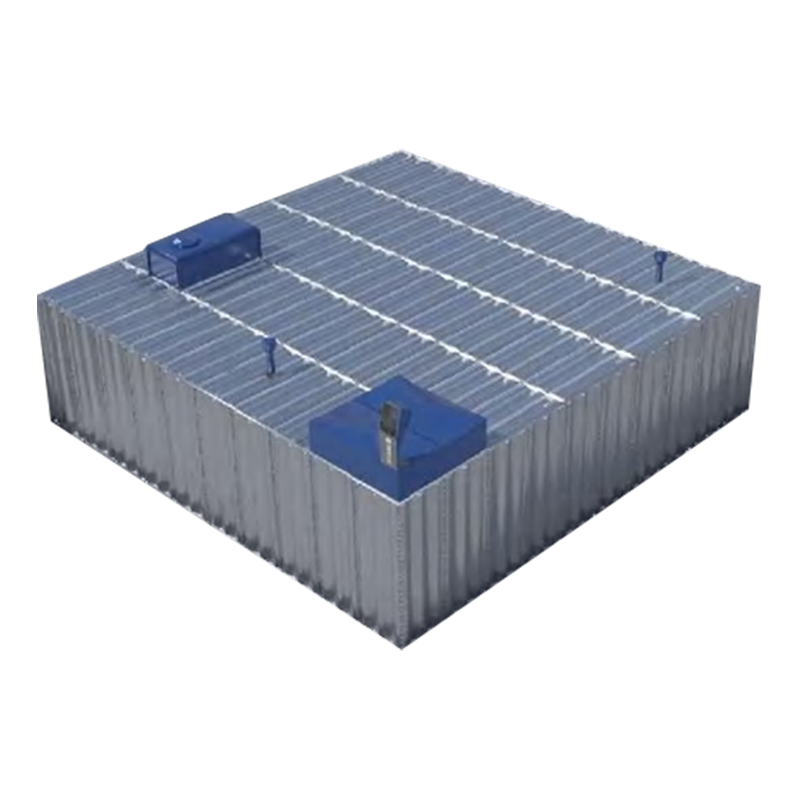
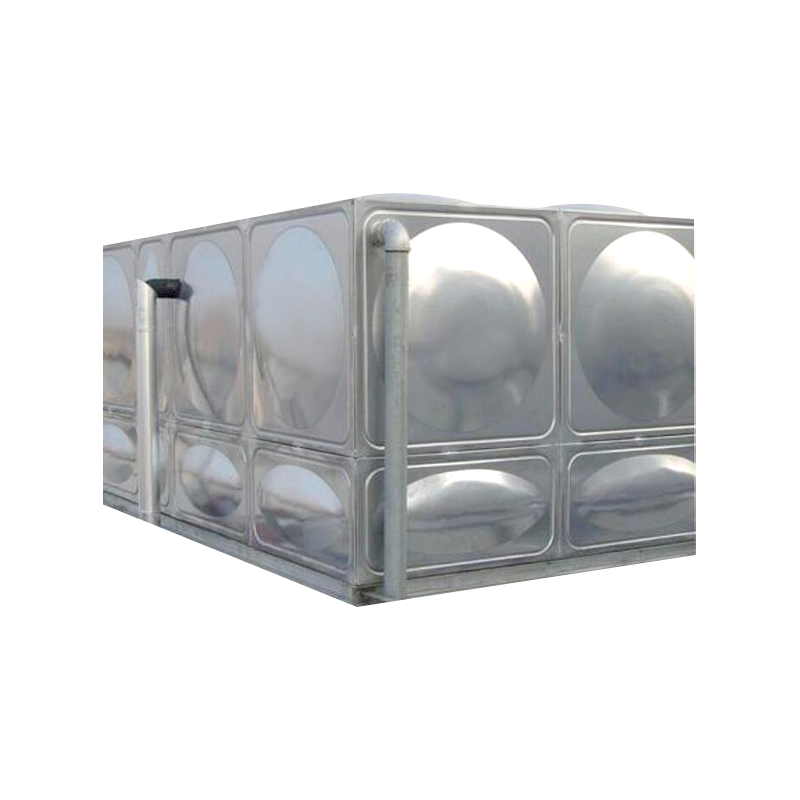
Horizontal tanks trade height for length — useful in low-clearance plant rooms or under-deck installations. For very large volumes, massive water tanks using bolted panel construction can be assembled on-site with no transportation size limits, achieving capacities from 50,000 to several million gallons within a compact circular footprint. Always confirm final dimensions with the manufacturer, as wall thickness, dome height, and fitting placements affect overall installed dimensions beyond the nominal vessel size.
Properties served by a private well rely on two distinct tank types that are often confused but serve fundamentally different functions: the water storage tank for well supply, and the pressure or expansion tank that manages pump cycling.
A large-volume water storage tank with pump — typically 500 to 5,000+ gallons — sits between the well and the household distribution system. The well pump fills the storage tank slowly at its sustainable yield rate (often 1 – 5 GPM for rural wells), while the booster pump inside or downstream of the tank delivers water at full household flow rates (typically 6 – 12 GPM). This decoupling prevents the well pump from running dry during high-demand events such as filling a bathtub or irrigating a lawn.
The configuration is especially valuable where well yield is borderline — a well producing just 2 GPM can adequately supply a family of four if paired with a 1,000-gallon holding tank that accumulates water overnight for daytime use.
A water well pump tank — also called a pressure tank or hydropneumatic tank — is a much smaller vessel (typically 2 to 120 gallons) installed close to the pump. It contains a pre-charged air bladder or diaphragm that stores a small volume of pressurized water, delivering it on demand without starting the pump for every minor draw. This protects the pump motor from the damaging short-cycling that occurs when it starts and stops dozens of times per hour.
The water booster tank concept extends this further: a booster pump draws from a large storage tank and re-pressurizes water to household line pressure, with its own small pressure tank maintaining the system. This two-tank architecture is the standard design for well-fed homes with limited aquifer yield.
This is one of the most common questions from well owners, and the answer is precise: the pre-charge air pressure in a pressure tank should be set to 2 PSI below the pump's cut-in pressure.
Most residential well systems operate on one of two standard pressure switch settings:
If the air charge is too low, the bladder bottoms out before the cut-in pressure is reached, causing the pump to short-cycle. If it is too high, drawdown volume is dramatically reduced — the tank holds very little usable water — and the pump runs almost continuously. Correct air pre-charge is the single most important factor in pressure tank performance and pump longevity.
Checking tank pressure is straightforward and requires only a standard tire pressure gauge. Follow these steps:
Repeat this check annually as part of routine well maintenance. Air charge naturally bleeds off slowly over 1 – 3 years even in a healthy tank.
Understanding the most common water pressure tank problems — and knowing how to distinguish a fixable issue from a failed component — saves significant time and repair cost.
There are several clear indicators that a pressure tank has failed or is failing:
A water pressure tank leaking from the bottom is a serious issue that demands immediate attention. Possible causes and their remedies:
As a safety reminder: never attempt to weld or grind a pressurized water tank. Always fully depressurize and drain before any repair work, and if in doubt, engage a licensed plumber or well contractor.
With a clear understanding of storage volume, pressure requirements, and potential failure modes, use this summary matrix to guide your final selection:
| Scenario | Recommended Tank Type | Key Spec to Confirm |
|---|---|---|
| Low-yield well (< 5 GPM) serving a household | Large storage tank + booster pump + small pressure tank | Storage ≥ 500 gal; booster rated 10–15 GPM |
| Adequate-yield well, standard household pressure | Water well pump tank (pressure tank only) | Pre-charge 2 PSI below cut-in; tank ≥ 20 gal |
| Rural property, fire reserve required | Dedicated storage tank (≥ 2,500 gal) separate from domestic supply | Local fire code minimum volume; gravity-fed or pump access |
| Municipal supply with low street pressure | Water booster tank + booster pump set | Booster pump rated for inlet/outlet pressure differential |
| Large agricultural or industrial storage | Bolted corrugated or welded steel massive water tanks | NSF liner, overflow management, seismic rating |
Whether you are sizing a new installation or troubleshooting an existing system, the principles are the same: match storage volume to realistic demand, set pressure to the specifications of your pump switch, inspect annually, and replace components at the first sign of bladder failure or shell corrosion. A well-designed water storage and pressure system will operate reliably for 15 – 25 years with only minimal routine maintenance.
Related Products

Contact us
Headquater Address
Room 901, Building 17, Lane 1088, Shen Hong Road, Minhang District, Shanghai
Factory Address
No. 1, Mingxing North Road, Tech Innovation Park, Jianhu County, Yancheng, Jiangsu, P. R. China
Amy@mxwatersupply.com
Amy@mxwatersupply.com
Telephone(Whatsapp/Wechat)
+86-18051685983
QR CODE

 English
 Français