Apr 15, 2026
Content
Industrial water tanks serve critical functions across manufacturing, processing, and utilities sectors, with capacity requirements ranging from 5,000 to over 5,000,000 gallons depending on application scale. The fundamental purpose extends beyond simple storage to include process water reserves, fire protection systems, cooling tower makeup, and potable water security for facilities operating under continuous production schedules. Food and beverage processing facilities typically specify 48-72 hours of production water storage to ensure supply continuity during municipal system interruptions, while semiconductor manufacturing demands ultra-pure water tanks with specialized internal finishes preventing contamination.
Material selection for industrial water tanks balances corrosion resistance, structural longevity, and regulatory compliance. Stainless steel tanks dominate applications requiring potable water certification or chemical compatibility, while bolted steel and concrete configurations serve bulk storage needs exceeding 100,000 gallons. The global industrial water storage market, valued at approximately $3.2 billion annually, reflects increasing demand for modular systems enabling rapid deployment and capacity expansion without facility shutdown.
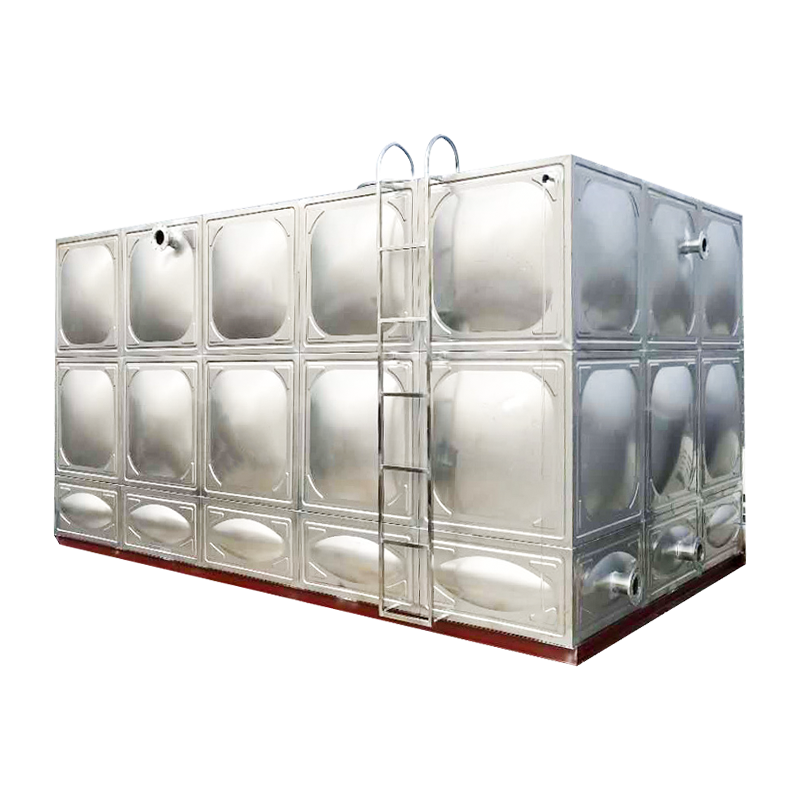
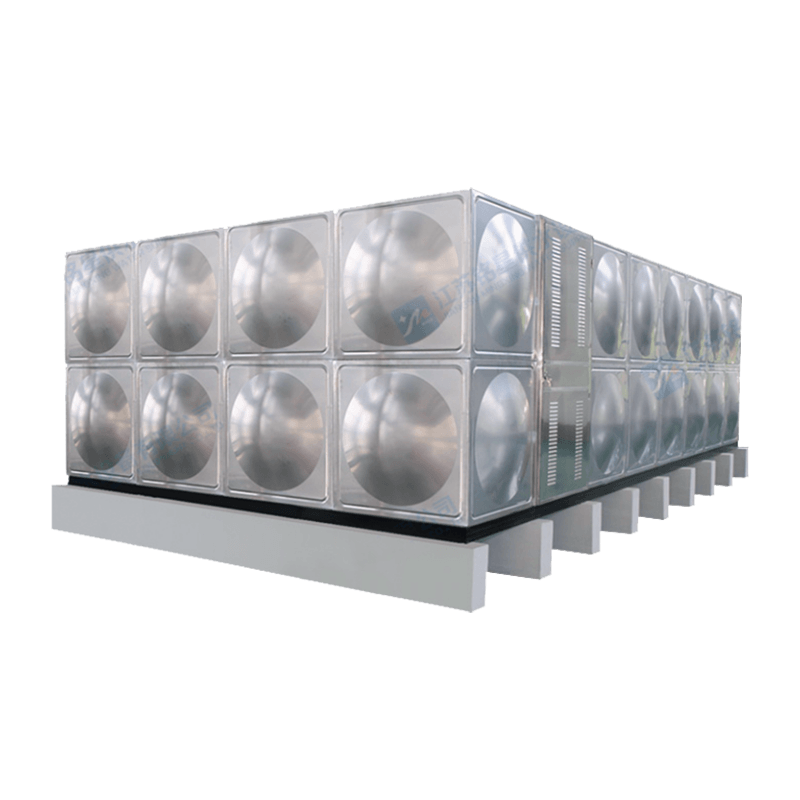
Stainless steel water tanks (SS water tanks) represent the premium tier of industrial storage, offering unmatched durability and hygiene characteristics for sensitive applications.
Grade 304 stainless steel serves general industrial water storage with adequate resistance to chlorides below 50 ppm concentration. For coastal installations or applications involving brackish water, Grade 316L with 2-3% molybdenum content provides superior pitting resistance, extending service life from 15 years to 30+ years in aggressive environments. The low carbon content (0.03% maximum) in 316L prevents sensitization during welding, maintaining corrosion resistance in heat-affected zones.
Wall thickness specifications follow ASME standards, with 2-4 millimeter panels for capacities up to 50,000 gallons and 5-8 millimeter construction for larger installations. Internal surface finishes range from 2B mill finish (Ra 0.4 micrometers) for general storage to mechanically polished or electropolished surfaces (Ra 0.2 micrometers) for pharmaceutical and food-grade applications where biofilm prevention is critical.
Field-welded stainless steel tanks provide monolithic construction for permanent installations, with circumferential and vertical welds radiographed to ASME Section VIII standards. Shop-fabricated bolted SS tanks utilize gasketed panel connections enabling disassembly and relocation, with EPDM or Viton gaskets rated for 20-year service life. Bolted configurations accommodate capacities from 1,000 to 500,000 gallons with installation periods of 3-7 days versus 3-6 weeks for welded alternatives.
| Capacity Range | Wall Thickness | Grade Specification | Construction Type | Typical Application |
|---|---|---|---|---|
| 1,000-10,000 gallons | 2-3 mm | 304/304L | Shop welded or bolted | Process water, RO storage |
| 10,000-50,000 gallons | 3-5 mm | 304L/316L | Field welded or modular | Potable water, cooling systems |
| 50,000-200,000 gallons | 5-8 mm | 316L duplex | Field welded with stiffeners | Fire protection, bulk storage |
| 200,000+ gallons | 8-12 mm | 316L/2205 duplex | Engineered field construction | Municipal, industrial reserves |
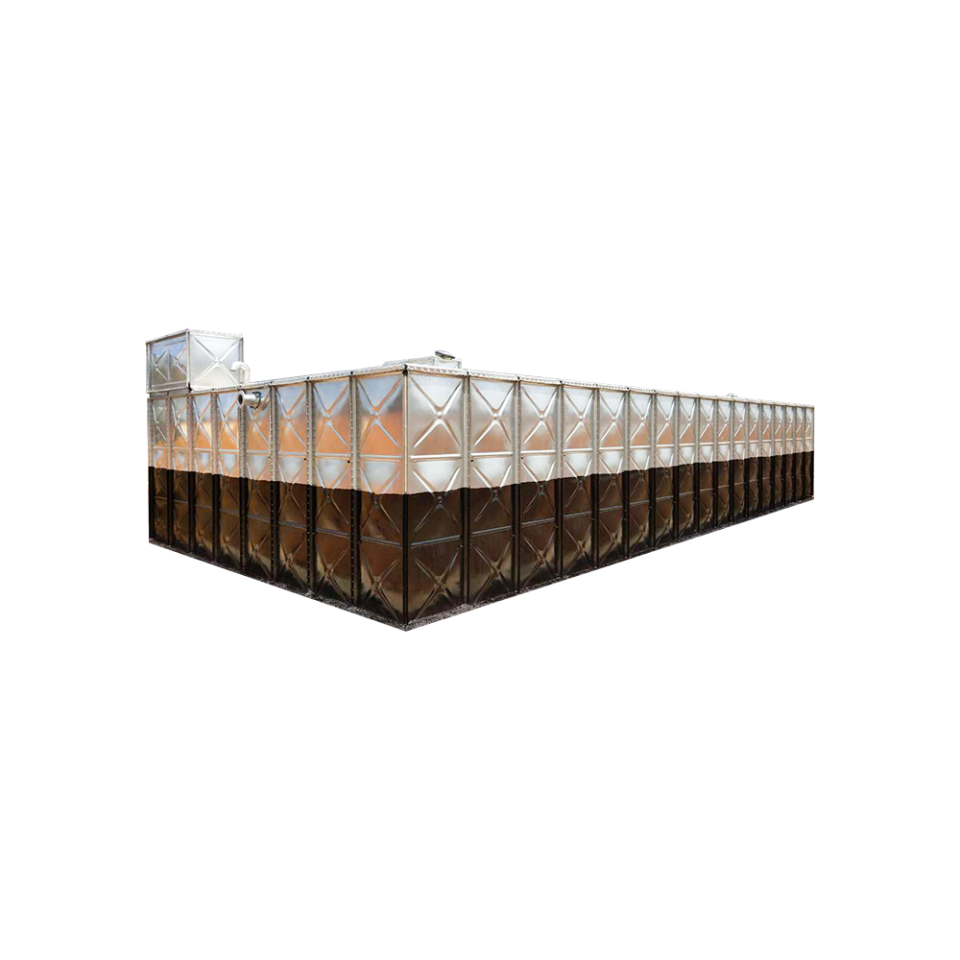
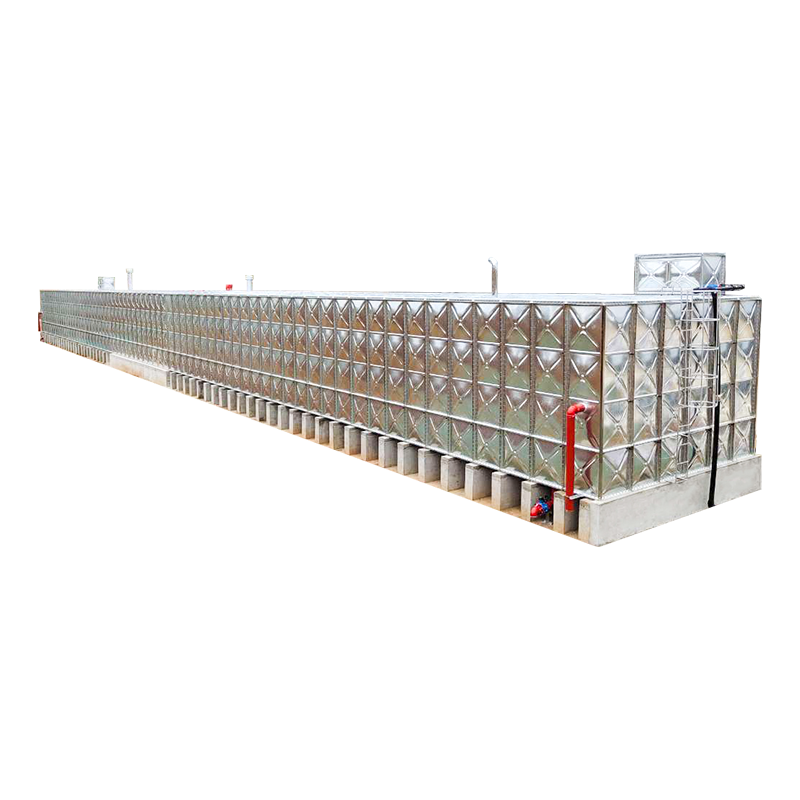
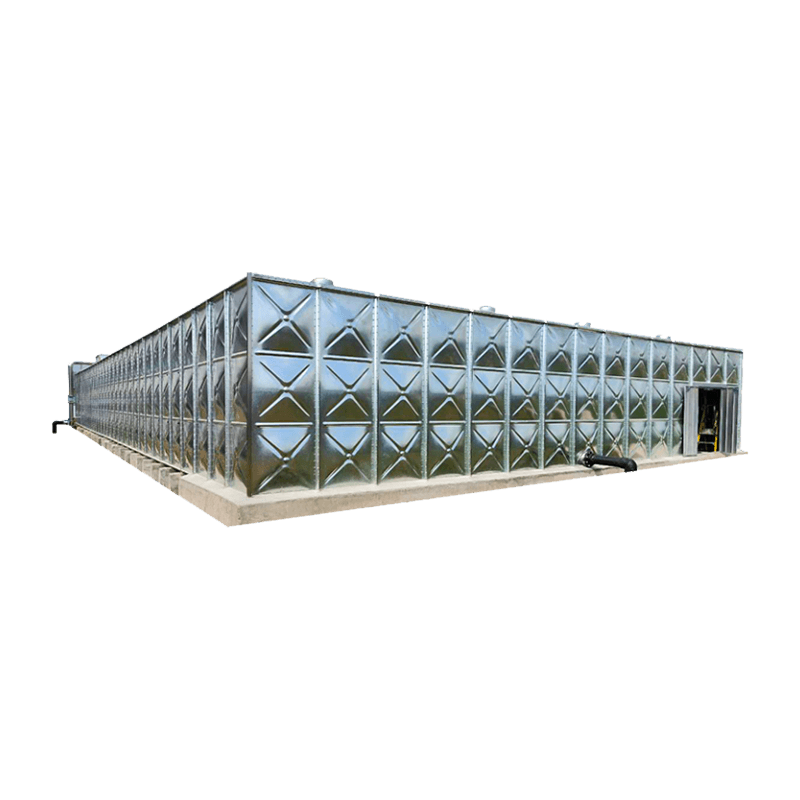
Modular water tanks address industrial needs for phased capacity expansion and rapid deployment without permanent infrastructure commitment.
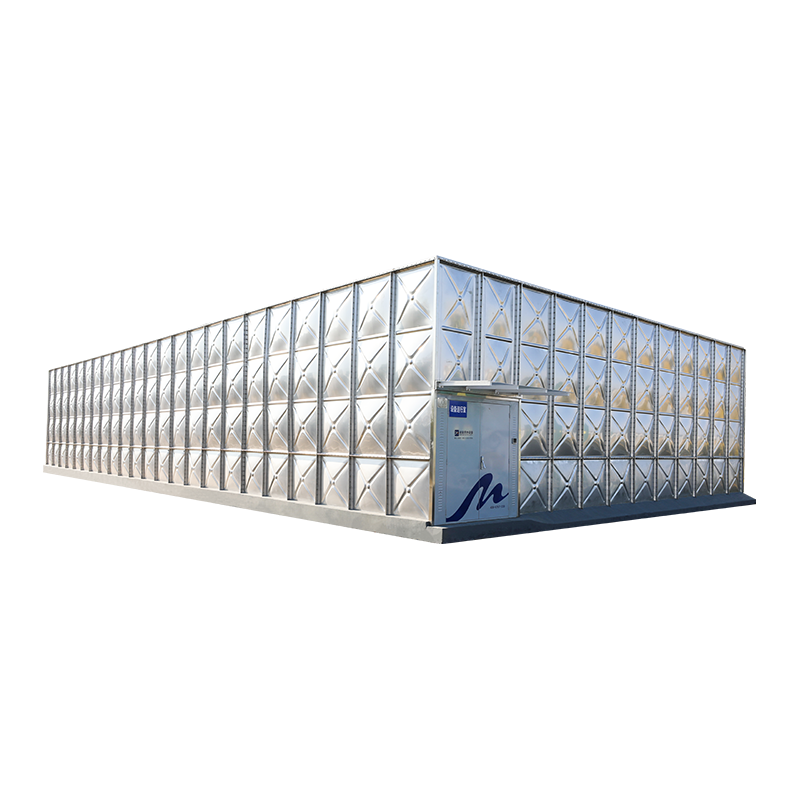
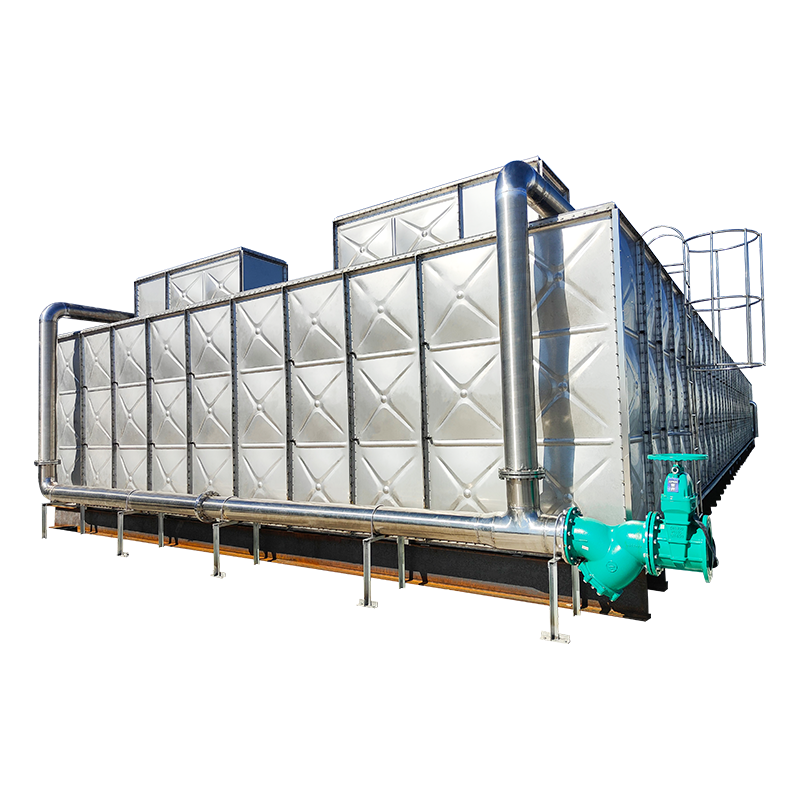
Modular systems utilize standardized 1.22m x 1.22m (4ft x 4ft) panels manufactured from hot-pressed galvanized steel, stainless steel, or glass-fused-to-steel (GFS) materials. Panel thickness ranges from 2.5 millimeters for smaller capacities to 5 millimeters for tanks exceeding 500,000 gallons. The modular approach enables height increments of 1.22 meters per tier, with typical configurations spanning 2-6 meters in height depending on foundation load-bearing capacity.
Assembly requires no specialized welding equipment, with panels joined using high-tensile steel bolts (grade 8.8 minimum) and EPDM rubber gaskets compressed to 30% deflection for watertight sealing. Experienced crews achieve installation rates of 10,000-15,000 gallons per day, reducing project timelines by 60-70% compared to conventional welded construction.
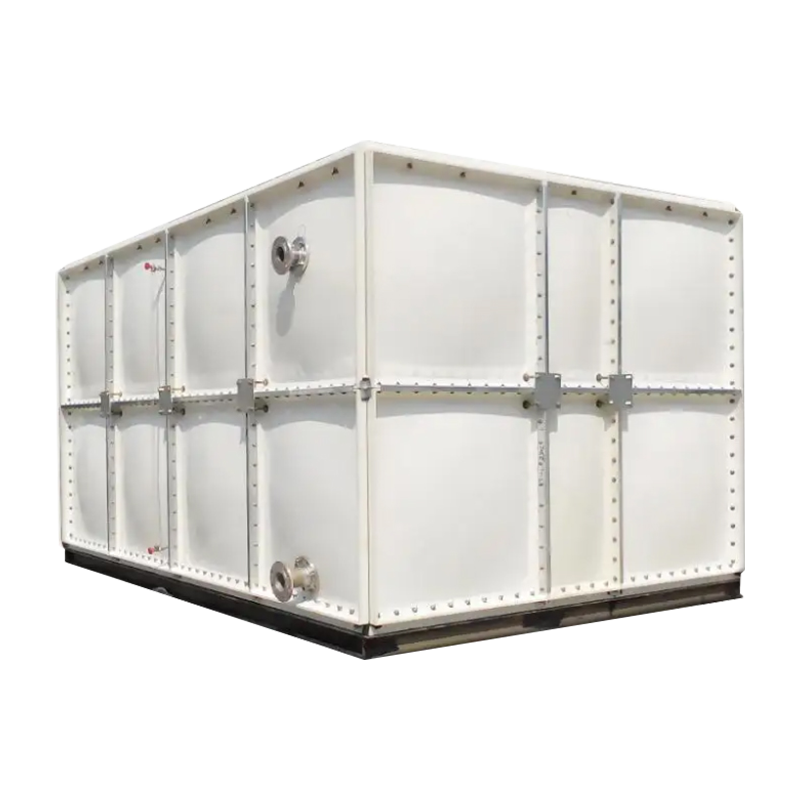
GFS modular tanks combine steel structural strength with glass corrosion resistance, with vitreous enamel coating (300-500 micrometers thick) fired at 800-850 degrees Celsius creating a chemically inert barrier. This technology dominates municipal and industrial bulk storage, offering 30-year service life at 40-50% lower cost than equivalent stainless steel construction. The coating withstands pH ranges from 3 to 11 and resists abrasion from sediment loading.
Beyond stainless steel and modular systems, industrial applications utilize specialized tank configurations matched to specific operational requirements.
Carbon steel tanks with factory-applied powder coating or liquid epoxy systems provide intermediate cost solutions for non-potable applications. Coating thickness of 250-400 micrometers achieves 15-20 year protection in neutral pH environments. These tanks accommodate fire protection water storage (NFPA 22 compliant) and process water reserves where stainless steel economics prove prohibitive.
Prestressed concrete tanks dominate capacities exceeding 1,000,000 gallons for municipal and power generation applications, with 50-100 year design lives and minimal maintenance requirements. Post-tensioned circumferential tendons (typically 0.5-inch diameter strands stressed to 75% ultimate strength) counteract hydrostatic pressure and thermal loads.
Fiberglass reinforced plastic (FRP) tanks serve chemical storage and demineralized water applications where metallic contamination must be eliminated. Wall construction utilizes chop-hoop wound fiberglass (5-10 millimeters thick) with vinyl ester resin matrices resisting osmotic blistering. FRP tanks accommodate temperatures up to 80 degrees Celsius and offer complete corrosion immunity in aggressive chemical environments.
Collapsible fabric tanks constructed from PVC-coated polyester or polyurethane provide temporary storage for construction sites, remote operations, and emergency response. Capacities range from 1,000 to 100,000 gallons with deployment times under 2 hours. These systems fold to 5% of deployed volume for transportation efficiency, though service life limits to 5-10 years under UV exposure.
Industrial water tank manufacturing integrates precision forming, welding, and surface treatment operations with rigorous inspection protocols ensuring structural integrity and leak-free performance.
Stainless steel tank production begins with plasma or laser cutting of sheet stock to panel dimensions with tolerances of plus or minus 1 millimeter. CNC press brakes form cylindrical or rectangular panels with bend radii minimizing stress concentrations. For modular bolted tanks, automated punching creates bolt hole patterns with 0.5-millimeter positional accuracy ensuring gasket compression uniformity.
Welding operations for field-erected tanks employ gas tungsten arc welding (GTAW) for root passes and submerged arc welding (SAW) for fill passes, achieving full penetration with minimal distortion. Welders hold ASME Section IX certifications with procedure qualifications specific to material grade and thickness. Post-weld heat treatment (solution annealing at 1050 degrees Celsius followed by rapid cooling) restores corrosion resistance in sensitized zones for 316L construction.
Glass-fused-to-steel manufacturing requires meticulous surface preparation, with steel panels shot-blasted to Sa 2.5 cleanliness grade and application of ground coat (cobalt-nickel enriched) followed by cover coat (titanium-opacified) enamels. The two-coat system achieves 200-300 micrometers total thickness with holiday testing at 1,500 volts verifying coating continuity.
Factory-applied epoxy systems for carbon steel tanks utilize electrostatic spray application achieving 250-micrometer dry film thickness with 95% transfer efficiency. Curing at 180-200 degrees Celsius ensures chemical resistance to potable water and mild industrial chemicals.
Completed tanks undergo hydrostatic testing at 1.5 times design working pressure or full water level for gravity tanks, with 24-hour hold periods and leak detection using visual inspection and moisture sensors. Potable water tanks require NSF/ANSI 61 certification verifying extractable contaminant levels below EPA limits. Welded stainless steel tanks for pressure applications receive ASME U-stamp certification following ultrasonic testing of all butt welds.
Successful industrial water tank deployment requires analysis of site conditions, foundation design, and integration with facility infrastructure.
Elevated tanks and large-capacity ground tanks require reinforced concrete ring walls or mat foundations designed for bearing pressures of 150-300 kPa depending on soil conditions. Seismic design follows AWWA D100 or ASCE 7 standards, with anchor bolts sized to resist overturning moments generated by horizontal accelerations of 0.2-0.5g in high-risk zones. Freeboard of 300-600 millimeters above maximum water level prevents overflow during seismic sloshing.
Industrial tanks integrate level monitoring (ultrasonic or pressure transducer systems), overflow protection, and access manways (minimum 600-millimeter diameter for personnel entry). Mixing systems prevent thermal stratification in large storage volumes, with side-entry agitators or jet nozzles achieving complete turnover every 6-12 hours. Cathodic protection systems (sacrificial anodes or impressed current) extend service life of coated steel tanks in corrosive soils.
The selection among industrial water tank types ultimately balances capital investment, operational lifecycle costs, regulatory requirements, and site-specific constraints. Stainless steel systems justify premium pricing in hygiene-critical applications, while modular GFS and bolted steel configurations optimize bulk storage economics without compromising structural reliability.
Related Products

Contact us
Headquater Address
Room 901, Building 17, Lane 1088, Shen Hong Road, Minhang District, Shanghai
Factory Address
No. 1, Mingxing North Road, Tech Innovation Park, Jianhu County, Yancheng, Jiangsu, P. R. China
Amy@mxwatersupply.com
Amy@mxwatersupply.com
Telephone(Whatsapp/Wechat)
+86-18051685983
QR CODE

 English
 Français