Sep 04, 2026
If your next capital project includes a water, chemical, or fire protection storage tank, the numbers behind the FRP tank market deserve a closer look. Published analyst estimates place the global market at roughly USD 2.5-2.8 billion in 2025-2026, growing at about 5-7% per year toward USD 3.4-4.0 billion by 2030. The growth is not speculative. It reflects a steady substitution of fiberglass reinforced plastic (FRP, also known as GRP) for welded steel and concrete in corrosive and hygiene-sensitive service. For buyers, that growth cuts both ways: it brings more manufacturing capacity and competitive pricing, and it also fills the market with new suppliers whose quality you need to verify before signing.
Content
Ask several research firms for the market size and you will get several different numbers, because each report draws the boundary differently. Some count tanks only; others bundle tanks with FRP pipe and ducting, which multiplies the total several times over. Base years and forecast horizons shift as well. None of this means the data is unreliable. It means you should align the scope before quoting any single figure in a feasibility study or board paper.
Once the scopes are aligned, the estimates converge. Tanks-only analyses generally agree on USD 2.5-2.8 billion for the mid-2020s, with compound annual growth of roughly 5-7% through 2030. Regional work tells the same story at a smaller scale: a North American study puts that market at about USD 422 million in 2025, rising around 3.5% in 2026. That is a mature market, still expanding on the back of underground fuel storage compliance and municipal asset replacement.
| Report scope | Baseline value | Forecast value | Implied annual growth |
|---|---|---|---|
| Global, tanks only (2026 baseline) | USD 2.76 billion | USD 3.48 billion by 2030 | 6.0% |
| Global, long-horizon estimate (2022 baseline) | USD 2.31 billion | USD 3.98 billion by 2030 | 7.1% |
| Global, extended horizon (2025 baseline) | USD 2.55 billion | USD 3.86 billion by 2034 | 4.7% |
| North America, regional (2025 baseline) | USD 422 million | USD 437 million in 2026 | 3.5% |
Market forecasts are aggregates of individual project decisions, and most of those decisions come down to three practical forces.
Steel tanks in wastewater or chemical service need coating and recoating cycles every few years, while concrete basins suffer surface attack above the waterline and can leak through hairline cracks. FRP panels sidestep both problems, which moves the buying decision away from initial price and toward total cost over a 25-30 year service life. In coastal, desalination, and aggressive chemical service, the corrosion argument alone usually settles the material choice.
Water storage is the largest application segment, and water treatment is the fastest-growing end use in most published segmentations. Utilities are upgrading aging basins, clearwells, and distribution storage, and modular FRP panel tanks can be erected inside existing buildings or on constrained sites where welding equipment or concrete pours would be impractical. For a detailed engineering comparison, see our analysis of how fiberglass sectional water tanks compare with concrete.
Drinking water hygiene requirements, chemical containment rules, and fire code storage volumes all push operators toward materials with documented, certifiable properties. At the same time, a large installed base of steel and concrete tanks built decades ago is reaching the end of its economic life. That replacement wave runs underneath the new-build market and keeps demand steady even when construction slows.
Segment data tells you where a specific project sits in the market and which type of supplier specializes in it. Published studies converge on a consistent pattern.
| Segment axis | Largest share | Fastest-growing |
|---|---|---|
| Resin type | Polyester | Vinyl ester |
| Application | Water storage | Chemical storage |
| Capacity | 1,000-5,000 litres | Over 10,000 litres |
| End-use industry | Oil and gas | Water treatment |
Two of these cells matter most for buyers. Polyester resin dominates volume because it keeps cost down in water service, while vinyl ester is specified where aggressive chemistry demands it, so the resin decision should follow your stored medium rather than any market trend. Meanwhile, the over-10,000-litre class is the fastest-growing capacity band, and it is served almost entirely by modular sectional construction: panels that ship flat, stack efficiently in containers, and bolt together on site with light lifting equipment.
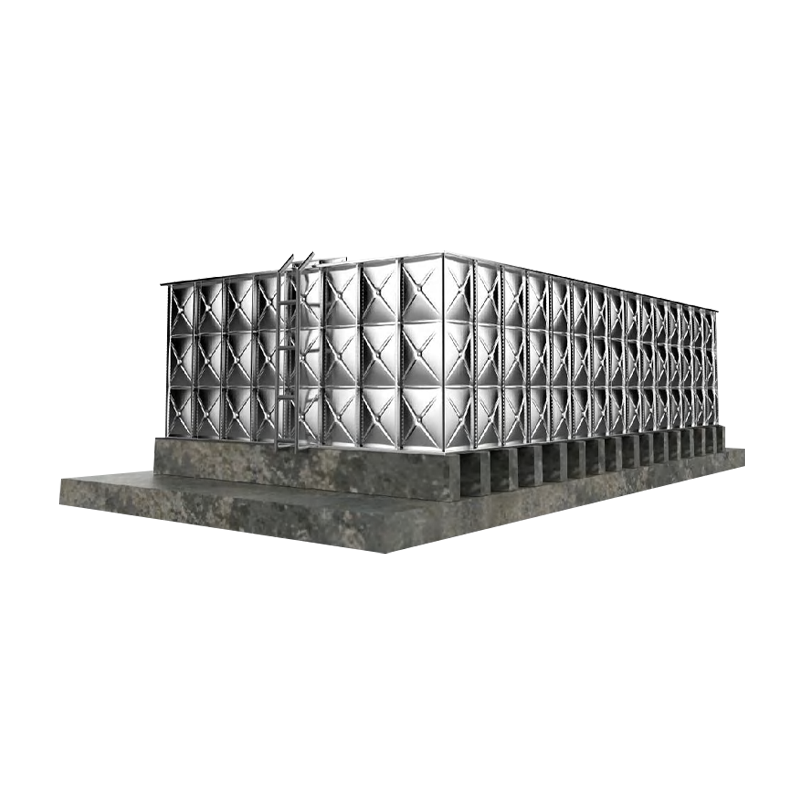
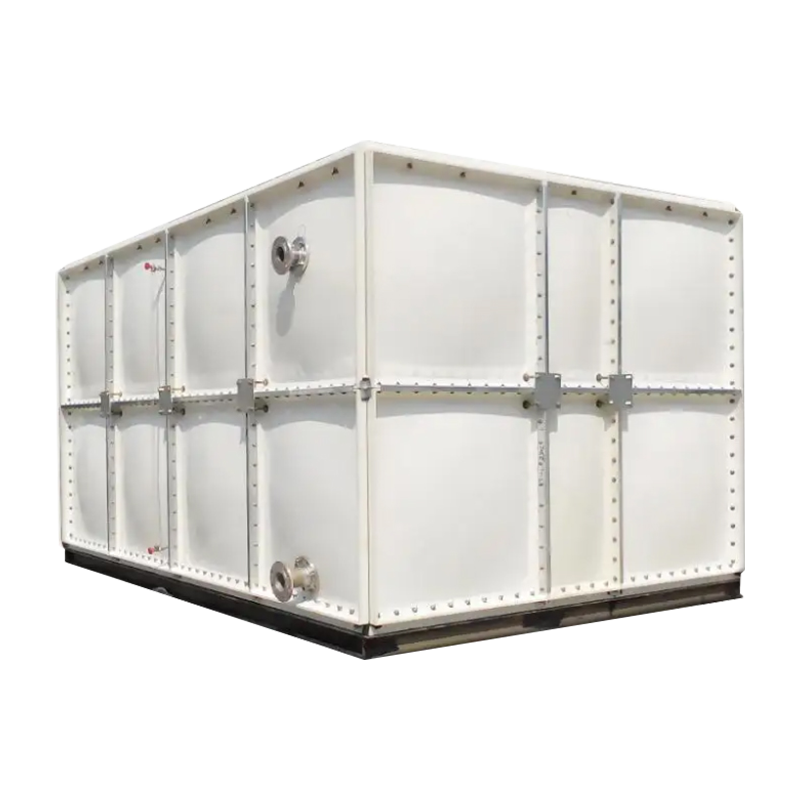 SMC Fiberglass Sectional Water Tank for Potable StorageAssembled from molded SMC panels with food-grade resin, this bolted sectional FRP tank suits the large above-10,000-litre modular class, offering corrosion resistance, flat shipping, and easy on-site assembly for water service.View Product →
North America remains the largest regional market, expanding at a mature 3.5% pace. Growth there is driven by conversion of underground fuel storage to code, aboveground chemical tank replacement, and steady municipal water investment rather than by any single boom sector.
Asia-Pacific is the fastest-growing region, supported by municipal wastewater construction in China and India, desalination programs across the Middle East, and industrial expansion in Southeast Asia. The region is also the center of manufacturing gravity for panel tanks, which shortens lead times for export projects. Europe grows on regulation-driven replacement of older assets, while the Middle East and Africa hold long-term potential tied to water scarcity and hydrocarbon processing.
A market expanding 5-7% a year attracts new entrants, and in FRP manufacturing that matters more than in most industries. Tank quality is set by production discipline: glass fiber content, resin cure, and joint sealing. Shortcuts in any of these are invisible until years into service, and a polished brochure tells you nothing about batch control. Put verification directly into the specification and ask each bidder:
Total cost of ownership, not unit price, should drive the comparison. Panelized FRP tanks can look expensive per cubic metre on paper, but they recover ground through compact freight volume, fast assembly with light equipment, simple foundation requirements, and decades of service without recoating. Before comparing quotes, review the price factors and buying tips specific to FRP water tanks so that every supplier is priced on the same basis.
Buyers operating in borderline conditions, such as potable water with occasional chemical exposure or fire storage in aggressive environments, often evaluate composite panel construction alongside pure FRP options, since hybrid panels trade some corrosion margin for added structural stiffness.
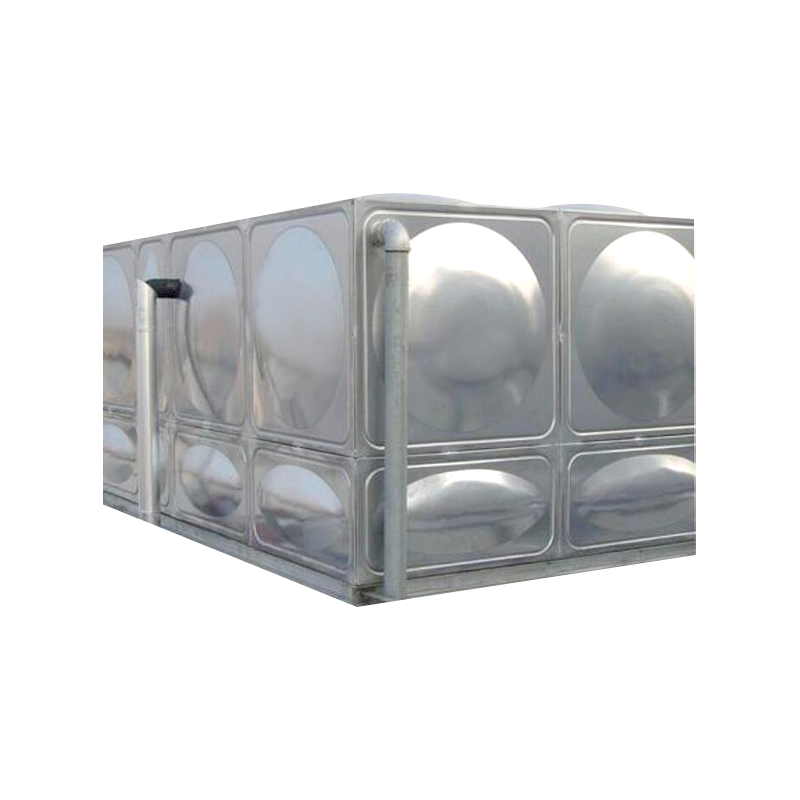
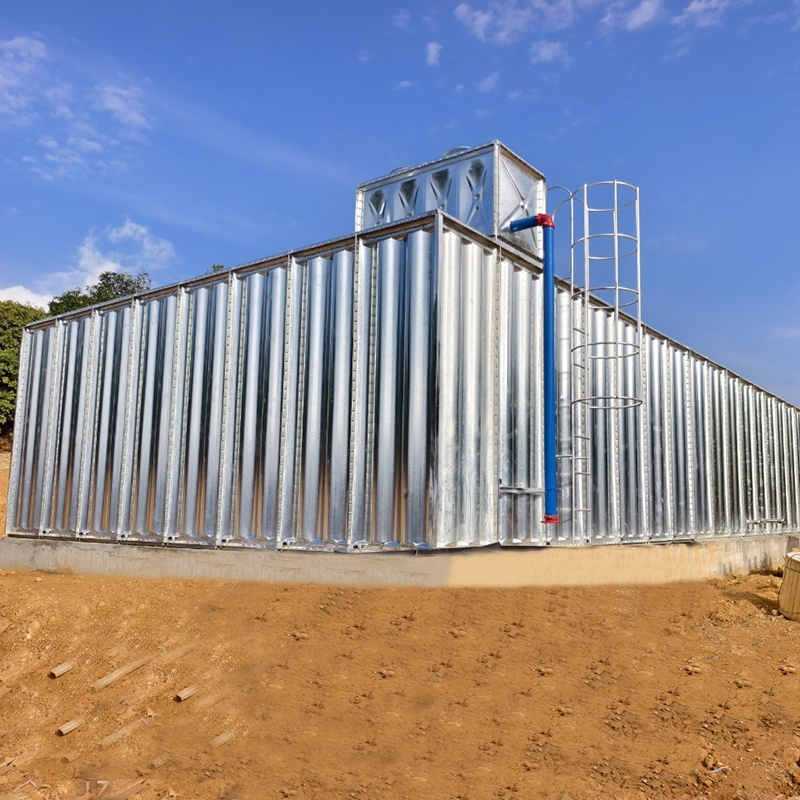
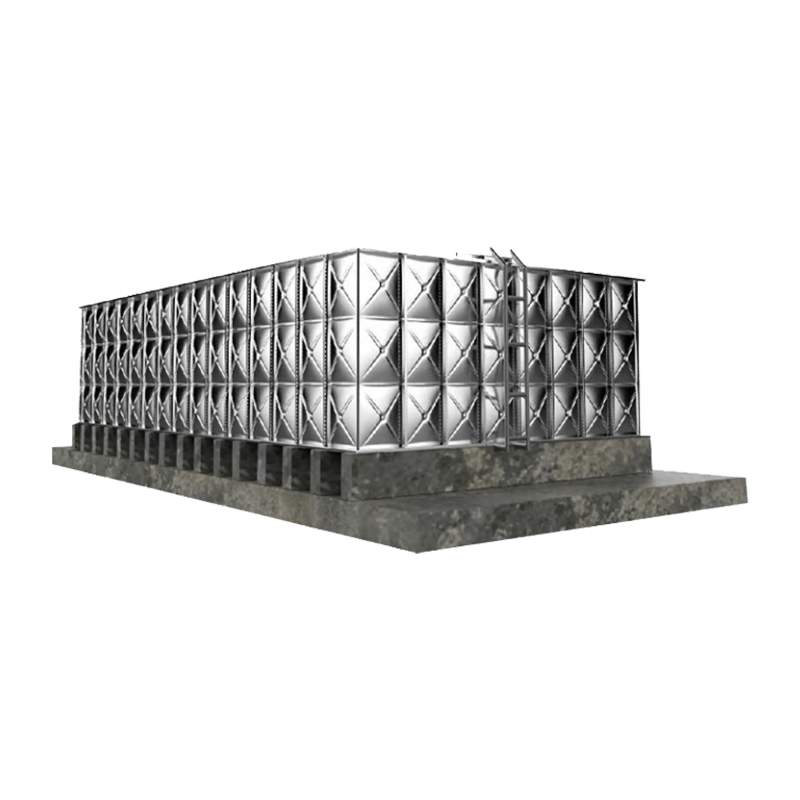
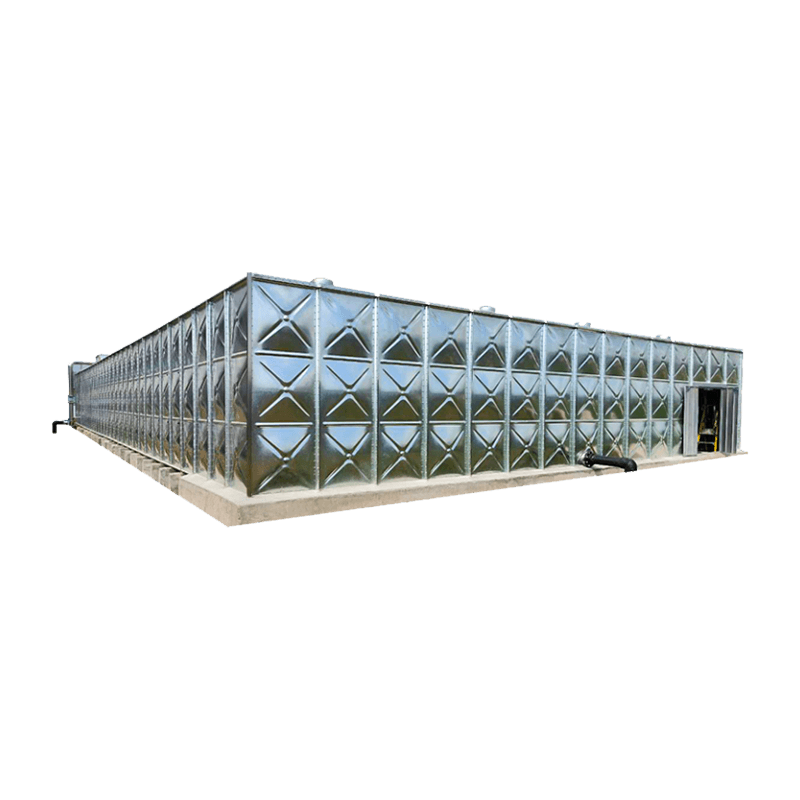
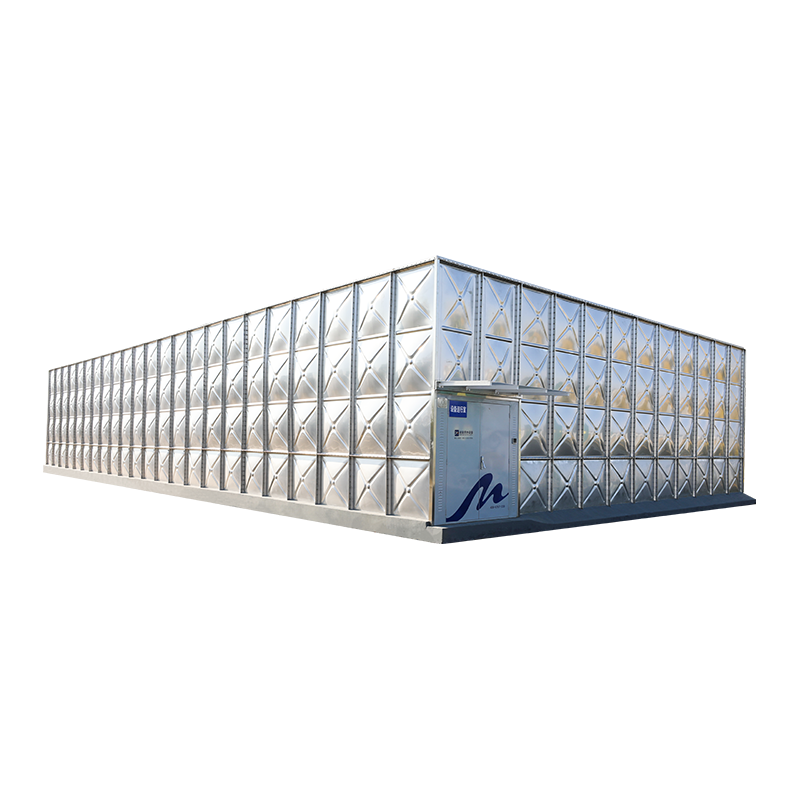 Composite Bolted Stainless Steel Sectional Water TankWith seamless stretch-formed stainless modules bolted together, this hybrid panel tank adds structural stiffness for borderline conditions like potable water with chemical exposure or fire storage in aggressive environments.View Product →
The consensus forecast of steady mid-to-high single-digit annual growth describes substitution, not a boom. Expect vinyl ester to keep gaining share as chemical storage grows fastest, large modular tanks above 10,000 litres to keep outgrowing small vessels, and Asia-Pacific to keep taking share of both demand and production. For project teams, the practical reading is straightforward: the market will offer more qualified suppliers every year, but verifying resin grade, glass content, and workmanship remains your responsibility. Treat the market numbers as context, and treat the factory audit as the real due diligence.
Related Products

Contact us
Headquater Address
Room 901, Building 17, Lane 1088, Shen Hong Road, Minhang District, Shanghai
Factory Address
No. 1, Mingxing North Road, Tech Innovation Park, Jianhu County, Yancheng, Jiangsu, P. R. China
Amy@mxwatersupply.com
Amy@mxwatersupply.com
Telephone(Whatsapp/Wechat)
+86-18051685983
QR CODE

 English
 Français