Jul 21, 2026
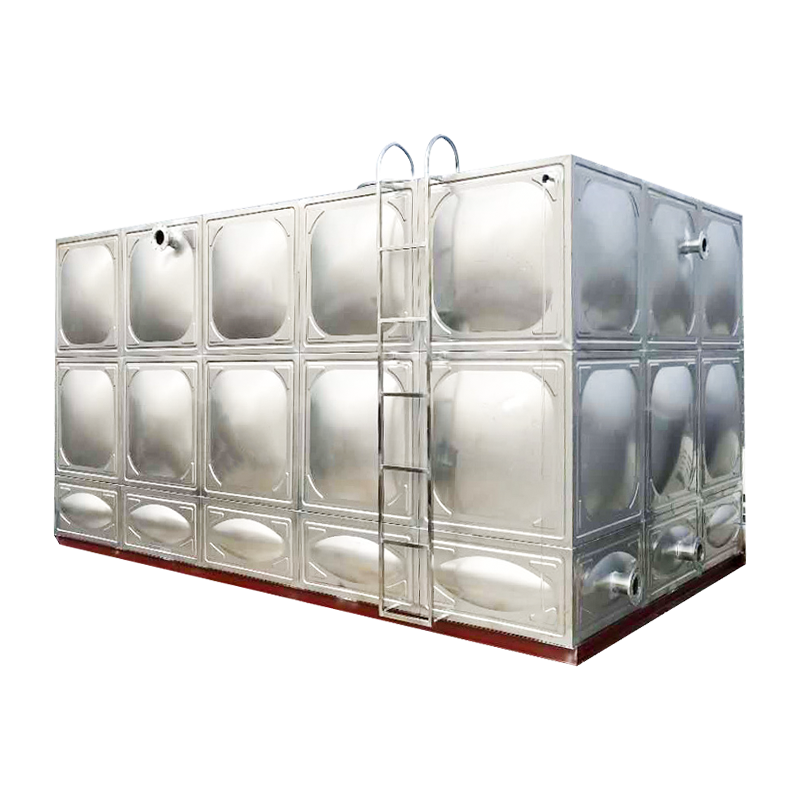
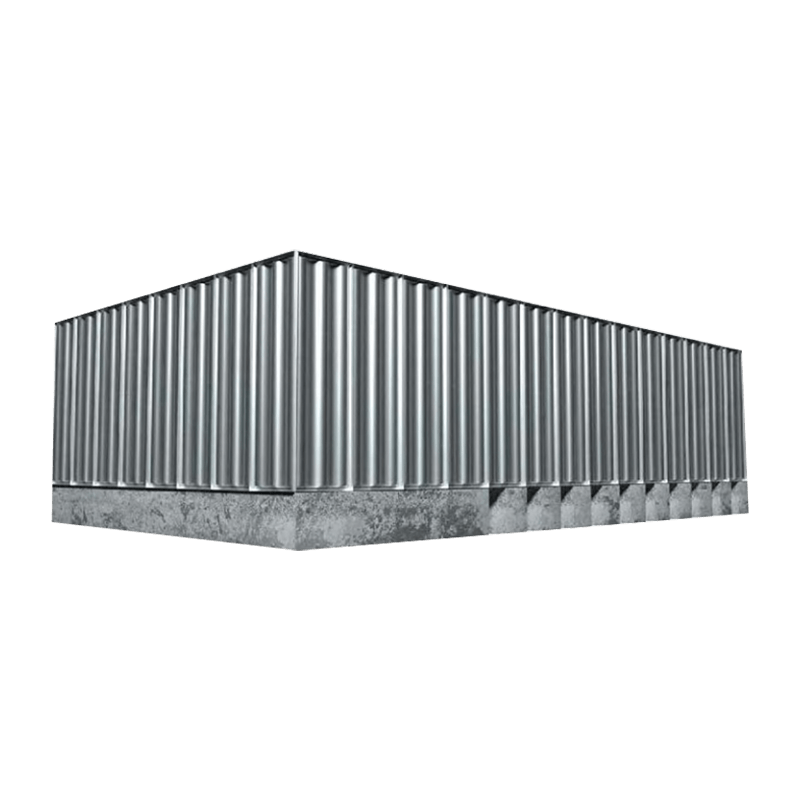
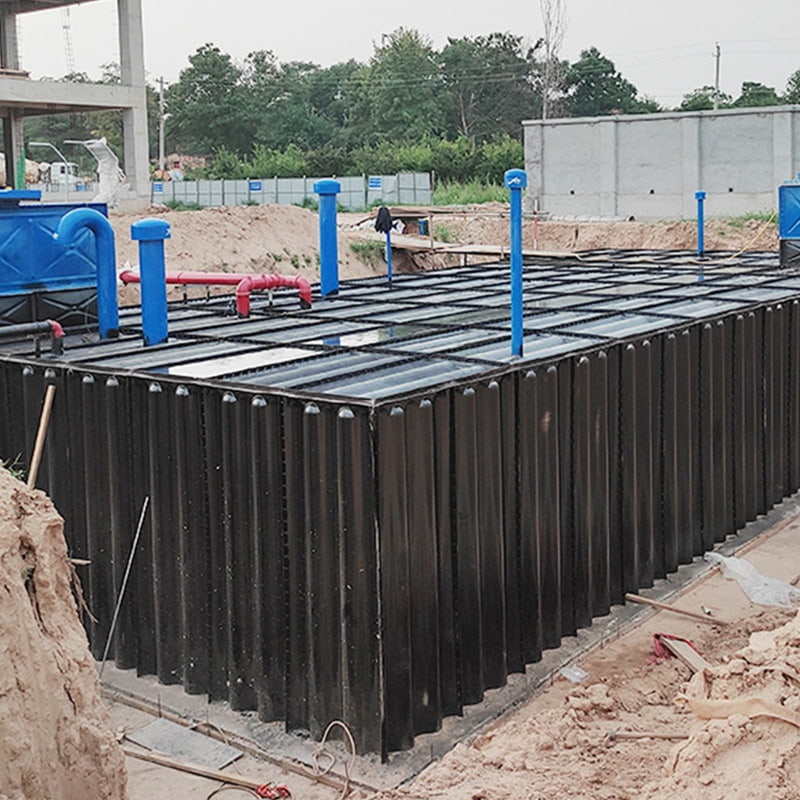
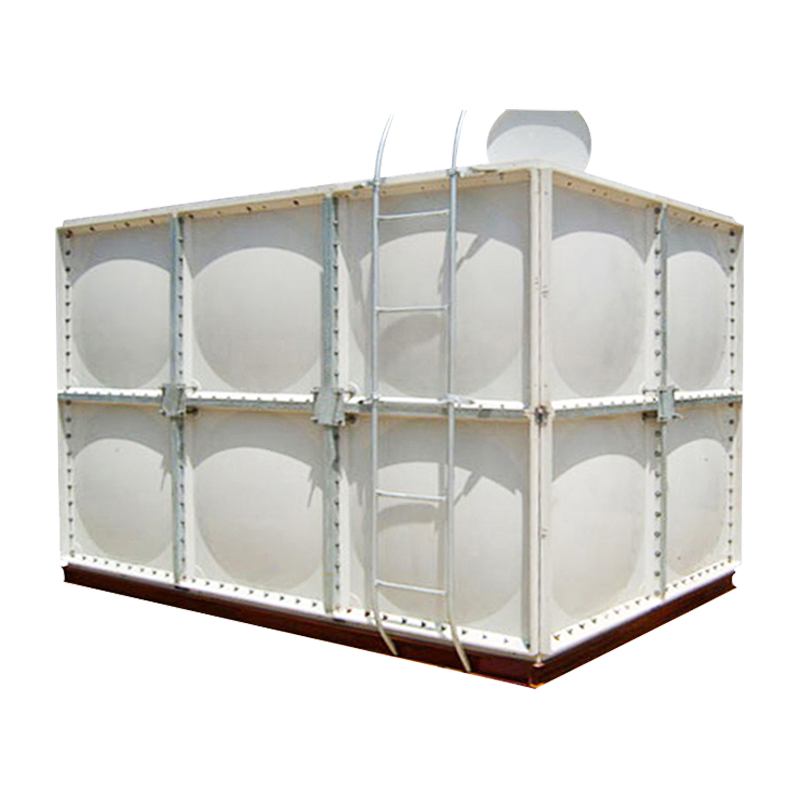
GRP sectional tanks are modular water storage systems assembled on‑site from factory‑made glass reinforced plastic panels. They provide a durable, corrosion‑free solution for storing potable water, process liquids, and firefighting reserves without the construction time or weight penalties of concrete or welded steel. Because the panels bolt together with internal bracing and gaskets, a tank of virtually any capacity — from a few thousand liters to over 5,000,000 liters — can be built inside an existing room, on a rooftop, or on a simple flat base in the open.
Content
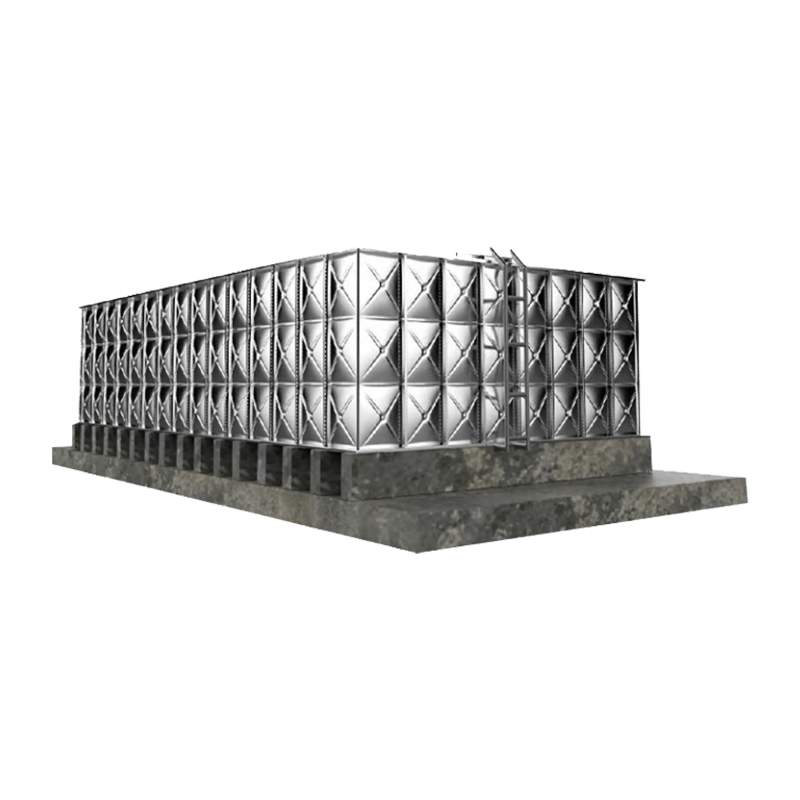
GRP stands for Glass Reinforced Plastic, a composite material made by embedding fine glass fibers in a polyester or vinyl ester resin matrix. In a GRP sectional tank, this material is molded into square or rectangular panels, typically in standard sizes of 1m × 1m, 1m × 0.5m, or 1.22m × 1.22m (4ft × 4ft). The panels are manufactured using a hot‑press molding process that cures the resin under heat and pressure, producing a smooth, impermeable surface on the inside and a textured, weather‑resistant face on the outside.
The panel thickness ranges from 4mm to 10mm depending on the hydrostatic pressure at that point in the tank wall — panels near the base are thicker to withstand higher loads. Internal tie rods and external steel bracing stiffen the structure without compromising the internal space. All fasteners, nuts, and washers are typically stainless steel (grade 304 or 316) to maintain full corrosion resistance. Food‑grade seals and gaskets, usually made from EPDM or nitrile rubber, ensure a watertight joint between every panel.
Because the tank arrives as a flat‑pack kit, it can be carried through standard doorways and stairwells, assembled by a small crew using hand tools, and relocated or expanded later. This sectional design is what makes GRP the preferred choice for installations where a one‑piece tank would be impossible to deliver or install.
The shift from traditional materials to GRP sectional tanks is driven by measurable performance gains. The following benefits make GRP the default specification for consultants and contractors across the water, fire, and industrial sectors.
GRP sectional tanks are not limited to one sector. Their versatility has made them the go‑to storage choice in environments ranging from hospitals to remote mining camps.
When specifying a water storage solution, engineers compare GRP sectional tanks against welded steel and cast‑in‑place concrete on multiple criteria. The table below summarizes the critical performance and cost factors.
| Parameter | GRP Sectional Tank | Welded Steel Tank | Concrete Tank |
|---|---|---|---|
| Corrosion resistance | Excellent — inert to most chemicals | Requires galvanizing or coating; rust risk | Prone to carbonation and spalling over time |
| Installation time | 2–4 days, hand tools | 1–3 weeks, welding and coating | 4–8 weeks, formwork, curing |
| Weight (empty) | ~1,500 kg | ~5,000 kg | ~60,000 kg |
| Life expectancy | 50+ years | 20–30 years | 30–50 years with maintenance |
| Thermal conductivity | Low (~0.25 W/m·K) | Very high (~50 W/m·K) | Moderate (~1.7 W/m·K) |
| Modification / expansion | Simple — add panels or relocate | Difficult — cut and weld | Nearly impossible without demolition |
The data shows that while concrete can provide thermal mass for large reservoirs and steel offers high impact resistance for specific industrial settings, GRP sectional tanks are the most balanced solution for the vast majority of static water and liquid storage applications, especially where speed, lifetime cost, and water quality are priorities.
The assembly of a GRP sectional tank follows a precise but straightforward sequence. First, a level concrete base or steel support frame is prepared. A perimeter channel or angle is fixed to the base to locate the bottom row of panels. The panels are then erected one by one, with EPDM gaskets placed between each mating flange. Stainless steel bolts and cross‑bracing tie rods are inserted as the panels rise, tightened to a calibrated torque to ensure uniform compression of the seals without damaging the GRP laminate.
Once the walls are complete, the roof panels are installed, incorporating access hatches, ventilation cowls, and screened overflow outlets. The entire tank is then filled and left to stand for a period to allow the seals to bed in fully before being flushed and put into service. No hot works, welding, or heavy lifting gear is needed — a 100,000‑liter tank can be built by four technicians in under a week, with the finished tank ready for immediate use once the final inspection is passed.
One of the defining features of a GRP sectional tank is its near‑zero maintenance requirement. The smooth internal gel‑coat finish prevents scale adhesion and algal growth, while the external UV‑stabilized resin layer resists chalking and fiber bloom even under intense sunlight. Annual inspections involve checking the bolt torques, verifying the condition of external bracing, and visually confirming seal integrity — procedures that take less than an hour for a moderate‑sized tank.
Should damage ever occur, the sectional nature of the design becomes a distinct advantage. A single damaged panel can be unbolted and replaced without draining the entire tank — a temporary internal baffle or lower water level is all that is needed. This repairability, combined with the inherent corrosion‑free properties, is why GRP sectional tanks are regularly warranted for 30 years and continue to perform reliably beyond half a century in municipal water networks around the world.
No two sites are identical, and the modular nature of GRP sectional tanks allows for extensive customization. Internally, the tank can be divided into multiple compartments with separate inlet and outlet connections — critical for systems that need a duty and standby reserve or separate raw and treated water sections. Flanged nozzles can be positioned at any point on any panel, and the tank can be supplied with integrated ladders, internal and external walkways, level indicators, and temperature sensors.
For roof‑mounted installations, the panel thickness and bracing can be engineered to reduce weight further, while buried tanks are supplied with additional external stiffening to withstand soil and water table pressures. Color options are available for the external gel coat to blend with building aesthetics, and insulation jackets can be added for freeze protection in cold climates. This breadth of options ensures that the final tank is not a generic product but a system configured to match precise hydraulic, spatial, and operational requirements.
Related Products

Contact us
Headquater Address
Room 901, Building 17, Lane 1088, Shen Hong Road, Minhang District, Shanghai
Factory Address
No. 1, Mingxing North Road, Tech Innovation Park, Jianhu County, Yancheng, Jiangsu, P. R. China
Amy@mxwatersupply.com
Amy@mxwatersupply.com
Telephone(Whatsapp/Wechat)
+86-18051685983
QR CODE

 English
 Français