Feb 25, 2026
Selecting the appropriate material for a sectional water storage system is one of the most critical decisions in industrial and municipal infrastructure planning. The choice of material affects not only the initial procurement budget but also the installation timeline, the quality of the stored water, and the total cost of ownership over several decades. Currently, three materials dominate the global market: Glass Reinforced Plastic or GRP, Hot Dipped Galvanized or HDG steel, and Stainless Steel. This guide provides a comprehensive technical breakdown to help engineers and project managers select the ideal material based on their specific environmental and operational requirements.
Content
Each of the three primary materials brings a unique set of characteristics to the table. Understanding the fundamental science of these materials is the first step in making an informed selection.
GRP, also known as FRP or Fiberglass, is a composite material made of a polymer matrix reinforced with glass fibers. It is celebrated for its total immunity to corrosion and its lightweight nature. In sectional tank design, GRP panels are typically hot pressed under high pressure and temperature, resulting in a dimensionally stable and smooth surface.
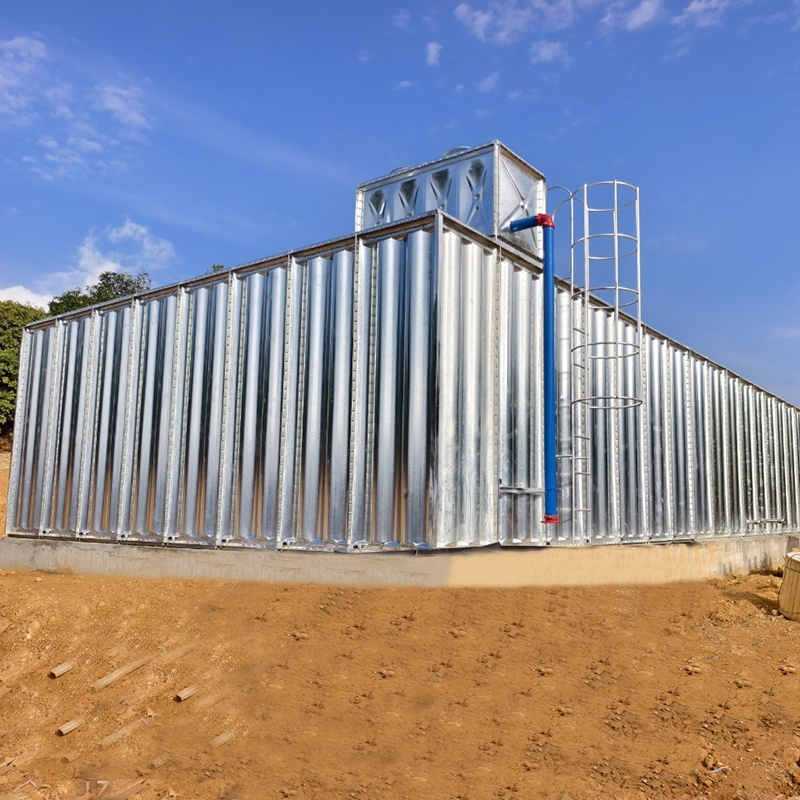
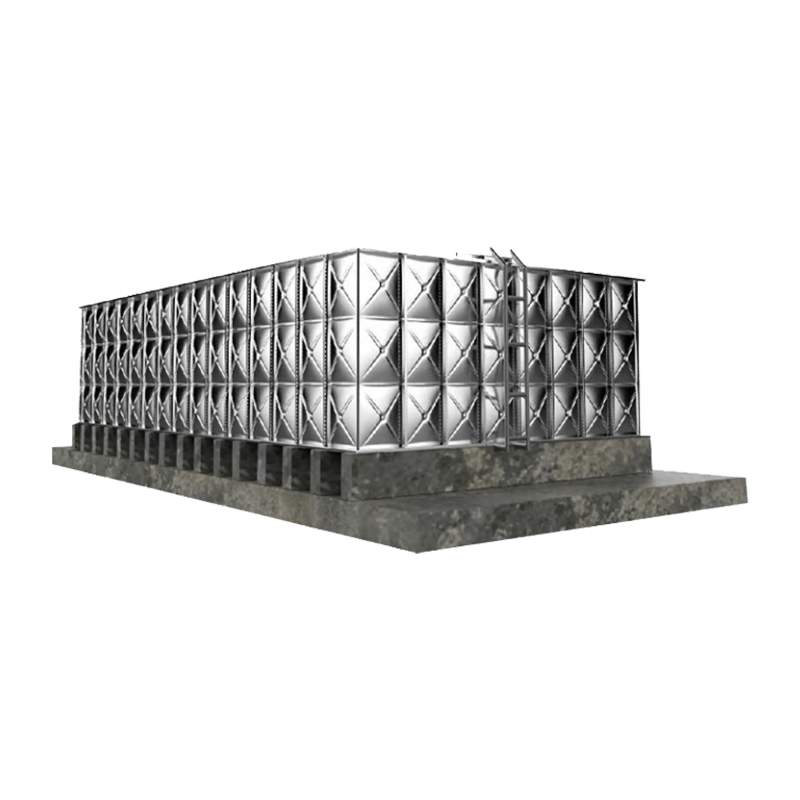
HDG steel relies on the structural strength of carbon steel combined with a sacrificial zinc coating. The metallurgical bond formed during the hot dip process ensures that the steel is protected both internally and externally. It is the workhorse of the industrial sector, known for its extreme ruggedness and structural reliability.
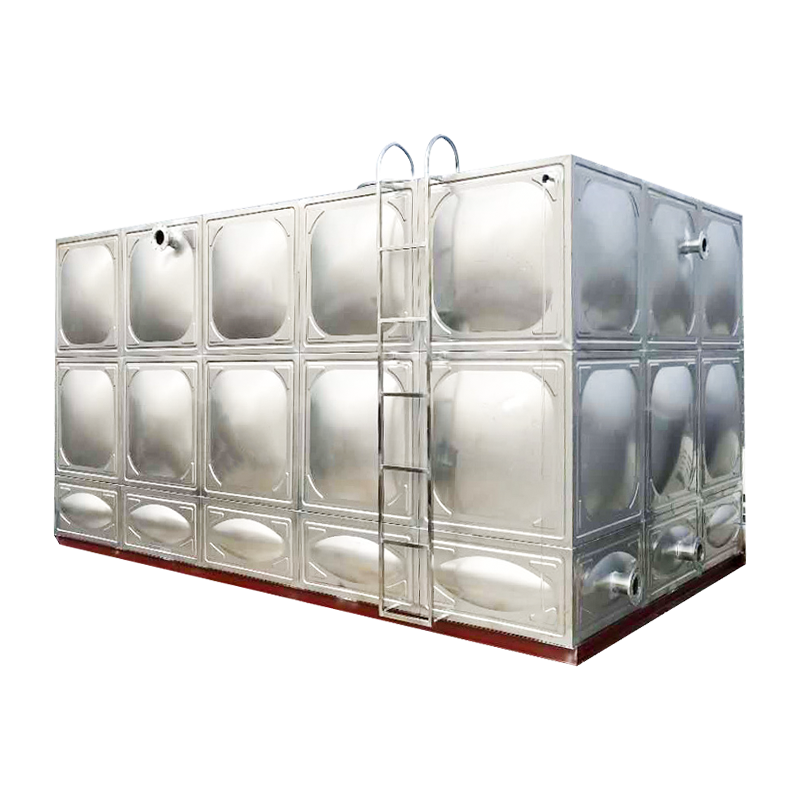
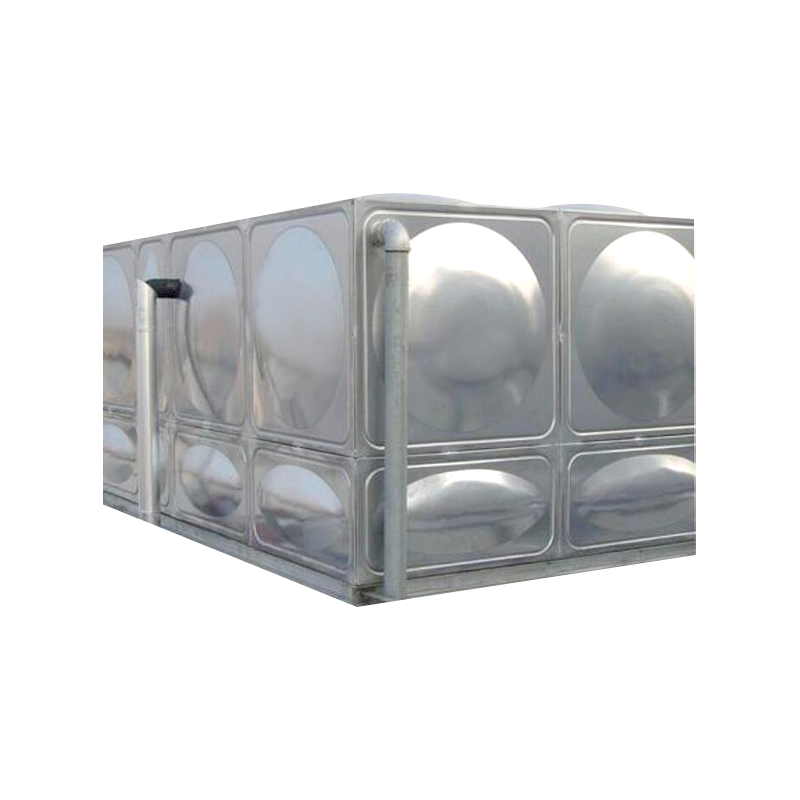
Stainless steel tanks, typically made from Grade 304 or Grade 316, rely on a chromium rich oxide film to resist corrosion. It is the prestige choice for applications requiring the highest levels of hygiene or for storing specific chemicals that are incompatible with zinc or plastics.
The mechanical demands on a sectional tank are immense, particularly as capacity increases. The way these materials handle internal hydrostatic pressure and external physical impact varies significantly.
HDG steel offers the highest tensile strength among the three, making it the preferred choice for massive reservoirs where structural integrity is the absolute priority. Stainless steel also offers high strength but at a much higher cost per kilogram. GRP, while strong for its weight, is more brittle than steel. In environments where the tank might be subject to physical impact or seismic shifts, the ductility of steel provides a safety margin that composites cannot match.
| Feature | GRP Composite | HDG Carbon Steel | Stainless Steel 316 |
|---|---|---|---|
| Tensile Strength | Moderate | Very High | High to Very High |
| Ductility | Low (Brittle) | High | High |
| Weight per Panel | Light | Heavy | Moderate to Heavy |
| Impact Resistance | Moderate | Excellent | Excellent |
The chemistry of the stored water and the surrounding atmosphere are perhaps the most influential factors in material selection.
GRP is completely non metallic, meaning it cannot rust or undergo galvanic corrosion. This makes it ideal for highly saline coastal environments where salt spray quickly degrades unprotected metals.
HDG steel uses cathodic protection, where the zinc layer corrodes slowly to protect the steel. This is highly effective in neutral pH environments but fails in highly acidic conditions.
Stainless steel relies on its passive layer. However, in stagnant water with high chloride levels, stainless steel can suffer from pitting corrosion, which is a localized and often invisible form of failure.
| Environment | GRP Selection | HDG Selection | Stainless Steel Selection |
|---|---|---|---|
| Potable Water | Excellent | Good | Superior |
| High Salinity Coastal | Superior | Good (with maintenance) | Moderate (risk of pitting) |
| High Acidity (pH < 5) | Excellent | Poor | Good |
| High Alkalinity (pH > 10) | Moderate | Excellent | Good |
The environment where the tank is installed can range from sub zero arctic zones to sweltering tropical or desert regions.
Steel tanks (both HDG and Stainless) have low coefficients of thermal expansion, meaning they remain very stable as temperatures fluctuate. GRP has a higher expansion rate, which must be accounted for in the gasket and joint design. Furthermore, while modern GRP panels are UV stabilized, long term exposure to intense desert sunlight can lead to fiber blooming or surface degradation over decades, a problem that does not affect metallic tanks.
For modular or sectional tanks, the ease of transport and assembly is a major selling point.
GRP panels are significantly lighter than steel, which can reduce shipping costs, especially for remote projects where air freight or difficult road transport is required. However, the light weight also means GRP panels require more careful handling to prevent edge chipping.
All three types are bolted on site. However, HDG tanks often require fewer internal reinforcements than GRP tanks for the same height, which can simplify and speed up the internal assembly process. Stainless steel tanks require the most care during assembly to ensure no carbon steel tools contaminate the surface, which would cause rusting.
When choosing a material, the initial price is often the tip of the iceberg.
GRP and HDG are generally comparable in price, with HDG being the more cost effective choice for very large industrial applications. Stainless steel is consistently the most expensive option, often costing two to three times as much as GRP or HDG.
| Metric | GRP Sectional | HDG Sectional | Stainless Steel |
|---|---|---|---|
| Initial Capex | Low to Moderate | Low to Moderate | Very High |
| Maintenance Need | Very Low | Low to Moderate | Moderate |
| Service Life | 25 to 40 Years | 30 to 50 Years | 50 Plus Years |
| Residual Value | Low | Moderate | High |
The final decision depends on the specific priorities of your project.
Choose GRP if your project is in a highly corrosive coastal area, involves difficult logistics to a remote site, or if you are storing water with a chemistry that is aggressive to metals. It is the king of corrosion resistance for standard water storage.
Choose HDG for large scale industrial projects, fire protection systems, or municipal reservoirs where structural toughness, long term proven reliability, and the best balance of cost and strength are required. It is the most robust choice for high capacity systems.
Choose Stainless Steel for high end food and beverage processing, ultra pure water applications, or when the prestige and absolute hygiene of the material outweigh the significantly higher capital investment.
By aligning the material properties with the environmental reality of the site, engineers can ensure that their sectional water storage system provides a reliable service life for generations.
1. Can I mix materials, such as using an HDG tank with stainless steel bolts?
This is generally discouraged due to galvanic corrosion. When two different metals are in contact in the presence of an electrolyte like water, the less noble metal (zinc in HDG) will corrode at an accelerated rate. Always use fasteners that are compatible with the tank material.
2. Which material is best for seismic zones?
HDG steel and Stainless steel are generally preferred in seismic zones because they are ductile. They can deform slightly and absorb energy during an earthquake without shattering. GRP is more brittle and may crack under the same seismic loads.
3. Is GRP safe for drinking water?
Yes, as long as the GRP panels are manufactured using food grade resins and are certified by bodies like WRAS or NSF. These certifications ensure that no harmful chemicals leach from the plastic into the water.
4. How does UV radiation affect HDG tanks compared to GRP?
HDG tanks are essentially immune to UV radiation; the zinc coating does not degrade under sunlight. GRP panels, while UV stabilized, can lose their surface gloss and eventually show some structural degradation if exposed to extreme UV levels over 30 or 40 years.
5. Which material has the lowest carbon footprint?
This is a complex calculation. GRP has a high energy intensity during resin production, while steel has high energy needs during smelting. However, because steel is 100 percent recyclable at the end of its life, it is often considered to have a better long term environmental profile than GRP.
Related Products

Contact us
Headquater Address
Room 901, Building 17, Lane 1088, Shen Hong Road, Minhang District, Shanghai
Factory Address
No. 1, Mingxing North Road, Tech Innovation Park, Jianhu County, Yancheng, Jiangsu, P. R. China
Amy@mxwatersupply.com
Amy@mxwatersupply.com
Telephone(Whatsapp/Wechat)
+86-18051685983
QR CODE

 English
 Français