Oct 16, 2026
Three months after a 420-apartment complex switched on its new booster sets, the facilities team was still logging pressure complaints from floors 12 to 18 between 7 and 9 every evening. The pumps were rated correctly on paper, and the motors ran at full speed almost all day. Nothing in the system measured demand, so nothing in the system could follow it.
That distance between rated performance and real performance is the problem intelligent water supply equipment is built to close. The term does not describe one product. It describes storage, boosting and control packaged so they behave as one controlled system, with a single party accountable for the pressure at the tap. Jiangsu Mingxing Water Supply Equipment Co., Ltd., a Jiangsu manufacturer that builds tanks, pumps and packaged stations under its Leaqua smart-water brand, structures its catalog around that logic rather than around individual components.
Intelligent water supply equipment is a packaged assembly of water storage tanks, booster pumps, variable-frequency controllers, pressure and flow sensors, and a monitoring layer that adjusts output to measured demand and reports its own operating condition.
That definition matters at the procurement desk. Once the boundary is drawn around one controlled system, responsibility for pressure, water quality and energy stops being split between three purchase orders.
Content
Intelligent water supply equipment is organized in four functional layers, and every layer carries its own specification risk. A weakness in one layer usually surfaces as a symptom in another, which is why component-by-component purchasing so often ends in a system nobody can tune.
| Layer | Typical hardware | What to fix in the specification | Failure it prevents |
| Storage | Sectional tanks in 304 or 316 stainless steel, hot-dip galvanized steel, or glass-reinforced plastic | Material grade, panel thickness by water depth, food-grade sealing | Contamination, panel deflection, leakage |
| Boosting | Vertical multistage or end-suction centrifugal pumps | Duty plus standby flow, head at worst-case inlet pressure | Single-point failure, short cycling |
| Control | Variable-frequency drives, PLC, pressure transmitters | Constant-pressure band, minimum pump speed, dry-run protection | Pressure swings, wasted energy |
| Monitoring | Flow meters, level sensors, remote dashboard | Data interval, alarm routing, who may change set points | Late fault detection, no evidence trail |
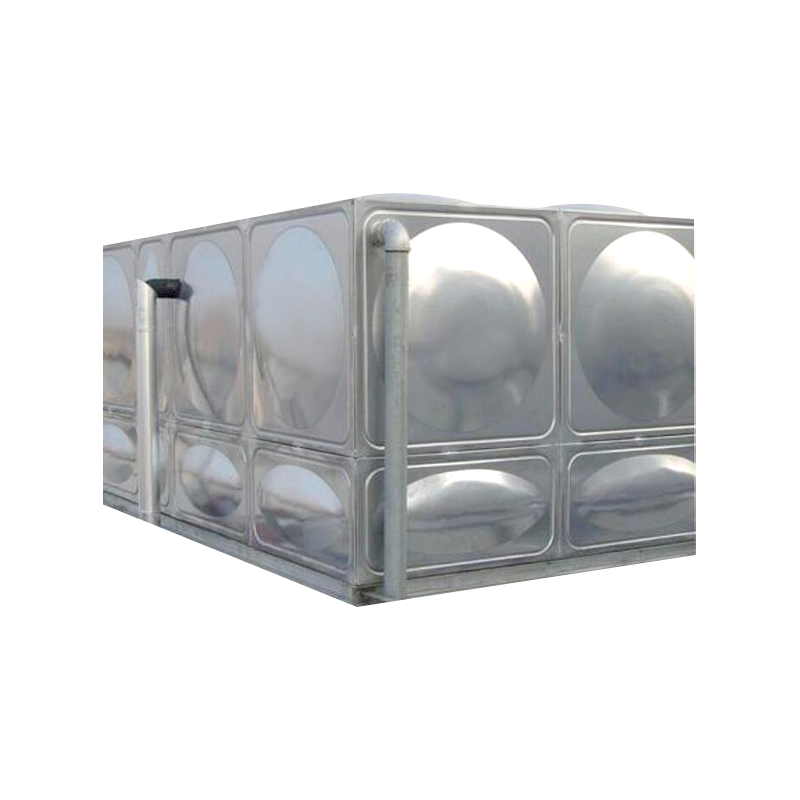
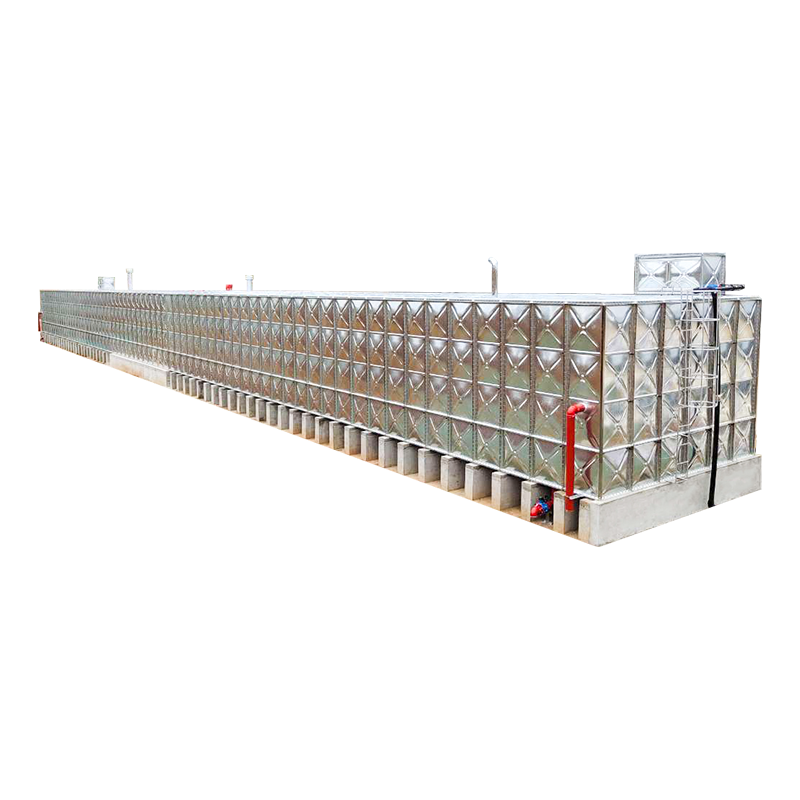
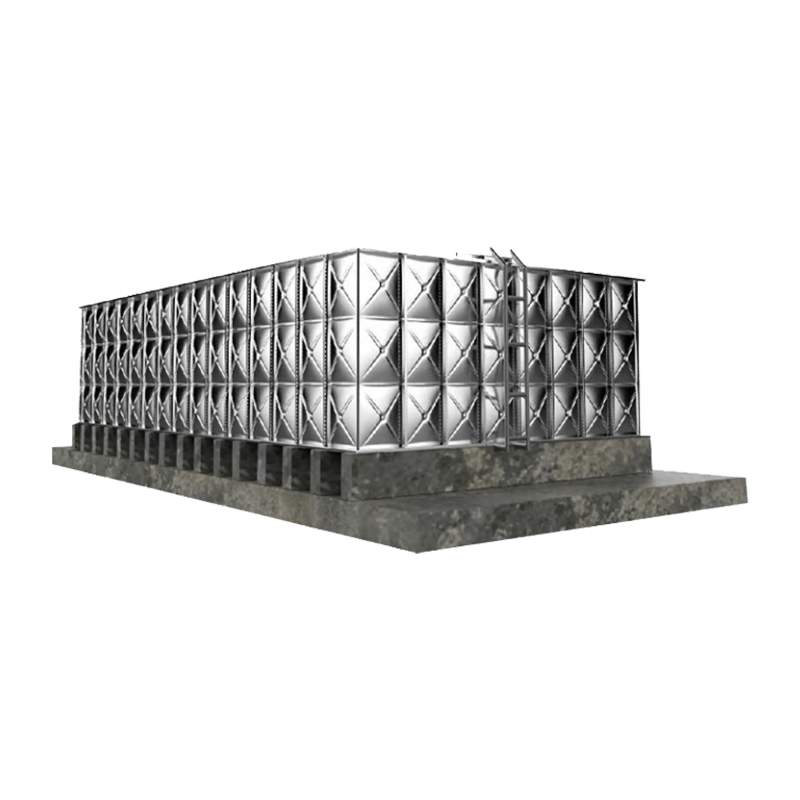
Storage and boosting decisions interact more than most tender documents admit. Panel thickness, water depth and suction conditions decide whether a pump sees clean, air-free water at its inlet. A prefabricated modular approach such as the SW large module prefabricated water tank keeps storage volume flexible on site while holding wall stiffness where the tank is deepest.
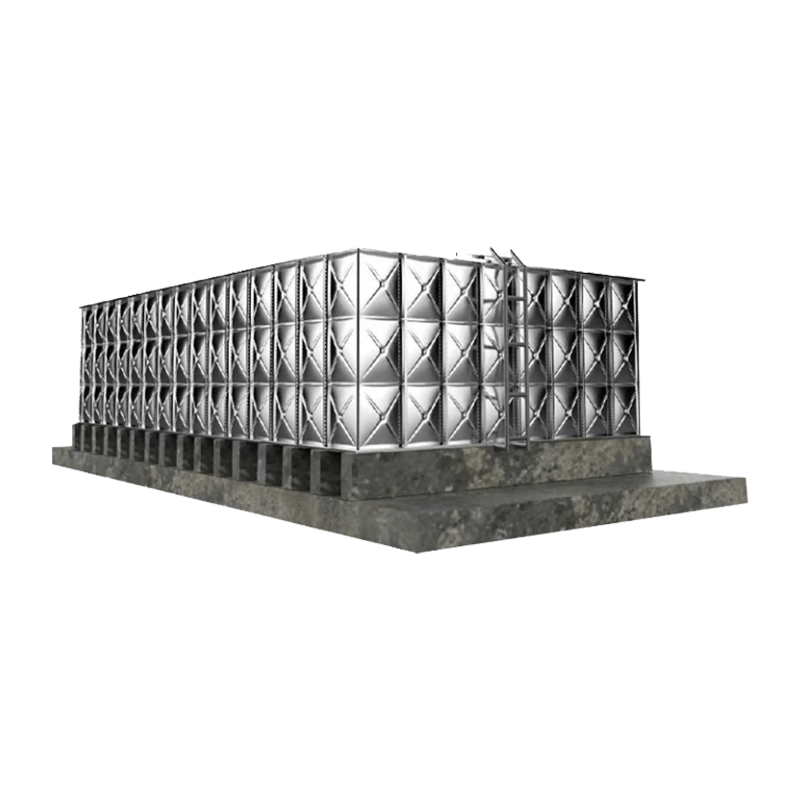 SW Large Module Prefabricated Water TankModular water tank with selectable plate thicknesses and SW models, supporting flexible site storage and stable pump suction.View Product →
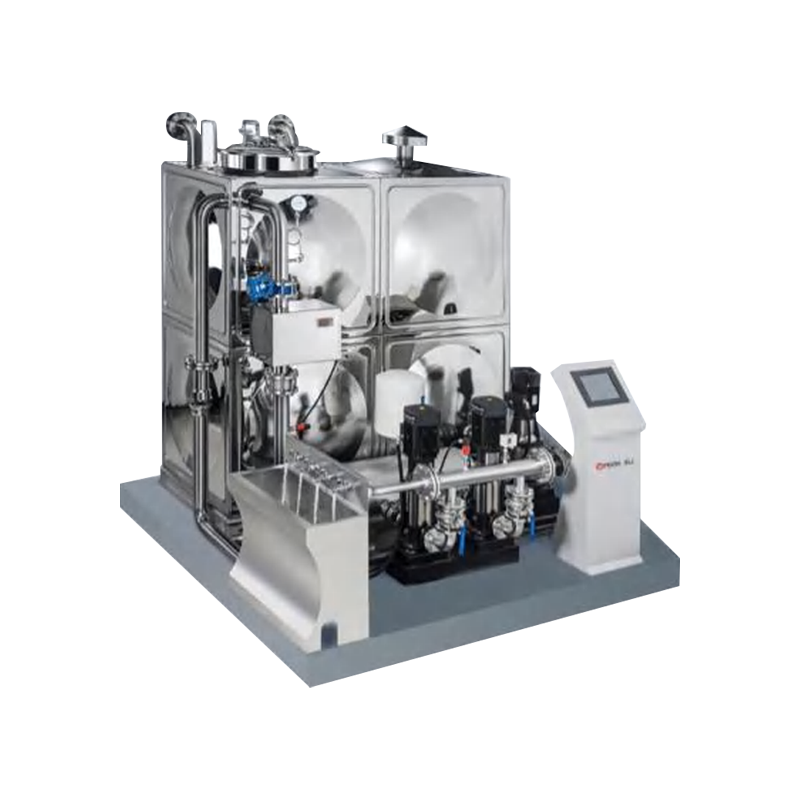
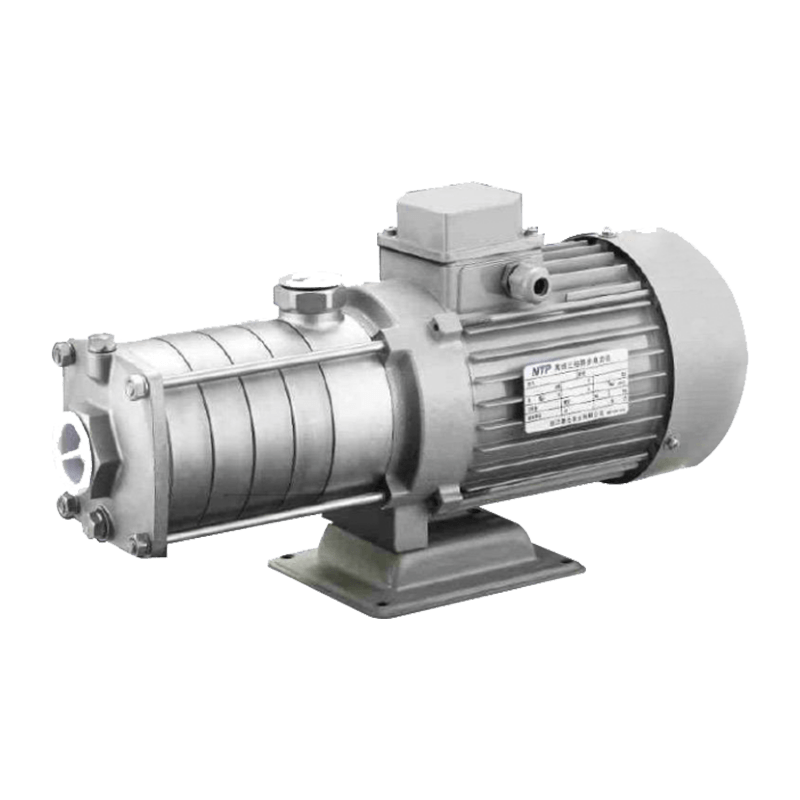
On the boosting side, a tank-type configuration is the usual answer where the municipal main cannot be drawn down far: water enters a break tank first, then gets boosted by variable-frequency pumps, so the main never sees negative pressure while its available head is still used.
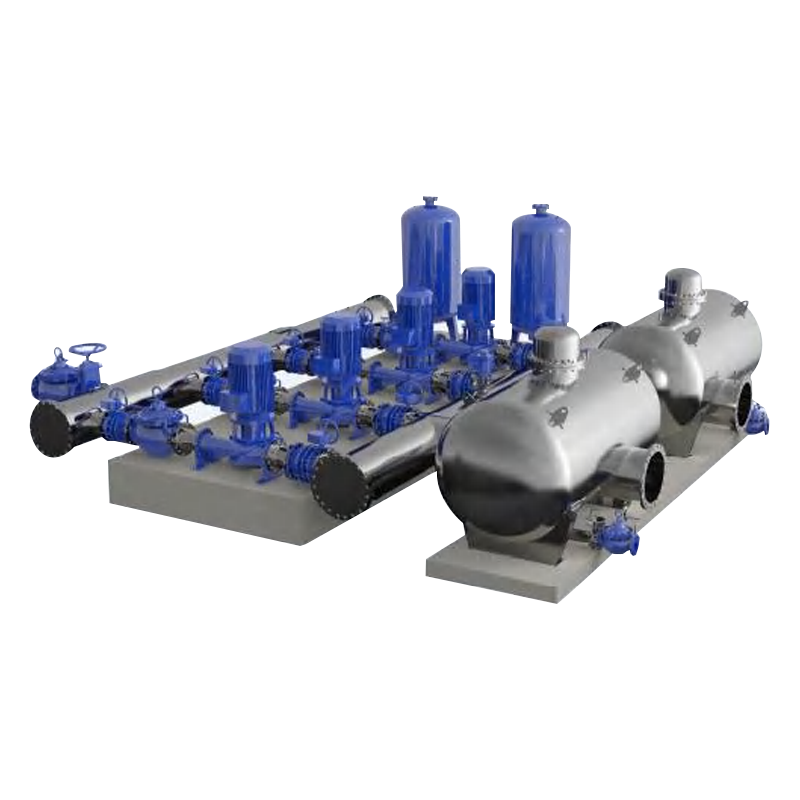 Digital Variable-Frequency Tank-Type Non-Negative Pressure Pump StationTank-type booster station with independent variable-frequency pump control, intelligent monitoring, and non-negative pressure design for stable, energy-efficient water supply.View Product →
A system is only as intelligent as its weakest layer. No drive can compensate for a pump running far from its best efficiency point, or for a tank drawing air through a badly placed suction line.
Energy, water loss and unplanned callouts move first; labour savings and longer equipment life arrive more slowly. Variable-frequency control changes the shape of the daily load curve rather than the peak, so pumps spend most of their hours at reduced speed and pressure is held by adjusting rotation instead of throttling valves.
The chart below summarizes reductions reported against a constant-speed baseline measured on the same load profile.
Method note: these are project-level averages, not guarantees. Actual results depend on pump selection, pipe friction, tank turnover and the shape of your daily demand curve. Meter your own station for thirty days before and after any change and compare kilowatt hours per cubic metre delivered at the same delivery pressure.
Three demand profiles cover most projects: domestic-only supply, domestic supply with a fire reserve, and drainage or sewage lifting. Choosing the wrong configuration costs more than choosing a larger one, because the mismatch shows up as short cycling, stagnation or a permanently running standby pump.
| Profile | Typical configuration | Dominant sizing input | Common mistake |
| Residential and commercial domestic | Tank-type non-negative-pressure station with variable-frequency pumps | Peak-hour flow and municipal inlet pressure | Sizing on average flow instead of peak hour |
| Domestic plus fire reserve | Integrated domestic and fire pumping station sharing one stored volume | Fire reserve volume and daily turnover rate | Letting reserve water sit without turnover |
| Basement and low-lying drainage | Sewage lifting device with submersible pumps | Inflow rate, lift height, solids content | Oversizing pumps and creating short cycles |
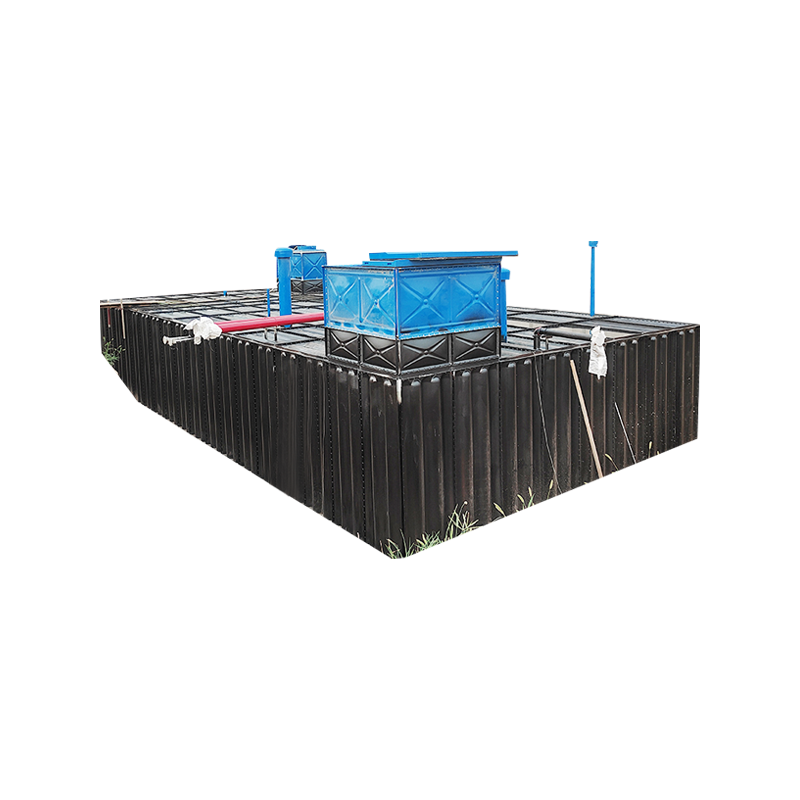
| Large fire reserve | High-capacity modular firefighting water tank, 1100 tonne class | Fire duration and refill rate | Underestimating panel stiffness in deep tanks |
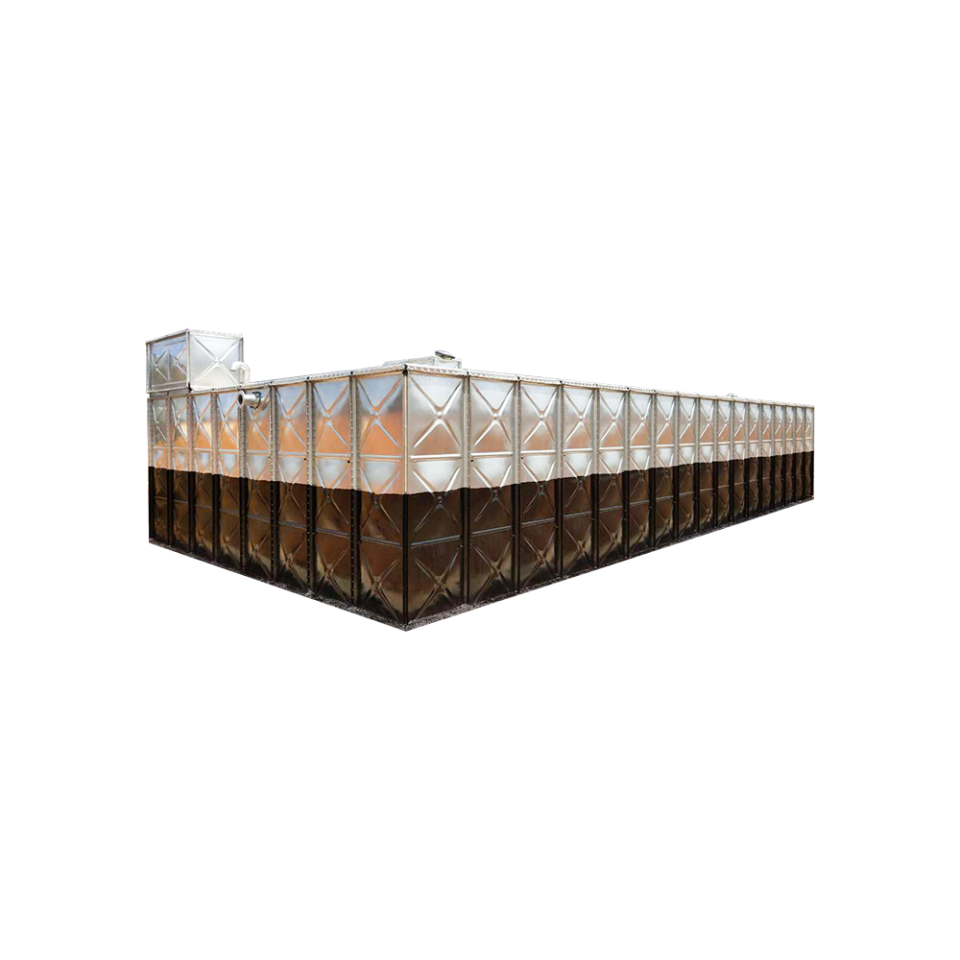
Where a building needs both domestic water and a fire reserve, a single integrated station shares one stored volume and keeps the reserve turning over instead of letting it sit for months.
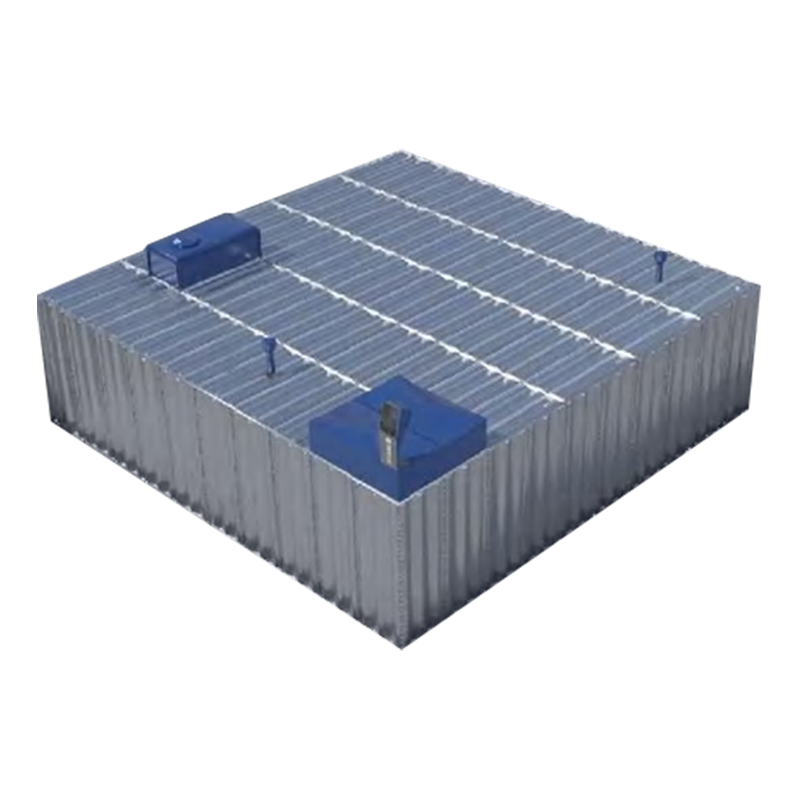 Integrated Domestic and Fire Protection Pumping StationIntegrated domestic and fire pumping station with prefabricated modules, intelligent monitoring, and pressure stabilizing pump operation for combined water demands.View Product →
Fire reserve water that never turns over is a water quality problem waiting to be discovered at the next inspection. Integrated domestic and fire stations solve it by design rather than by procedure.
Four specification decisions predict most of the outcome: tank material, pump selection point, control logic and sensor placement. Everything else is detail.
For potable water, 304 stainless steel remains the practical default, with 316 reserved for chloride-rich or industrial environments. Hot-dip galvanized steel with a zinc layer of 70 micrometres or more competes on first cost where water is not for drinking. Panel thickness must be read together with water depth, not chosen from a flat table, because pressure at the base of a four metre tank is roughly double that of a two metre tank.
Select the duty point near the pump best efficiency point at the most common flow, not at the theoretical peak. An oversized pump cycles, loses efficiency and wears seals faster. The standby pump should be a full-duty spare, not a smaller unit, and the control logic should rotate the lead pump on a schedule so both units accumulate similar hours.
The pressure transmitter belongs downstream of the common discharge header, not on a branch that only serves part of the building. Minimum pump speed must be set above the point where the pump stops generating head, and dry-run protection must be wired to stop the drive, not merely to raise an alarm. The drive-level behaviour behind these choices is worth reading up on before the control narrative is written; this technical note on the benefits of intelligent variable frequency control covers the fundamentals.
Most first-quarter failures are sizing and installation problems rather than software problems. The six below account for the majority of callouts on new installations.
If a station needs manual intervention within its first month of operation, the problem is almost always a sizing assumption rather than a controller setting, and adjusting parameters will not fix it.
Compare suppliers on engineering accountability, not catalog breadth. A manufacturer that builds tanks, pumps and control panels in one facility absorbs the interfaces; a trading company forwards them to you. Four checks separate the two quickly.
For a project-specific review of tank volume, pump selection and control logic, arrange a project review with the engineering team before the tender documents are frozen rather than after.
Intelligent water supply equipment is specified correctly when one party can answer for the pressure at the furthest tap, the quality of the stored water and the energy recorded on the meter.
A tank-type non-negative-pressure station separates the building from the main by drawing water into a break tank and then boosting it, so the served pressure no longer depends on main pressure. Direct-connection units have no break tank and therefore need a minimum inlet pressure, typically around 0.1 MPa, to operate safely.
Yes. An integrated domestic and fire pumping station shares one stored volume and maintains the fire reserve as a dedicated portion of it. The reserve must still be protected against stagnation, and local code determines whether physical separation between domestic and fire connections is required in your jurisdiction.
Plan on tank inspection and cleaning, seal and panel checks, pump vibration and current readings, transmitter calibration, and an annual review of drive parameters. Once the monitoring layer is active, most of this becomes condition-based scheduling instead of a fixed calendar, which is where the labour reduction on the chart above comes from.
Meter the station for thirty days before and after the change and compare kilowatt hours per cubic metre delivered at the same discharge pressure. Instantaneous power readings taken during a site visit prove nothing, because they capture one moment of a load curve that varies by hour and season.
Related Products

Contact us
Headquater Address
Room 901, Building 17, Lane 1088, Shen Hong Road, Minhang District, Shanghai
Factory Address
No. 1, Mingxing North Road, Tech Innovation Park, Jianhu County, Yancheng, Jiangsu, P. R. China
Amy@mxwatersupply.com
Amy@mxwatersupply.com
Telephone(Whatsapp/Wechat)
+86-18051685983
QR CODE

 English
 Français