Jun 05, 2026
Content
Water storage tanks are classified by material, structural configuration, pressure rating, and application. Understanding the differences between tank types prevents costly specification errors and ensures the selected tank matches both the performance requirements and the regulatory environment of the installation.
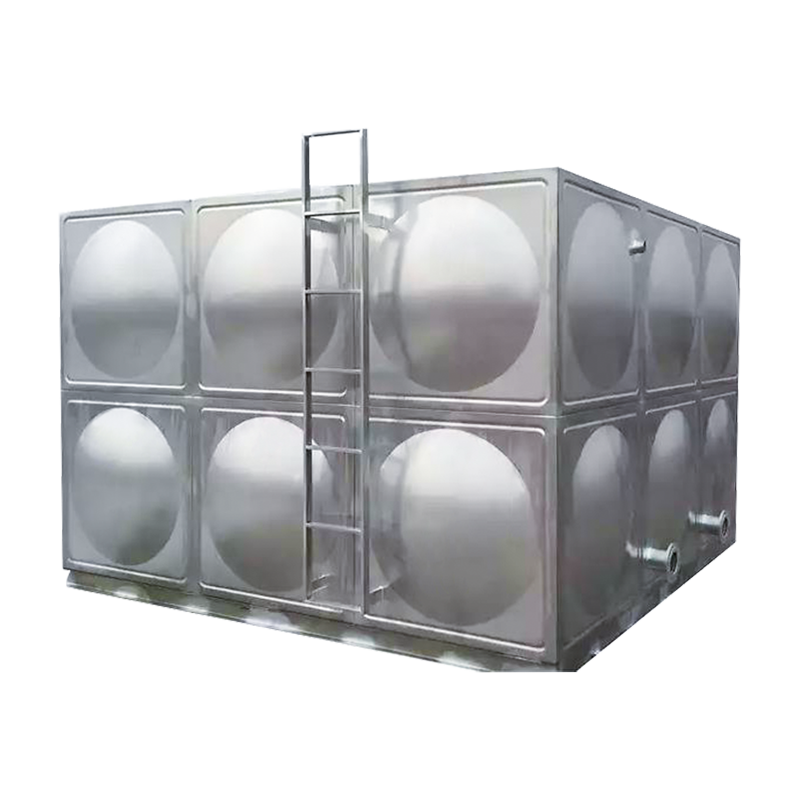
Stainless steel tanks (304 and 316 grades) are the premium choice for potable water, food-grade applications, and any installation requiring long service life without internal lining or coating maintenance. The passive chromium oxide surface resists corrosion without any additional treatment, making stainless tanks the lowest-maintenance option across a 30–50 year service life.
Polyethylene (HDPE or LLDPE) tanks dominate the low-cost residential and agricultural market. They are lightweight, inexpensive, and available off the shelf in a wide range of sizes. Their limitations are UV degradation over time (which causes embrittlement and discoloration), temperature sensitivity (HDPE tanks soften above 60 °C), and a service life of 10–15 years in outdoor installations before replacement is typically needed.
GRP (glass-reinforced plastic / fibreglass) tanks offer a middle ground — longer service life than polyethylene and lower cost than stainless steel. Their gel coat inner surface can degrade and release particles into stored water over time, requiring periodic inspection and recoating in potable water service.
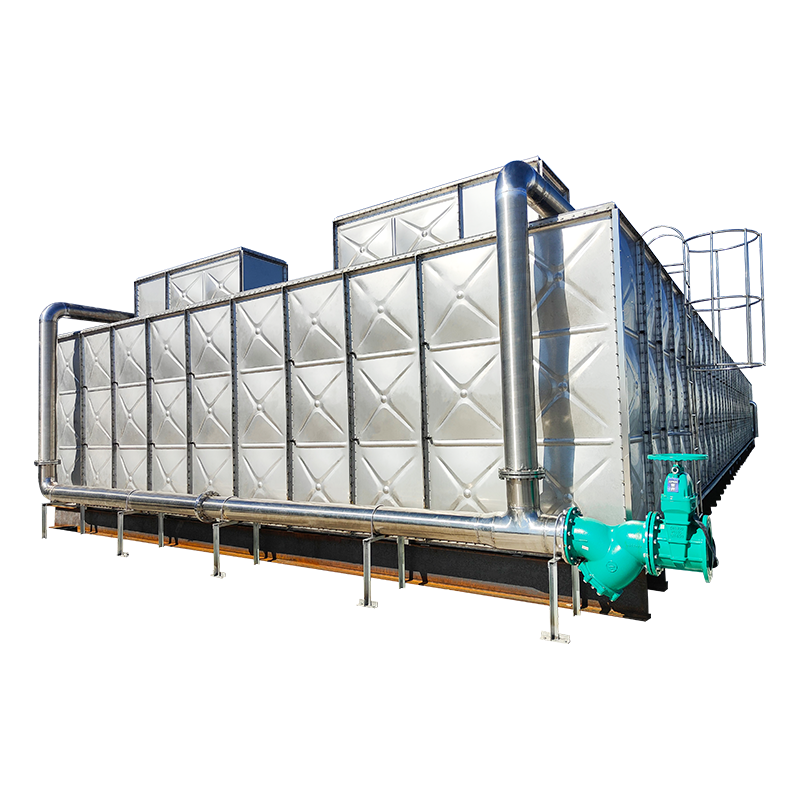
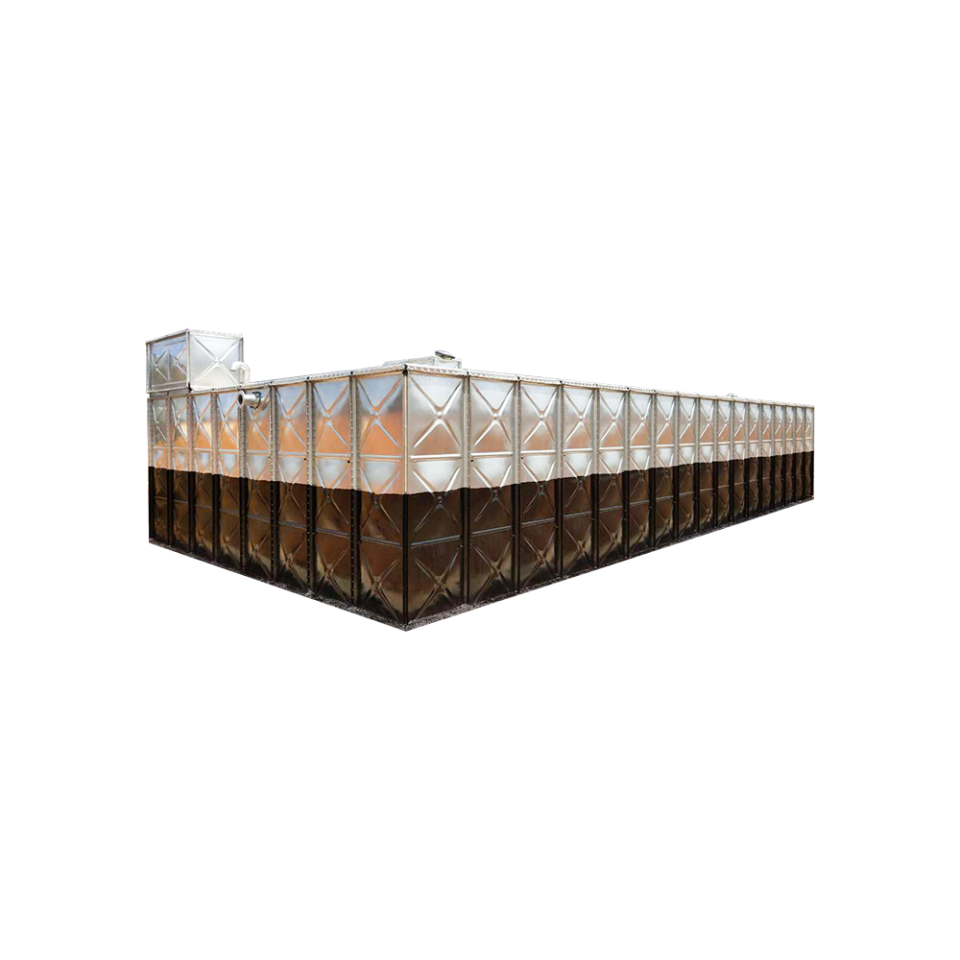
Carbon steel tanks, either factory-coated bolted panel or welded with epoxy lining, are the standard for large-volume non-potable industrial water storage where the volume economics favor steel over stainless but where plastic or GRP would be structurally inadequate at scale.
Beyond material, tank configuration determines how the tank is installed and where it fits in the hydraulic system. Atmospheric (open-top or vented) tanks store water at ambient pressure and rely on gravity or a booster pump for supply pressure. Pressure tanks — covered separately below — store water under elevated pressure to maintain system pressure without continuous pump operation. Elevated tanks use gravity head from their installation height to generate supply pressure. Underground tanks are buried cisterns used where surface space is unavailable, typically constructed from reinforced concrete, GRP, or polyethylene.
A stainless water pressure tank — also called a pressure vessel, hydropneumatic tank, or expansion tank depending on the application — operates fundamentally differently from an atmospheric storage tank. Rather than simply holding a volume of water at ambient pressure, a pressure tank maintains a pre-charged air cushion that stores potential energy and uses it to sustain water pressure in the distribution system without requiring the pump to run continuously.
In a bladder-type stainless steel pressure tank, a flexible rubber bladder separates the water from the pre-charged air chamber. When the pump fills the tank, water enters the bladder, compressing the air charge and raising the system pressure. When a tap opens, the compressed air drives water out of the bladder without the pump running, until pressure drops to the cut-in setpoint and the pump cycles on again. This arrangement reduces pump cycle frequency by 80–90% compared to a system without a pressure tank, dramatically extending pump life by reducing the number of motor starts per hour — the most damaging operational event for pump motors and mechanical seals.
A diaphragm-type stainless pressure tank uses a fixed rubber diaphragm welded across the tank interior rather than a replaceable bladder. Diaphragm tanks are typically used for smaller pressure vessels (under 100 liters) in residential boosting and heating system applications.
Pressure tanks are subject to cyclic mechanical loading — every pump start pressurizes the tank, every draw-down depressurizes it. Over a tank's service life in a busy commercial building or industrial facility, this means tens of thousands of pressure cycles. Stainless steel's combination of high tensile strength, corrosion resistance, and fatigue resistance makes it the material of choice for pressure tanks in potable water service, pharmaceutical water systems, food processing, and any application where carbon steel's susceptibility to internal corrosion cannot be managed by coating alone under cyclic pressurization.
Stainless pressure tanks for water supply applications are pressure-rated from as low as 6 bar (87 psi) for residential and light commercial use up to 16 bar (232 psi) for industrial boosting stations and high-rise building supply. All pressure vessels above certain volume-pressure thresholds must be designed and certified to ASME Section VIII, PED (European Pressure Equipment Directive), or equivalent national standards — a requirement independent of material selection.
Pressure tank sizing is determined by the draw-down volume required between pump start and pump cut-in — not by total water storage volume. The draw-down volume must be large enough to supply typical demand events (a toilet flush, a short shower draw) without triggering a pump start. For residential applications, a tank providing 20–40 liters of draw-down is standard with most modern variable-speed pump sets. Fixed-speed pump systems with conventional pressure switches require larger tanks — typically 80–200 liters for a 4-bedroom home — to prevent short-cycling. Undersizing the pressure tank is the single most common installation error; it results in rapid pump cycling, overheating, and premature pump failure within 2–5 years of installation.
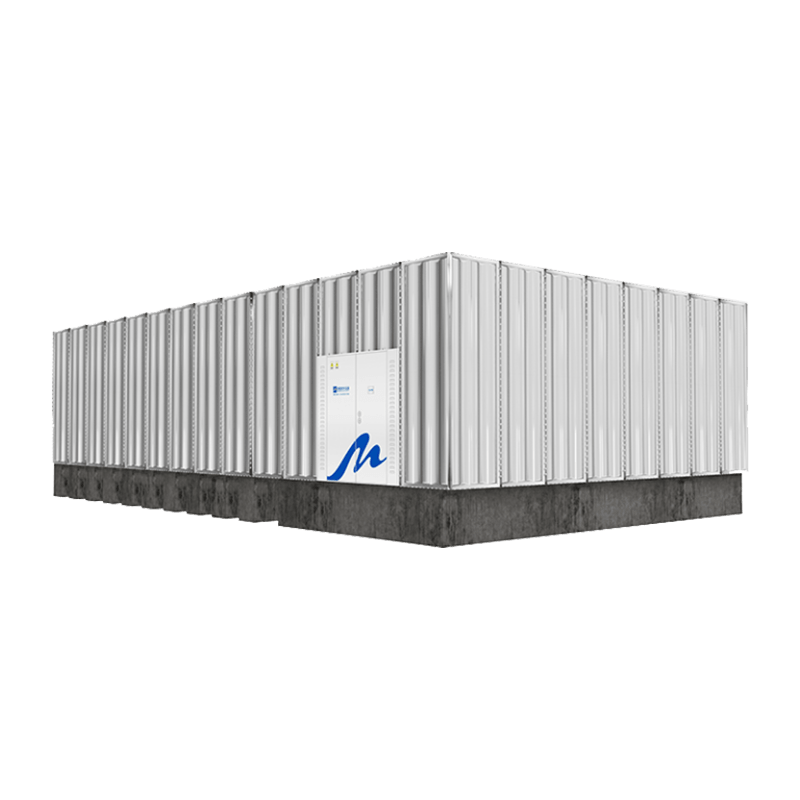
Water storage tanks for fire protection serve a fundamentally different function from domestic or process supply tanks. They are life-safety components required to deliver a defined flow rate and volume for a specified duration under emergency conditions — and their design, installation, and maintenance are governed by codes that carry legal force regardless of the building owner's preferences.
In the United States, fire protection water storage tanks are governed primarily by NFPA 22 (Standard for Water Tanks for Private Fire Protection). NFPA 22 defines construction requirements, capacity determination methods, installation requirements (including freeze protection), inspection schedules, and the design of tank accessories (fill valves, emergency fill connections, outlet valves, and heating systems). Local Authority Having Jurisdiction (AHJ) approval is required in addition to NFPA compliance in most jurisdictions.
International equivalents include EN 12845 (European standard for fixed firefighting systems), AS 2304 (Australia/New Zealand water storage tanks for fire protection), and equivalent national codes in other markets. These standards differ in detail but share the fundamental requirement that fire protection tanks must hold a dedicated reserve volume that cannot be drawn down by any non-fire-service connection.
Fire protection tank volume is calculated from the hydraulic demand of the sprinkler system or hydrant system it serves, multiplied by the required duration of supply. A light hazard sprinkler system for a small commercial building might require 30 minutes of supply at 150 gpm — producing a minimum tank volume of 4,500 gallons (17,000 liters). An ordinary hazard system for a warehouse with a design demand of 500 gpm and a 60-minute duration requires a 30,000-gallon (114,000-liter) dedicated reserve. The engineer of record calculates these requirements from the hydraulic calculations for the fire suppression system, and the tank is sized to meet that calculated volume with a margin specified by the applicable standard.
NFPA 22 permits fire protection tanks to be constructed from steel (welded or bolted), reinforced concrete, wood (for existing installations), and composite materials meeting the standard's structural requirements. Stainless steel and coated carbon steel are the most commonly specified materials for new installations in most markets. Stainless steel is preferred where the tank interior will be used for dual-purpose storage (fire reserve plus domestic supply) because it avoids the water quality concerns associated with carbon steel linings, and where the tank is located in a corrosive environment such as a coastal industrial site. Factory-coated bolted steel tanks (glass-fused-to-steel or epoxy-coated) are widely used for large-volume fire tanks above 50,000 gallons where welded stainless steel would be cost-prohibitive.
Large water storage tanks — the cylindrical steel structures that define the skyline of industrial facilities, municipalities, and commercial campuses — serve a range of functions that are not always obvious to those unfamiliar with water infrastructure. Understanding what large tanks do clarifies why they are sized as they are and why certain material and configuration specifications are required.
Municipal water towers and ground-level clearwell tanks equalize the difference between a treatment plant's steady production rate and the highly variable hourly demand from the population it serves. Water demand peaks in the morning and evening by a factor of 2–4 times the daily average; without storage, the treatment plant and distribution pumps would need to be sized for peak demand rather than average demand — a capital cost multiple of 2–4 times the storage-based design. The water tower also maintains system pressure passively: the elevation of the stored water creates hydraulic head that supplies homes and businesses without continuous pump operation during normal demand periods.
Manufacturing facilities, power plants, and data centers maintain large on-site water storage for two distinct reasons: process continuity (a cooling tower or chiller system that runs out of makeup water can shut down production in minutes) and emergency capacity (fire suppression systems, emergency cooling, and blast deluge systems require volumes that municipal supply connections cannot deliver at the required instantaneous flow rate). Industrial water storage tanks in this category typically range from 50,000 to 2,000,000 gallons, held in welded steel or bolted steel panel tanks at ground level.
Large agricultural operations store water during periods of surplus — winter rainfall, off-peak irrigation allocation windows, or flood events — for use during peak demand periods when surface water availability or allocation limits would otherwise restrict irrigation. Tanks in this application range from 10,000 to 500,000 gallons and are typically constructed from galvanized corrugated steel with a liner, or from bolted stainless panel systems where water quality maintenance is important for drip irrigation systems sensitive to contamination.
A 10,000-gallon (approximately 38,000-liter) steel water tank is a common size for commercial fire protection reserves, agricultural storage, and industrial process buffer tanks. It is large enough to require professional installation but small enough to be a single-piece welded unit rather than a field-assembled structure. Understanding what drives the price at this scale helps buyers evaluate quotes and avoid comparing specifications that are not equivalent.
Indicative pricing for a 10,000-gallon steel water tank (tank only, excluding foundation, installation, and accessories) as of current market conditions:
| Tank Type | Approximate Price Range (USD) | Notes |
|---|---|---|
| Welded carbon steel, epoxy-lined | $8,000 – $18,000 | Most common for fire protection and non-potable industrial |
| Bolted steel, glass-fused coating | $12,000 – $25,000 | Field-assembled; suitable for sites with limited crane access |
| 304 stainless steel, welded | $22,000 – $45,000 | Potable water, food/pharma; price varies significantly with steel market |
| 304 stainless, bolted panel | $18,000 – $35,000 | Modular; can be assembled in confined spaces; includes frame |
Steel commodity price is the largest variable in stainless tank pricing — 304 stainless coil prices have ranged from $1,800 to $3,500 per metric ton over the past five years, and this volatility flows directly into finished tank pricing. A quote obtained in one quarter may differ from a quote obtained six months later by 15–25% for reasons entirely outside the fabricator's control. Locking in pricing with a purchase order is strongly advisable for large capital projects where budget certainty is required.
Beyond material cost, the principal factors that increase tank price at the 10,000-gallon scale are: ASME or NSF certification (adds testing, documentation, and third-party inspection cost); accessory package specification (level indicators, access hatches, vents, overflow assemblies, sample ports, and heating elements add $2,000–$8,000 to the base tank price depending on scope); surface finish requirements (a standard 2B mill finish is standard; No. 4 brushed or electropolished finishes for food or pharmaceutical service add 10–20% to fabrication cost); and expedited delivery, which carries a premium of 15–30% on standard lead times of 8–16 weeks for welded stainless tanks at this size.
Related Products

Contact us
Headquater Address
Room 901, Building 17, Lane 1088, Shen Hong Road, Minhang District, Shanghai
Factory Address
No. 1, Mingxing North Road, Tech Innovation Park, Jianhu County, Yancheng, Jiangsu, P. R. China
Amy@mxwatersupply.com
Amy@mxwatersupply.com
Telephone(Whatsapp/Wechat)
+86-18051685983
QR CODE

 English
 Français