Aug 19, 2026
Content
A well pressure tank stores a reserve of water under pressure so that a well pump doesn't have to switch on every time someone opens a faucet. Without this reserve, a well pump would cycle on and off dozens of times a day, and that kind of short-cycling is what wears out pump motors, burns out start capacitors, and shortens the life of the entire well system by years. The tank absorbs the pump's output, holds it under compressed air pressure, and releases it steadily as water is used, delivering consistent flow to fixtures without the pump running continuously.
Beyond protecting the pump, the tank also acts as a buffer against pressure surges (sometimes called water hammer) and smooths out the sharp pressure drop that would otherwise occur the instant a faucet, shower, or irrigation valve opens. In practical terms, a well tank is what turns raw pumped water into a stable, house-ready water supply — it's the component that determines whether a well-fed home feels like it's on municipal water or feels like it's fighting its own plumbing every time two fixtures run at once.
A properly sized pressure tank for well water also reduces energy costs, since motor starts consume disproportionately more electricity than continuous running. A tank that's undersized for the household's peak demand forces the pump to restart constantly, while an oversized tank sits mostly idle and adds unnecessary upfront cost — matching tank drawdown capacity to typical fixture demand is the real design goal, not simply buying the largest tank available.
Modern well tanks are almost universally "pre-charged" or "bladder" tanks, and understanding how the pre-charge works explains most of the troubleshooting logic used on these systems. Inside the tank, a flexible diaphragm or bladder separates two chambers: one filled with compressed air (the pre-charge) and one that fills with water pumped from the well. Before any water enters the tank, the air side is charged to a specific pressure — typically set a few PSI below the pump's cut-in pressure.
When the well pump starts, water is forced into the water-side chamber, compressing the air on the other side of the bladder further. As the air compresses, it pushes back against the water, which is what keeps the water pressurized and available to the plumbing system without the pump needing to run. As household fixtures draw water out of the tank, the compressed air expands, pushing the remaining water out through the plumbing at a steadily decreasing pressure — until the pressure drops low enough to trigger the pump's pressure switch, which restarts the pump and refills the tank.
This cycle — fill, use, drop, refill — repeats continuously, and the volume of usable water delivered between pump cycles is called the tank's "drawdown." A larger air charge relative to tank size, combined with a wider gap between cut-in and cut-out pressure, produces a larger drawdown and fewer pump cycles per day, which is generally the goal for pump longevity.
Older-style tanks without a bladder work differently: they hold air and water in the same chamber with no physical separation. These galvanized "air-over-water" tanks rely on the air staying trapped above the water line, and because there's no barrier, that air gradually dissolves into the water and needs to be manually replenished — a maintenance step modern bladder tanks eliminate almost entirely.
The choice between a bladder-style tank and a traditional galvanized tank without a bladder comes down to maintenance tolerance, tank lifespan, and how consistent the water pressure needs to be over time.
In a bladder tank, the air charge is permanently sealed off from the water by a rubber diaphragm or bladder, so the air can't dissolve into the water over time. This means the pre-charge pressure stays stable for years without adjustment, water quality isn't affected by direct air contact, and the tank requires essentially no routine maintenance beyond an occasional pressure check. Bladder tanks for water storage are now the standard choice in most residential and light commercial well installations because they combine long service life with minimal upkeep.
Older galvanized tanks store air and water in direct contact within a single steel chamber. Over time, the compressed air slowly absorbs into the water and is carried out through the plumbing every time a fixture is used, so the air cushion shrinks and needs to be recharged periodically — often with an air compressor and a manual valve, or an automatic air volume control device on more advanced setups. These tanks are typically less expensive up front and can be built in much larger sizes, which is why they still show up in some commercial and agricultural installations, but they demand far more hands-on attention than a sealed bladder design.
Correct pre-charge pressure is the single most important setting on a well pressure tank, and it's also the one homeowners most often overlook. The tank's air pre-charge should always be set to roughly 2 PSI below the pump's cut-in pressure — the pressure at which the pump switch turns the pump on. Most residential systems run on a 30/50 pressure switch (pump starts at 30 PSI, stops at 50 PSI), which means the tank's air charge should typically read around 28 PSI when the tank is empty of water.
| Pressure Switch Setting | Cut-In Pressure | Cut-Out Pressure | Recommended Tank Pre-Charge |
|---|---|---|---|
| 20/40 | 20 PSI | 40 PSI | 18 PSI |
| 30/50 | 30 PSI | 50 PSI | 28 PSI |
| 40/60 | 40 PSI | 60 PSI | 38 PSI |
To check the pressure, first power down the well pump and open a faucet to drain the tank completely of water — this is essential, because measuring air pressure while water remains inside the tank gives a false, inflated reading. With the tank empty, use a standard tire-style pressure gauge on the Schrader valve located on top of the tank (the same type of valve found on a car or bicycle tire) and compare the reading to the target pre-charge for the installed pressure switch. If the reading is low, air can be added with a bicycle pump or small compressor; if it's significantly low, that's often an early sign of a bladder leak rather than simple air loss over time.
A waterlogged well tank is one of the most common tank failures, and it happens when the air charge is lost — usually because the bladder has ruptured or developed a slow leak — allowing water to fill nearly the entire tank instead of just the water-side chamber. With little to no air cushion left to push against, the tank can no longer maintain steady pressure, and the pump is forced to cycle on almost every time a faucet opens, sometimes multiple times per minute under continuous use like a shower or hose.
The most reliable ways to tell if a well pressure tank is bad include:
A single low pre-charge reading doesn't automatically mean the tank needs replacing — sometimes it's simply lost air gradually and can be recharged. But if the tank needs re-pressurizing repeatedly within a short period, or if it stays waterlogged even after recharging, the bladder has almost certainly failed and the tank itself needs to be replaced rather than repeatedly serviced.
Well tanks installed in unheated basements, crawl spaces, outbuildings, or exposed utility rooms are vulnerable to freezing in cold climates and to condensation-driven corrosion in humid ones, which is why well tank insulation is worth planning into any installation that isn't in a conditioned space. A tank that freezes can rupture internally, damage the bladder, or crack fittings and connected piping, leading to a failure that's far more expensive than the insulation would have cost.
Common insulation approaches include wrapping the tank body in fitted foam tank jackets or blankets designed specifically for pressure tanks, building a simple insulated enclosure around the tank and its fittings, and insulating the surrounding pipe runs and pressure switch, which are often more vulnerable to freezing than the tank body itself since they hold less thermal mass. In consistently cold environments, some installations add low-wattage heat tape along exposed piping as a supplemental measure alongside insulation, particularly on the section between the well casing and the pressure tank where water sits stagnant between pump cycles.
Ventilation still matters even with insulation in place — a fully sealed enclosure in a humid space can trap condensation against the tank shell, which accelerates corrosion on galvanized tanks in particular. The goal with insulation is to slow temperature swings and block direct cold air exposure, not to create an airtight box around the tank.
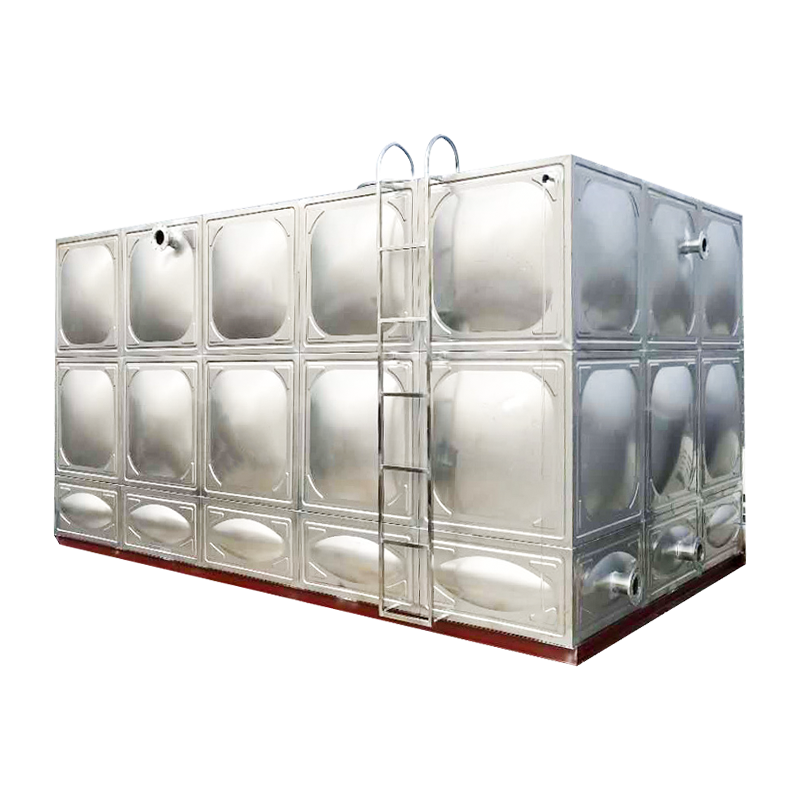
Well systems are often discussed alongside two related but distinct components: the water storage tank pump setup, which moves water from the well or a cistern into the pressure tank, and separate bulk holding tanks used where well yield is low or inconsistent. A water well holding tank — sometimes a large cistern installed between the well and the pressure system — stores a bigger volume of raw water so the pump isn't drawing directly against a slow-recovering well, and it's a common solution for low-yield wells that can't keep up with peak household demand on their own.
For homes without a well, or as a supplemental source, an above ground water tank for house use serves a similar storage role — collecting and holding water (from a well, rainwater catchment, or delivered supply) at a location above or near the home, then feeding it into a pressure tank and pump system for distribution. These above-ground tanks are typically easier to inspect, maintain, and insulate than buried cisterns, though they require more careful freeze protection in cold climates since they're fully exposed to ambient temperatures.
When sizing any of these components — pressure tank, holding tank, or pump — the deciding factor should always be peak simultaneous demand (how many fixtures might run at once) rather than average daily usage, since it's the peak moments that expose an undersized system through pressure drops, pump short-cycling, or a holding tank running dry before the well can recover.
Related Products

Contact us
Headquater Address
Room 901, Building 17, Lane 1088, Shen Hong Road, Minhang District, Shanghai
Factory Address
No. 1, Mingxing North Road, Tech Innovation Park, Jianhu County, Yancheng, Jiangsu, P. R. China
Amy@mxwatersupply.com
Amy@mxwatersupply.com
Telephone(Whatsapp/Wechat)
+86-18051685983
QR CODE

 English
 Français