Aug 09, 2026
Selecting a modular water storage tank requires a systematic evaluation of capacity needs, material compatibility, installation conditions, and the specific regulatory demands of the intended application. The right choice balances initial cost against decades of reliable service, and it starts with an accurate modular water tank capacity calculation rather than simply sizing to fit the available space. Whether the tank will serve a commercial building's daily water supply, act as a dedicated fire reserve, or buffer an industrial process, each of the following factors directly shapes the final specification. Ignoring any one of them can lead to premature coating failure, insufficient flow during a fire event, or water quality non-compliance—all of which are far more expensive to fix than a thorough upfront analysis.
Content
An accurate modular water tank capacity calculation is the foundation of every other design decision. Under-sizing leads to supply interruptions, while over-sizing wastes capital and increases the footprint unnecessarily. The calculation method differs by application:
A modular tank's capacity can be adjusted later by adding or removing panels, but the initial sizing should still target the likely long-term peak. Panel dimensions—commonly 1,220 mm or 1,000 mm square—create incremental steps in volume, so the capacity will round to the nearest practical size rather than an arbitrary number. Confirm with the manufacturer that the panel size and structural design can accommodate the full static head of the proposed height without requiring excessively thick panels.
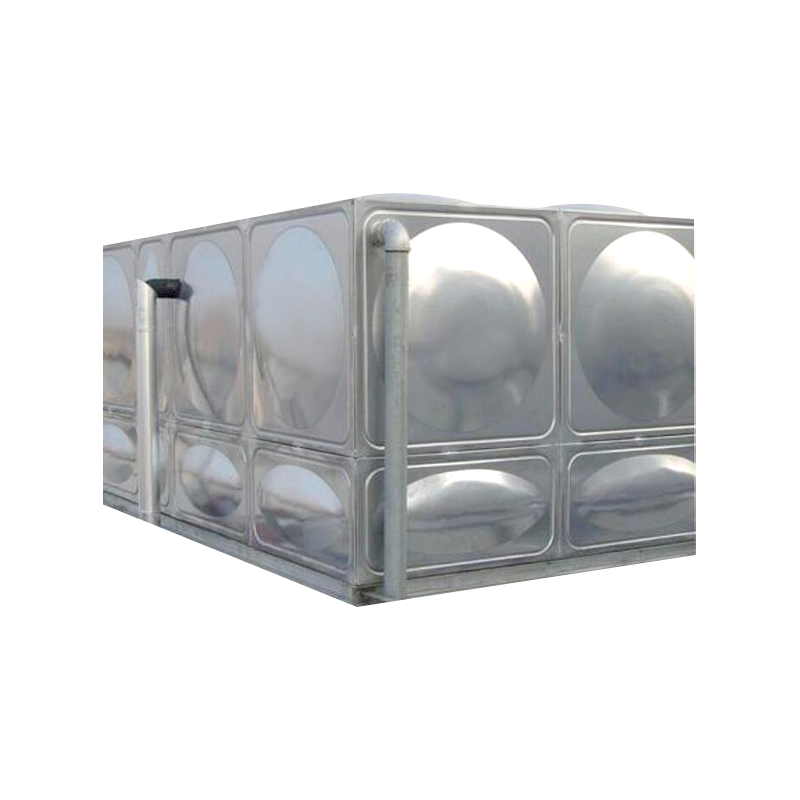
A water tank material comparison is necessary because the stored water chemistry, ambient environment, and maintenance budget all interact with the panel material over decades. The most common comparison pits GRP vs stainless steel water tank options, but glass-fused-to-steel and galvanized steel with epoxy linings are also frequently selected in specific scenarios.
| Criterion | GRP (Glass-Reinforced Plastic) | Stainless Steel (304/316L) |
|---|---|---|
| Corrosion Resistance | Excellent against water and mild chemicals; no electrochemical corrosion | Excellent; 316L resists chlorides up to 1,000 ppm |
| Potable Water Certification | Requires food-grade resin; WRAS/NSF 61 certified options available | Inherently compliant; no leaching |
| Typical Service Life | 20–35 years | 40–60+ years |
| UV Resistance (Above-Ground) | Needs UV-stabilized outer layer or coating | Unaffected by UV |
| Weight per Square Meter | ~15–25 kg | ~30–45 kg (depending on thickness) |
| Relative Installed Cost | Lower initial cost | Higher initial cost, lower long-term maintenance |
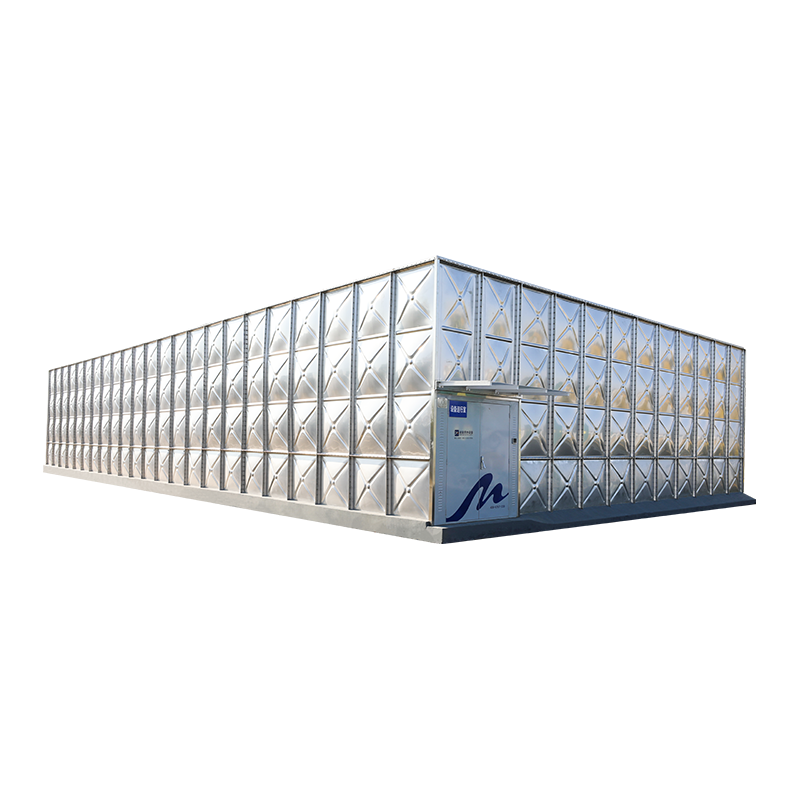
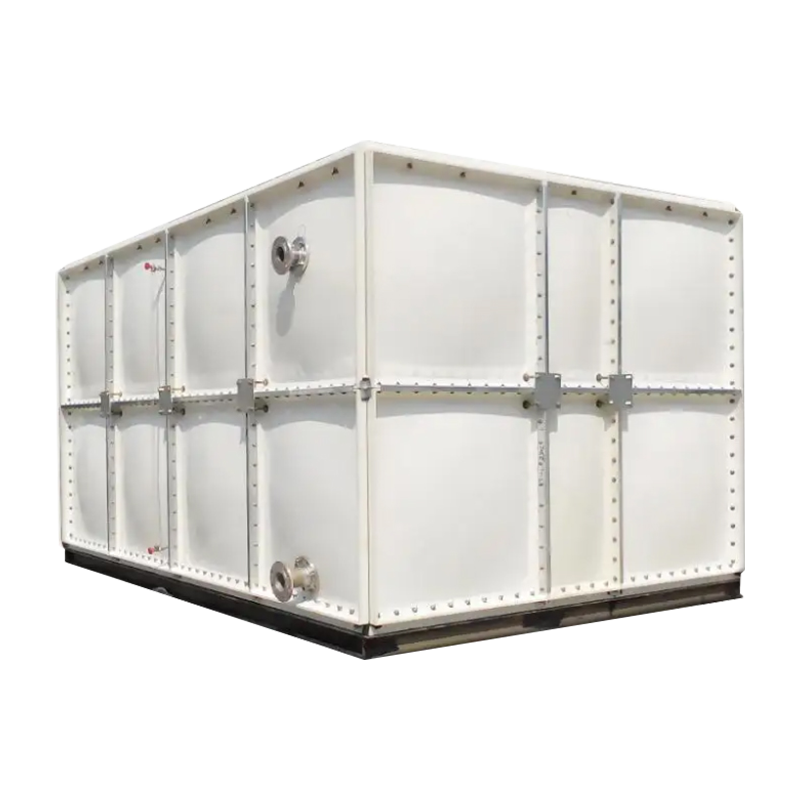
For potable water, stainless steel eliminates concerns about resin chemistry and delivers a smooth, crevice-free surface that simplifies cleaning and disinfection. However, GRP remains a strong choice for applications where the tank will be located in a corrosive atmosphere—such as coastal sites or chemical plants—because it does not rust and is electrically non-conductive, which prevents galvanic corrosion. When comparing GRP vs stainless steel water tank options, consider not just the panel cost but also the foundation and handling: GRP panels are lighter and can sometimes be moved without a crane, while stainless steel panels, though heavier, are more resistant to accidental impact during assembly. Glass-fused-to-steel is a third option that provides a hard, inert fused surface and is often chosen for aggressive industrial liquids or where very high durability is needed.
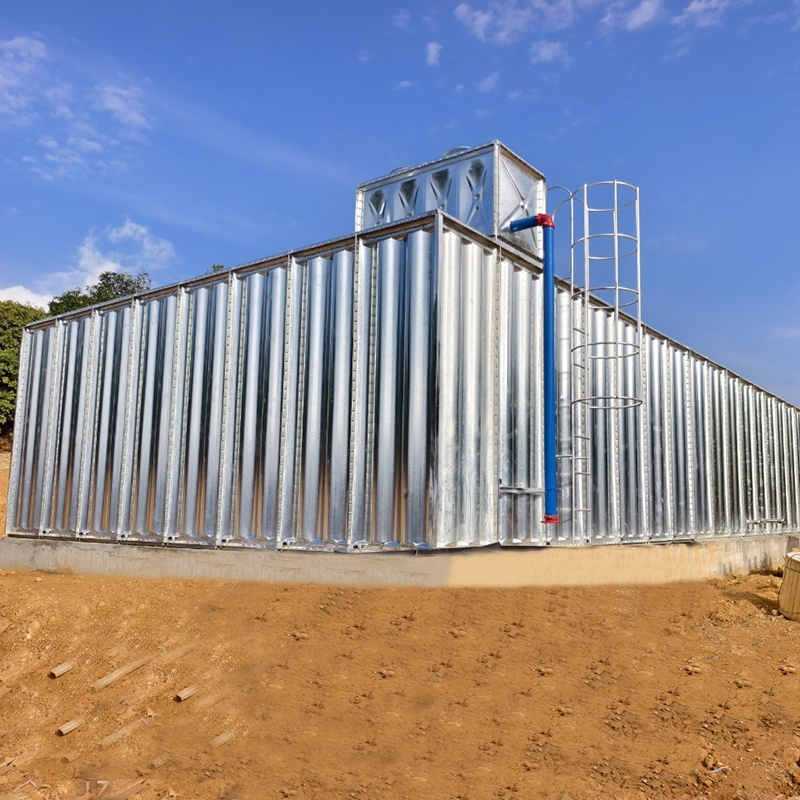
The decision between underground vs above ground water tanks affects not only the tank structure itself but also the excavation, backfill, access for maintenance, and pumping requirements. Above-ground modular tanks are far more common—they are visible, accessible for inspection, and straightforward to drain and clean. They do, however, occupy valuable ground area and are subject to ambient temperature swings, which may necessitate insulation or an internal liner to control condensation and algae growth in potable applications. Above-ground tanks also require a structural base, typically a reinforced concrete ring beam or full slab, engineered for the tank's diameter and the load when full.
Underground modular tanks, by contrast, free up surface space and benefit from stable soil temperatures, which can help maintain water quality by reducing thermal cycling. However, the engineering requirements are significantly more demanding. The tank must withstand soil and groundwater pressure from the outside, in addition to the internal water pressure. Modular tanks designed for underground use typically feature reinforced panel sections and external bracing, and the backfill material must be carefully specified and compacted to avoid uneven loading. Access hatches, vents, and sumps must be extended to the surface, and any leakage detection or pump maintenance requires entry into a confined space. For a water storage tank for commercial buildings located in dense urban areas where land is at a premium, an underground modular tank can be the only viable option, but the installed cost is typically 1.5 to 2.5 times that of the same tank installed above ground.
The modular water tank installation process is one of its strongest selling points, but a successful outcome depends on a well-prepared foundation, correct gasket installation, and proper bolt tensioning. The general sequence for an above-ground tank is as follows:
A typical 200,000-liter above-ground modular tank can be erected and ready for commissioning in 5–7 working days by a trained crew, provided the foundation is already cured. Underground installations take longer due to excavation and backfill steps, but the actual panel assembly time is similar.
Modular water tank maintenance requirements are relatively low compared to welded tanks, because damaged panels can be isolated and replaced individually. However, proactive inspection and cleaning remain essential to achieving the full design service life. A structured maintenance plan should include:
Because a well-maintained modular tank can deliver decades of trouble-free service, it is worth investing in a maintenance contract with a qualified technician who understands the specific panel system and has access to original spare parts. Some manufacturers offer factory-backed maintenance programs that include periodic bolt re-tensioning and coating touch-up, which helps preserve the warranty.
A water storage tank for commercial buildings that doubles as or is dedicated to fire protection must meet specific fire water storage tank requirements that go beyond general water storage. The governing standard depends on the jurisdiction—NFPA 22 in North America, BS EN 12845 in Europe, or AS 2304 in Australia—but core requirements are largely consistent:
For commercial buildings where a combined potable and fire tank is planned, the fire reserve must be protected from stagnation. A solution is to circulate water through the fire storage zone using a small transfer pump, or to install a tank mixer. Any coating or lining used in the fire water zone must be compatible with the possibility of long-term stagnant storage without releasing compounds that could affect sprinkler heads or foam concentrate. Asking the tank manufacturer for documented compliance with the applicable fire standard is a non-negotiable step in the selection process, and the local fire authority should review the tank specification before final approval.
A practical modular water tank selection guide integrates the preceding factors into a logical sequence. Start by quantifying the required capacity and the critical application—potable, fire, process, or combination. Next, evaluate site constraints that will dictate above-ground or underground installation, and measure the available footprint to determine the tank's plan dimensions and height. With the physical envelope defined, select the panel material by matching the stored water chemistry, ambient environment, and required service life. A water tank material comparison that weighs GRP, stainless steel, and glass-fused-to-steel against these specific conditions will surface the most suitable option.
Once materials and size are firm, verify the modular water tank installation process with the manufacturer—confirm foundation specifications, required assembly equipment, and the availability of a certified erection crew. Build the maintenance schedule into the operating budget from the start, and, for fire water applications, engage the authority having jurisdiction early to approve the tank's capacity, fittings, and monitoring provisions. This methodical approach ensures that the selected modular tank not only meets the immediate budget but delivers reliable, code-compliant performance for its entire design life. The factors to consider when choosing a water storage tank are interrelated; the right choice emerges from weighing them together, not from a checklist completed in isolation.
Related Products

Contact us
Headquater Address
Room 901, Building 17, Lane 1088, Shen Hong Road, Minhang District, Shanghai
Factory Address
No. 1, Mingxing North Road, Tech Innovation Park, Jianhu County, Yancheng, Jiangsu, P. R. China
Amy@mxwatersupply.com
Amy@mxwatersupply.com
Telephone(Whatsapp/Wechat)
+86-18051685983
QR CODE

 English
 Français