Nov 17, 2026
A water tank can be advertised as 100 m³ and still provide less than 100 m³ of usable project storage. The difference usually comes from the way the capacity is defined: the tank may have a nominal geometric volume, a normal operating range, a fire or emergency reserve, and a lower portion that cannot be reliably withdrawn. If those terms are mixed together in the RFQ, the quotation can look correct while the installed system does not deliver the required service volume.
For contractors, consultants, distributors and owners, the safest approach is to specify capacity together with water levels, service duty, connections and operating controls. This guide explains the difference between nominal and effective water tank capacity and shows what to include before a sectional tank is quoted or released for fabrication.
Content
The first question is not simply “What tank size do you want?” It is “How much water must be available for which service, between which levels, and under which operating condition?” A project may need normal domestic storage, a separate fire reserve, process batch volume, emergency autonomy or a combination of these duties.
For example, a tank described as “100 m³” could mean the internal volume up to the overflow level, the supplier’s catalogue designation, or the total volume of a particular panel arrangement. It does not automatically prove that 100 m³ is available above the required pump suction level or that the full amount can be used for normal demand.
Storage terminology varies between projects and jurisdictions, so the contract documents should define the terms instead of relying on a label alone. A U.S. Fire Administration reference separates equalization storage for normal fill-and-draw patterns, ineffective storage, fire storage and emergency storage. It also notes that the actual requirements depend on local regulations, operating conditions and hydraulic conditions. Use that classification as a technical way to discuss the design, not as a universal sizing rule.
| Capacity term | Practical meaning | What the project team should confirm |
|---|---|---|
| Nominal capacity | The stated or labelled tank volume on a defined basis. It may refer to a geometric volume, a catalogue designation or a project schedule value. | Is the basis measured to the overflow level, maximum operating level or another reference level? |
| Effective or usable capacity | The volume available to the intended service within the approved operating range, after excluding inaccessible or separately reserved water. | Between which upper and lower levels is this volume calculated, and which service is allowed to use it? |
| Operational or equalization storage | Water used for normal filling, drawdown, peak demand balancing or routine system operation. | What demand pattern, refill time and control sequence does the operating volume need to support? |
| Reserved capacity | Water held for a defined priority such as fire protection, emergency supply or another service that cannot be consumed during normal operation. | Who controls the reserve, what level protects it, and how is unauthorized drawdown detected? |
| Dead or ineffective volume | Water below the usable outlet or minimum operating level, or water that cannot be reliably withdrawn because of pressure, geometry, pump suction or quality constraints. | What physical or hydraulic condition prevents this volume from being counted as usable? |
For background on these storage functions, see the U.S. Fire Administration Water Supply Systems reference. Its terminology is useful for project discussions, but the final capacity must follow the governing specification, responsible engineer and local authority requirements.
The same physical tank volume can have a different design meaning in different applications. Define the service first, then calculate the volume and operating range. This avoids selecting a tank from a search result or a previous project that used a different duty.
Domestic or potable water
Review average and peak demand, refill conditions, water turnover, treatment or disinfection requirements, minimum operating level and the connection arrangement. A larger tank is not automatically better if it creates unnecessary water age or unused storage.
Fire protection
Separate the required fire reserve from normal operating storage unless the approved design explicitly combines the duties. Required flow, duration, minimum water level, pump suction and local fire requirements must be confirmed by the responsible design team.
Process or industrial water
Identify batch size, peak withdrawal, refill rate, recirculation, cleaning volume, temperature and the quality of water that must remain available. The usable range may be controlled by a process sequence rather than by a simple daily demand.
Emergency or resilience storage
Define the event being covered, the expected outage or recovery period, the critical users and the minimum service flow. Emergency volume should not be treated as ordinary operating water unless the project has approved that operating strategy.
A capacity statement is therefore stronger when it reads like this: “Provide 120 m³ nominal internal capacity, including 80 m³ effective domestic storage between the approved maximum and minimum operating levels, plus 40 m³ protected fire reserve above the fire-reserve level.” The actual numbers must come from the project calculation; the important point is to name the basis and the boundaries.
Tank capacity is a geometric result, but usable capacity is also a control and connection result. The level schedule should be coordinated with the tank height, panel layout, inlet, outlet, overflow, drain, vent, level sensors and pump controls.
| Level or reference | Why it matters | Typical review question |
|---|---|---|
| Overflow or highest water level | Defines the upper boundary for the protected water volume and the overflow arrangement. | Does the stated nominal capacity use this level or a lower maximum operating level? |
| Maximum operating level | Controls normal filling and leaves the intended allowance before overflow. | What valve, pump or level-control action stops filling at this point? |
| Pump start and stop levels | Determine the normal drawdown range, pump cycling and available operating volume. | Are the controls compatible with the actual tank height and pump duty? |
| Low-level alarm or minimum operating level | Protects equipment and signals that the service volume or reserve boundary is being approached. | Is the alarm level above the outlet or minimum suction condition? |
| Outlet invert or suction reference | Sets a physical limit on how much water can be withdrawn without unacceptable hydraulic or equipment conditions. | Has the required flow been checked at the lowest water level, not only at a full tank? |
| Drain and cleaning level | Shows how the remaining water is removed for inspection, maintenance or disinfection. | Can the tank be isolated, drained and returned to service without compromising the reserve? |
Also check the relationship between the tank footprint and its height. A very tall configuration may fit the available floor area but create access, structural, pressure, maintenance or pump-suction issues. A wider configuration may simplify access but require more foundation area. The final arrangement should be selected from the complete project envelope, not from volume alone.
The capacity calculation should be visible in the connection schedule. An outlet that is too high can leave more dead volume than expected; an outlet that is too low may create an undesirable suction condition or require additional internal protection. The inlet, overflow, vent and drain each serve a different function and should not be treated as interchangeable.
Read the earlier water tank openings guide alongside the capacity review. It explains why a correct tank volume can still be undermined by unresolved opening functions, elevations or connection responsibilities.
A supplier can quote more accurately when the request distinguishes the required service volume from the tank’s nominal size. Include the following information in the RFQ or technical schedule.
| RFQ item | Information to provide or request |
|---|---|
| Water service | Domestic, potable, fire protection, process, irrigation, raw water, emergency or combined duty. |
| Capacity basis | Nominal volume, required effective or usable volume, reserved volume and any excluded dead volume. |
| Operating levels | Overflow, maximum operating, pump start/stop, low-level alarm, minimum operating and outlet reference levels. |
| Flow and controls | Design inlet and outlet flow, refill time, pump duty, duty/standby arrangement, control philosophy and alarm requirements. |
| Site envelope | Available length, width and height; access route; maintenance clearance; foundation or support interface; environmental design conditions. |
| Connection schedule | Size, type, orientation, elevation and supply boundary for inlet, outlet, overflow, drain, vent, hatch and instruments. |
| Material and water-contact scope | Panel or shell material, finish or coating, liner if applicable, seals, gaskets and project-specific water-contact requirements. |
| Documents and approval | General arrangement, level schedule, connection details, calculations or data sheets required by the project, inspection documents and revision status. |
MXTank’s water tank quotation checklist and submittal checklist can be used as companion documents. The quotation should still be checked against the project specification and the responsible engineer’s design, because a checklist cannot replace the project’s capacity calculation.
Before approving a quotation or releasing a tank for fabrication, ask the project team to answer these questions in writing:
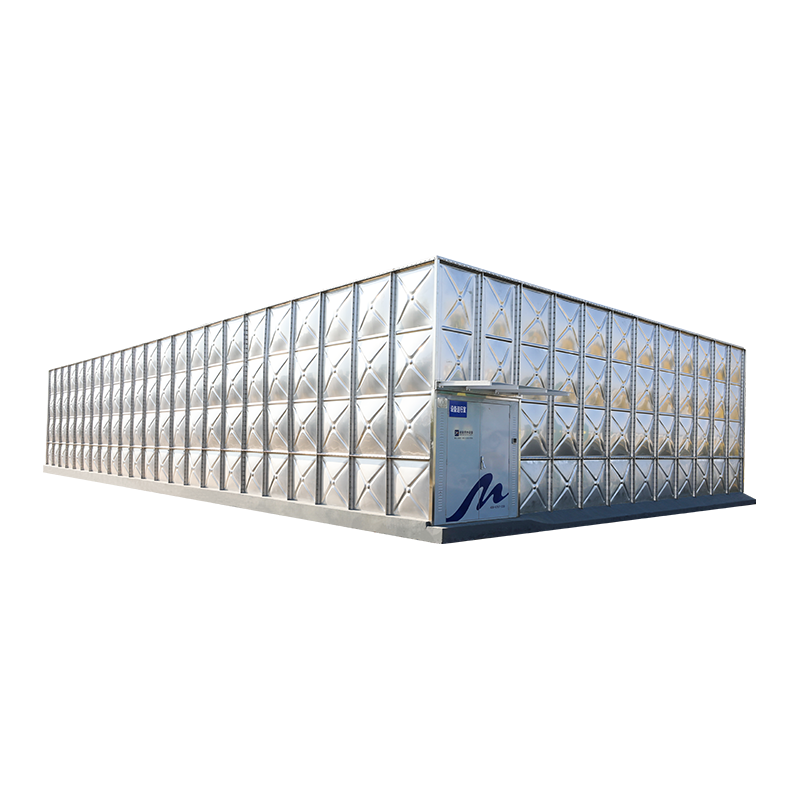
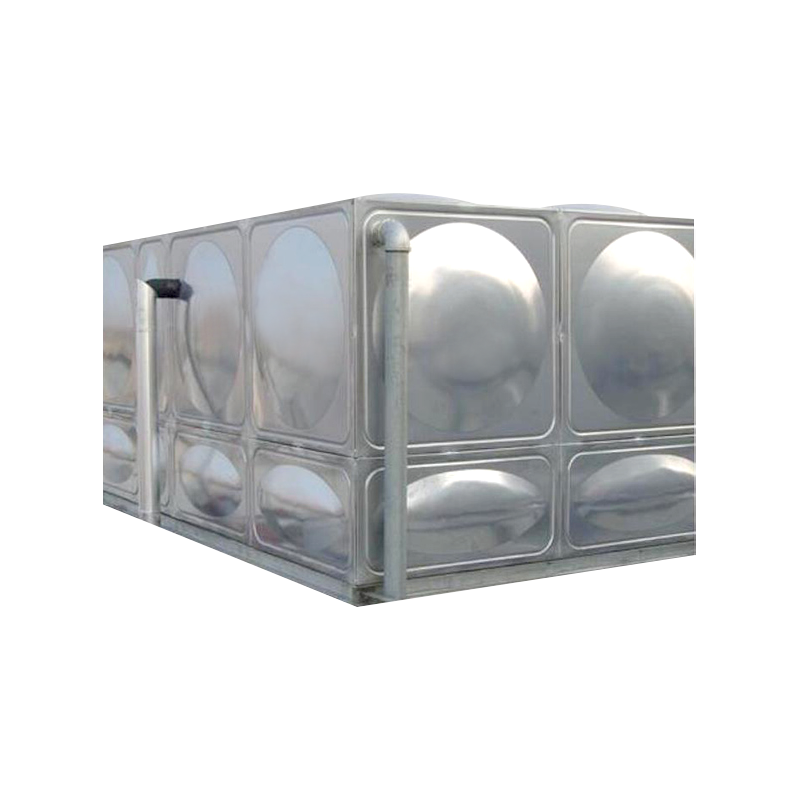
MingXing’s sectional water tank range includes assembly-bolted sectional tanks and welded stainless steel sectional tanks. The final material, configuration, capacity, connections and accessories should be confirmed against the individual project documents.
Send MingXing the water service, required effective volume, operating levels, site dimensions and connection schedule for a project-specific review before the tank configuration is finalized.
Not necessarily. It depends on how the 100 m³ value is defined and where the project sets the maximum operating level, minimum operating level, reserve boundary and outlet reference. Ask for the effective volume between named levels.
There is no universal multiplier. Calculate the required effective and reserved volumes first, then select a tank geometry that provides those volumes while meeting the operating, structural, access and connection requirements.
It depends on the approved operating strategy and the project specification. In many systems, fire reserve is a protected allocation that cannot be consumed by normal demand. Show it separately unless the design documents explicitly define a combined storage function.
A supplier can propose a configuration, but the final selection should also consider service, operating levels, flow, pump conditions, site envelope, support, openings, materials and local requirements. A volume-only request leaves too many assumptions hidden.
No. Extra volume can increase cost, structural loads, footprint, water age, cleaning requirements and unused capacity. The goal is not the largest tank; it is a tank whose defined usable and reserved volumes match the actual duty.
Related Products

Contact us
Headquater Address
Room 901, Building 17, Lane 1088, Shen Hong Road, Minhang District, Shanghai
Factory Address
No. 1, Mingxing North Road, Tech Innovation Park, Jianhu County, Yancheng, Jiangsu, P. R. China
Amy@mxwatersupply.com
Amy@mxwatersupply.com
Telephone(Whatsapp/Wechat)
+86-18051685983
QR CODE

 English
 Français