Jan 20, 2026
Content
Firefighting technology has evolved significantly, moving beyond traditional methods to embrace more efficient, water-saving, and less damaging solutions. Among these advancements, mobile trolley-type water mist fire extinguishing systems represent a pinnacle of portable, high-efficacy fire suppression. At its heart, this system leverages the science of water mist—fine droplets created by forcing water through specialized nozzles at high pressure. The mobility aspect, provided by the trolley frame, integrates this sophisticated mist-generating machinery into a manually maneuverable unit. This combination is designed for rapid deployment in environments where fixed systems may be absent, inadequate, or where the fire's location requires a flexible attack vector. The core question of its operation can be broken down into three synergistic principles: the exceptional heat absorption capacity of fine mist, the oxygen displacement effect due to rapid vapor expansion, and the radiant heat blocking capability of the mist cloud. These principles work in concert to suppress fires quickly, using minimal water, which in turn minimizes water damage—a critical advantage in settings like server rooms, archives, workshops, or hospital corridors.
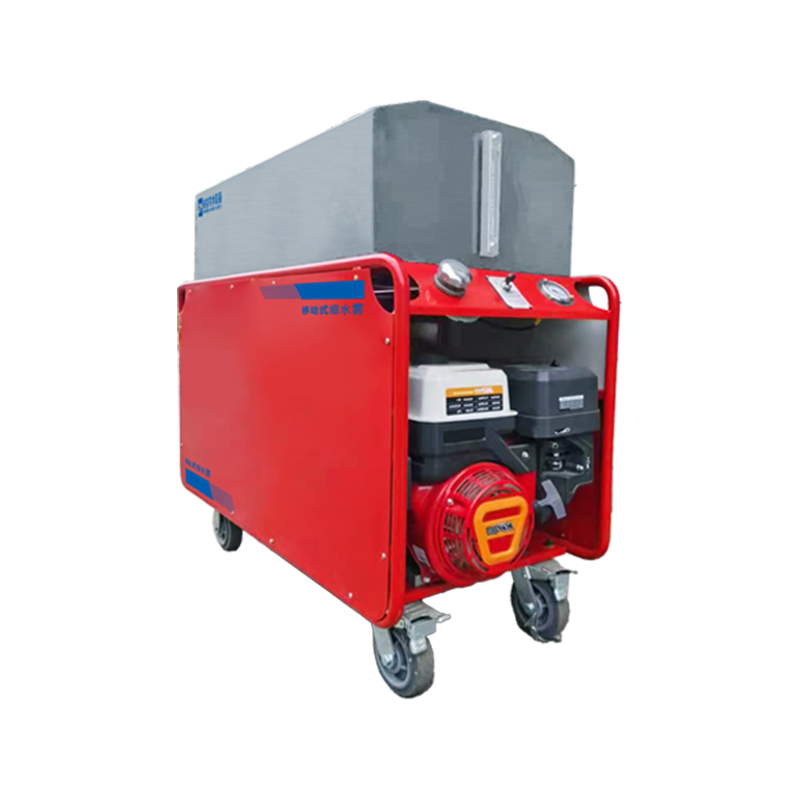
To comprehend how the system functions as a cohesive unit, one must first understand its integral parts. A mobile trolley-type water mist system is more than a water tank on wheels; it is a self-contained firefighting apparatus. Each component plays a vital role in the chain of operation, from water storage to mist ejection.
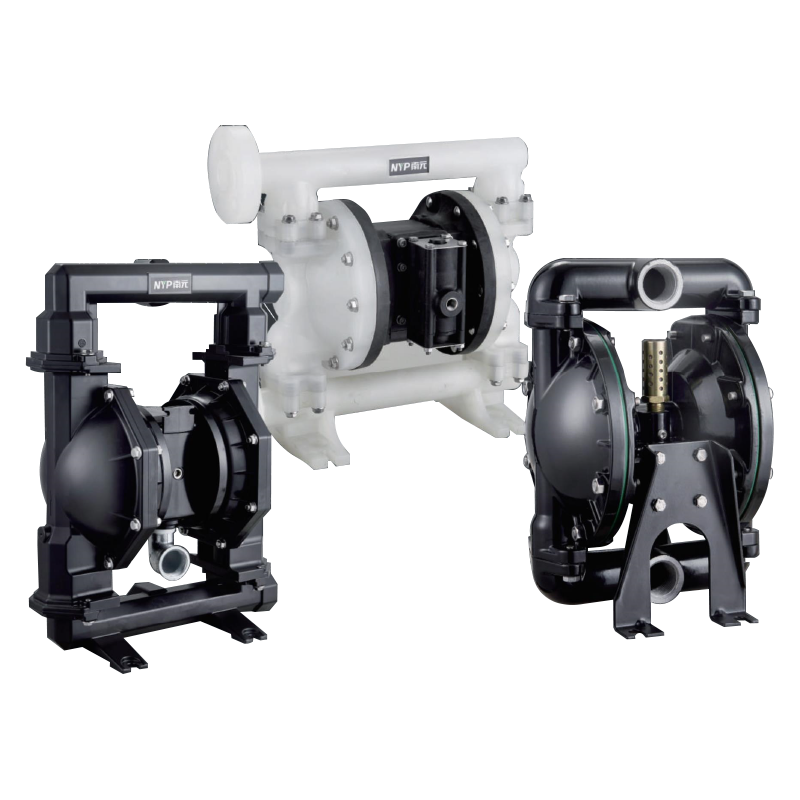
This is the system's engine. Typically, it consists of a high-pressure pump—often a piston or diaphragm pump—powered by either an integrated electric motor, a gasoline/diesel engine, or in simpler models, a stored gas cylinder (like nitrogen). This unit's sole purpose is to draw water from the storage tank and pressurize it to extremely high levels, commonly ranging from 40 to 200 bar (600 to 2900 psi). The high pressure is non-negotiable, as it is the force needed to atomize the water into a fine mist at the nozzle. The choice of power source impacts the system's autonomy; electric units may require a power outlet or large batteries, while engine-driven models offer complete independence, a crucial factor for mobile water mist fire trolley for industrial workshop fires where power might be cut during an emergency.
The tank, typically made of stainless steel or reinforced polymer, holds the system's extinguishing agent: water. Capacities vary but often range from 50 to 200 liters. Some advanced systems may include an additive tank for mixing foam concentrates or wetting agents to combat specific fire types (Class B). The tank is equipped with filters to prevent nozzle clogging, a fill port, and often a level gauge. Its placement on the trolley chassis is carefully balanced to ensure stability during movement and operation. The seemingly modest volume, when converted into mist, creates a vastly larger total surface area for cooling, making it far more effective than a larger volume of water applied in a solid stream.
This is the delivery system. A high-pressure, flexible hose (capable of withstanding the internal pressure) is stored on a manual or spring-retractable reel. The hose length, usually 20-40 meters, determines the operational radius from the trolley. At the end of the hose is the heart of the mist generation: the handgun or lance and the nozzle. The nozzle is precision-engineered with minute orifices and often contains internal swirl chambers. As high-pressure water is forced through these features, it breaks apart into droplets with a median diameter typically less than 400 microns. The operator controls discharge via a valve on the handgun. The design of the nozzle dictates the spray pattern (e.g., cone, jet) and droplet size distribution, which are optimized for different fire scenarios.
Mobility defines this system category. The chassis is a rigid frame, often of tubular steel, mounted on two large, robust wheels and two stabilizing casters or legs. This configuration allows a single operator to tilt and pull the unit like a hand truck for transport over thresholds and uneven surfaces. Ergonomics are key; the handle height, wheel size, and weight distribution are designed to facilitate quick movement in potentially cluttered or high-stress environments. The frame also securely houses all other components, protecting them from impact. For scenarios like portable water mist trolley for warehouse fire protection, where travel distance from a safe storage point to a fire location can be considerable, this robust mobility is indispensable.
The operational sequence of a mobile trolley-type water mist system is a deliberate procedure that maximizes effectiveness and operator safety. Understanding this flow is critical for both training and appreciating the system's engineered response.
No firefighting system is universally perfect. The mobile trolley water mist system offers a compelling set of benefits but also has specific constraints that dictate its ideal application scenarios. A clear understanding of both is necessary for proper selection and deployment.
The integration of water mist technology into a mobile platform creates unique operational benefits that are especially relevant for complex or sensitive environments.
Recognizing the system's boundaries ensures it is used effectively and safely, preventing over-reliance in inappropriate situations.
To contextualize its value, a comparison with other common portable or semi-portable firefighting equipment is useful. The following table highlights key operational differences.
| Feature / System | Mobile Trolley-Type Water Mist | CO2 Trolley System | Dry Chemical Powder Trolley | Traditional Water/Foam Cart |
|---|---|---|---|---|
| Primary Extinguishing Mechanism | Cooling, Oxygen Displacement, Radiation Blocking | Oxygen Dilution (Suffocation) | Chemical Inhibition of Flame Chain Reaction | Cooling (Water) and/or Smothering (Foam) |
| Water Damage & Residue | Very Low (minimal water used, evaporates quickly) | None | None, but corrosive powder residue is difficult to clean | Very High (significant water/foam residue) |
| Post-Discharge Visibility & Safety | Improves visibility (settles smoke); safe for occupied areas | Poor visibility (condensation fog); asphyxiation hazard in confined spaces | Very poor visibility (powder cloud); breathing hazard | Variable; steam and foam can reduce visibility |
| Ideal for Electrical Fires | Excellent (low conductivity mist) | Excellent (non-conductive) | Good (non-conductive) | Poor (water is conductive; foam may be) |
| Typical Runtime / Capacity | 30-60 minutes of continuous mist | Very short (10-30 seconds per discharge, limited gas weight) | Short (10-30 seconds of powder release) | Long (5-20 minutes of water stream, depending on tank) |
| Best Application Context | Sensitive environments (data centers, museums, hospitals), enclosed spaces, electrical risks, areas with limited water supply. | Localized flammable liquid fires in well-ventilated or unoccupied areas, electrical equipment rooms (with caution for personnel). | Industrial settings with mixed fire risks (flammable liquids, gases, electrical), outdoor or well-ventilated areas due to residue and breathing hazard. | Large open areas (hangars, workshops), outdoor fires, Class A structural fires where water damage is a secondary concern. |
The unique profile of the mobile trolley water mist system makes it not just a generic tool, but a specialized solution for specific high-value or high-risk scenarios. Its application is driven by the need for effective suppression with minimal secondary consequences.
In facilities where the cost of downtime or damage far exceeds the cost of the firefighting system, this technology shines. For example, in a trolley mounted water mist system for electrical room safety, it provides a safe, non-damaging, and highly effective means to tackle incipient electrical fires without jeopardizing adjacent live equipment with water damage or corrosive residues. Similarly, the benefits of using a mobile water mist cart in data centers are multifold: it suppresses fire without soaking servers and routers, it is safe to discharge in occupied server aisles, and its rapid cooling can prevent thermal shock to hardware. Archives, libraries, museums, and art storage facilities also benefit immensely, as the fine mist can suppress a fire without ruining irreplaceable paper, parchment, or artifacts—a outcome often impossible with traditional sprinklers.
Manufacturing and storage facilities present dynamic fire risks. A mobile water mist fire trolley for industrial workshop fires offers flexibility to address fires involving machinery, electrical panels, hydraulic fluids, and ordinary combustibles. Its mobility allows it to be stationed centrally and pulled to the site of an incident, whether it's a CNC machine, a welding station, or a storage rack. Likewise, a portable water mist trolley for warehouse fire protection can be used in high-bay storage areas, particularly for high-value goods or those susceptible to water damage. It can serve as an initial attack appliance before the arrival of the fire department, potentially containing a fire to a single pallet or rack. Workshops dealing with flammable liquids (paints, solvents) can use it effectively, especially models capable of injecting foam concentrate for tackling spill fires.
In hospitals, patient safety is paramount. The system's non-toxic nature and ability to fight fires without creating large amounts of steam or requiring immediate evacuation of entire wings make it suitable for operating theaters, MRI suites (where magnetic fields rule out ferrous components), and patient corridors. Heritage buildings, where installing modern fixed pipework is architecturally destructive and prohibitively expensive, can use mobile trolleys as a primary firefighting resource. They can be discreetly housed in strategic locations, preserving the building's aesthetics while providing modern protection. This application underscores the system's role as a cost effective alternative to fixed water mist installation in retrofit scenarios, avoiding the massive disruption and cost of running pipework through historic walls and ceilings.
Simply purchasing a unit is not enough. To ensure reliability and effectiveness, a holistic approach covering proper selection, comprehensive training, and a rigorous maintenance regime is mandatory.
Selection parameters must align with the specific hazards identified in a risk assessment. Key factors include:
An untrained operator can be ineffective or even endangered by the equipment. Training must be hands-on and recurring, covering:
A failed system during an emergency is worse than no system at all. A strict maintenance schedule is non-negotiable and should include:
Adhering to this regimen transforms the mobile trolley-type water mist system from a piece of equipment into a reliable guardian, ready to perform its critical function at a moment's notice. It solidifies its role as a cost effective alternative to fixed water mist installation, delivering high-level protection without the permanence or high installation overhead, provided it is supported by the necessary human and procedural infrastructure.
Related Products

Contact us
Headquater Address
Room 901, Building 17, Lane 1088, Shen Hong Road, Minhang District, Shanghai
Factory Address
No. 1, Mingxing North Road, Tech Innovation Park, Jianhu County, Yancheng, Jiangsu, P. R. China
Amy@mxwatersupply.com
Amy@mxwatersupply.com
Telephone(Whatsapp/Wechat)
+86-18051685983
QR CODE

 English
 Français