Feb 04, 2026
The relentless pursuit of operational efficiency and sustainability is reshaping industrial infrastructure. At the heart of many fluid management processes lies a transformative technology: the Intelligent Variable Frequency Water Pump System. Moving far beyond simple on/off functionality, these systems represent a synergy of advanced motor control, sensor integration, and algorithmic intelligence. This article delves deep into the multifaceted benefits of deploying such smart pumping solutions in demanding industrial environments, examining how they drive down costs, enhance reliability, and contribute to greener operations. We will explore specific applications, from precise pressure control to complex multi-pump orchestration, providing a comprehensive guide for engineers and facility managers seeking to optimize their water and fluid handling infrastructure.
Content
The fundamental shift from fixed-speed to variable-speed pumping, governed by intelligence, unlocks a portfolio of advantages. Unlike traditional systems that cycle pumps on and off to meet demand—a process fraught with energy waste and mechanical stress—an intelligent VFD pump system modulates the pump motor's speed in real-time. This precise matching of output to the exact process requirement is the cornerstone of its value proposition. The intelligence layer, often powered by programmable logic controllers (PLCs) or dedicated pump controllers, continuously analyzes data from pressure, flow, or level sensors. It doesn't just react; it predicts and adapts, ensuring the system operates at its best efficiency point (BEP) as often as possible. This dynamic adjustment leads to profound savings, as pump power consumption is proportional to the cube of the speed. A small reduction in speed results in a dramatic drop in energy use. Furthermore, the elimination of harsh start-stop cycles and the ability to maintain stable system parameters drastically reduce wear on pumps, pipes, and valves, translating into lower maintenance costs and extended asset life. The system's data-logging capabilities also provide invaluable insights for predictive maintenance and operational reporting.
One of the most common and critical applications for these systems is maintaining constant pressure in variable-demand scenarios. Traditional systems use a pressure switch and a pressure tank, leading to a "dead band" where pressure fluctuates between set points. An intelligent variable frequency drive for water pump pressure control eradicates this issue. It uses a high-fidelity pressure transducer to provide continuous feedback to the drive's controller. The controller's algorithm then adjusts the motor speed instantaneously to keep the discharge pressure at a precisely set value, regardless of how many outlets are open or closed in the network. This is particularly vital in large industrial plants, high-rise buildings, or irrigation systems where demand can change rapidly and unpredictably. The benefits extend beyond consistency. By maintaining just the required pressure—no more, no less—the system eliminates the energy waste of over-pressurization. It also significantly reduces leakage rates in pipe networks, as leakage is directly related to pressure. This application showcases the system's ability to provide superior performance while simultaneously achieving its core efficiency goals.
The evolution from basic to intelligent pressure control highlights the technological leap. Below is a comparison of common methods.
| Control Method | Principle of Operation | Energy Efficiency | Pressure Stability |
| On/Off Control with Pressure Switch | Pump runs at full speed until upper pressure limit is reached, then shuts off. Restarts when pressure falls to lower limit. | Very Low (High cycling losses, constant full-load operation) | Poor (Large pressure fluctuations within the dead band) |
| Constant Speed with Throttling Valve | Pump runs constantly at full speed; a valve is manually or automatically throttled to restrict flow and regulate pressure. | Low (Energy is wasted as heat across the valve restriction) | Moderate (Can be stable but inefficient) |
| Intelligent VFD with PID Control | Pump speed is continuously varied by the VFD based on real-time pressure sensor feedback using a Proportional-Integral-Derivative algorithm. | Very High (Power consumption scales with the cube of speed) | Excellent (Maintains set point within a very tight tolerance) |
The energy-saving potential of an intelligent pump system is its most compelling financial argument, but realizing the maximum savings requires sophisticated control strategies. Modern smart pump controllers go beyond simple pressure maintenance; they implement algorithms designed to minimize energy consumption under all operating conditions. One key strategy is "load-sharing" in multi-pump setups, where the controller optimally sequences and loads pumps to keep each operating near its peak efficiency. Another is "trim and tune" functionality, where the system automatically identifies and adapts to changes in the hydraulic system over time, such as pipe fouling or new demand points. For applications with highly variable or seasonal demand, controllers can utilize "sleep" or "low-flow" modes, where the pump slows to a minimal maintenance speed or shuts down during periods of zero demand, restarting seamlessly when needed. These strategies transform the pump system from a passive utility into an active, energy-optimizing asset. Calculating the return on investment (ROI) typically involves analyzing energy tariffs, runtime profiles, and the efficiency curves of the existing versus new system, with payback periods often ranging from 1 to 3 years.
Agricultural and landscape irrigation represents a massive opportunity for efficiency gains. An intelligent water pump system for agricultural irrigation must address unique challenges: vast geographical areas, fluctuating water source levels, varying pressure requirements for different emitter types (drip vs. sprinkler), and the critical need for water conservation. The intelligent system here acts as the central nervous system. It integrates inputs from weather stations (for evapotranspiration data), soil moisture sensors, and zone valves. Instead of operating on a simple timer, the system calculates the exact water volume needed and adjusts pump output accordingly. It can manage multiple pressure zones simultaneously by using the VFD to maintain a constant pressure at the pump discharge, while downstream pressure-reducing valves handle final zone adjustment. This prevents over-pumping and energy waste. Furthermore, features like "dry-run" protection, which detects loss of prime or source water depletion, and "soft-fill" routines to prevent pipeline damage during startup are essential. The result is precise water application, reduced energy and water costs, and healthier crops through optimized hydration.
A robust system is built on several integrated components.
| Component | Primary Function | Benefit to the System |
| Variable Frequency Drive (VFD) | Converts fixed frequency/voltage AC power to variable output to control motor speed. | Enables precise speed control for demand matching and soft start/stop. |
| Programmable Logic Controller (PLC) or Dedicated Pump Controller | The "brain" that processes sensor inputs and executes control algorithms. | Provides intelligence, automation sequences, and communication capabilities. |
| Pressure Transducers & Flow Meters | Provide real-time feedback on system hydraulic conditions. | Essential for closed-loop control; allows the system to respond to actual demand. |
| Soil Moisture & Weather Sensors | Provide data on crop water requirements and environmental conditions. | Enables predictive and adaptive irrigation scheduling for maximum efficiency. |
| Motor Protection Circuitry | Monitors motor current, temperature, and insulation integrity. | Prevents costly motor burnouts and enables predictive maintenance. |
Industrial settings often subject equipment to extreme conditions—corrosive chemicals, high temperatures, abrasive fluids, and continuous operation. The benefits of a smart VFD water pump are not merely economic; they are also profoundly mechanical. The reliability gains stem from the elimination of the most damaging events in a pump's life: abrupt starts and stops. A direct-on-line start can draw up to 6-8 times the full-load current, creating immense torque and thermal stress on the motor windings, shaft, and coupling. Similarly, suddenly stopping flow can cause destructive water hammer. An intelligent VFD system introduces motor current slowly during a soft start and ramps down speed gently for a soft stop. This dramatically reduces stress on the entire drive train, from bearings and seals to pipelines. Additionally, the ability to maintain smooth, stable operation away from critical vibration points (often a problem at certain speeds) further enhances longevity. For critical processes, the intelligent system provides constant health monitoring, alerting operators to anomalies like bearing wear or cavitation before they cause catastrophic failure, thereby ensuring uninterrupted operation and protecting capital investment.
The energy savings are rooted in the affinity laws for centrifugal pumps. The power required by a pump is proportional to the cube of its rotational speed. A traditional fixed-speed pump meeting reduced demand must either throttle flow with a valve (wasting energy as friction/heat) or cycle on/off (running inefficiently at full load). An intelligent VFD pump system reduces the motor speed to precisely match the output to demand. For example, reducing the pump speed to 80% of its maximum results in a flow rate of 80%, but the power consumption drops to approximately (0.8)³ = 51% of full-load power—a nearly 50% saving. The intelligent controller continuously finds this optimal speed, ensuring the pump operates on its best efficiency curve. Over time, especially in systems with highly variable demand, these savings compound dramatically.
Yes, retrofitting is a common and often highly cost-effective strategy. The process typically involves installing a compatible Variable Frequency Drive between the power supply and the existing pump motor, adding a suitable pressure or flow sensor for feedback, and installing a control panel. It is crucial, however, to conduct a professional assessment first. Key considerations include: the compatibility of the existing motor with VFD operation (inverter-duty motors are ideal), the pump's hydraulic range to ensure it can operate efficiently at lower speeds, and the system's control logic. Retrofits can unlock most of the energy and maintenance benefits. For optimal results, especially in multi-pump setups, integrating a dedicated smart pump controller to manage the entire station is recommended over simply controlling individual drives.
Both are common setpoints for an intelligent variable frequency water pump system, chosen based on the primary process need. Constant Pressure Control is used when maintaining a stable pressure in a distribution network is paramount, regardless of how many users are drawing flow (e.g., building water supply, irrigation mainlines). The system uses a pressure sensor and varies pump speed to keep pressure at the set value. Constant Flow Control is used when a precise volumetric flow rate must be delivered, such as in chemical dosing, certain cooling circuits, or filtration processes. Here, a flow meter provides feedback, and the pump speed is adjusted to maintain the set flow rate, even if system pressure changes due to filter clogging or other factors. Advanced systems can even switch between or cascade these modes based on process requirements.
Modern systems are designed with user-friendliness in mind. While the underlying technology is sophisticated, most intelligent pump systems for industrial applications come with pre-programmed, application-specific macros (e.g., for pressure boosting, irrigation, cooling towers). Installation technicians typically configure these with straightforward parameters like set points and pump sequence via a local keypad or software. Maintenance shifts from mechanical troubleshooting to monitoring and data analysis. Routine maintenance is often simpler (less wear on parts), but it requires personnel familiar with basic VFD operation and system diagnostics. The controllers provide clear fault logs and alerts. For complex installations, partnering with a qualified systems integrator for initial setup and training is highly advisable to ensure optimal performance and ease of long-term management.
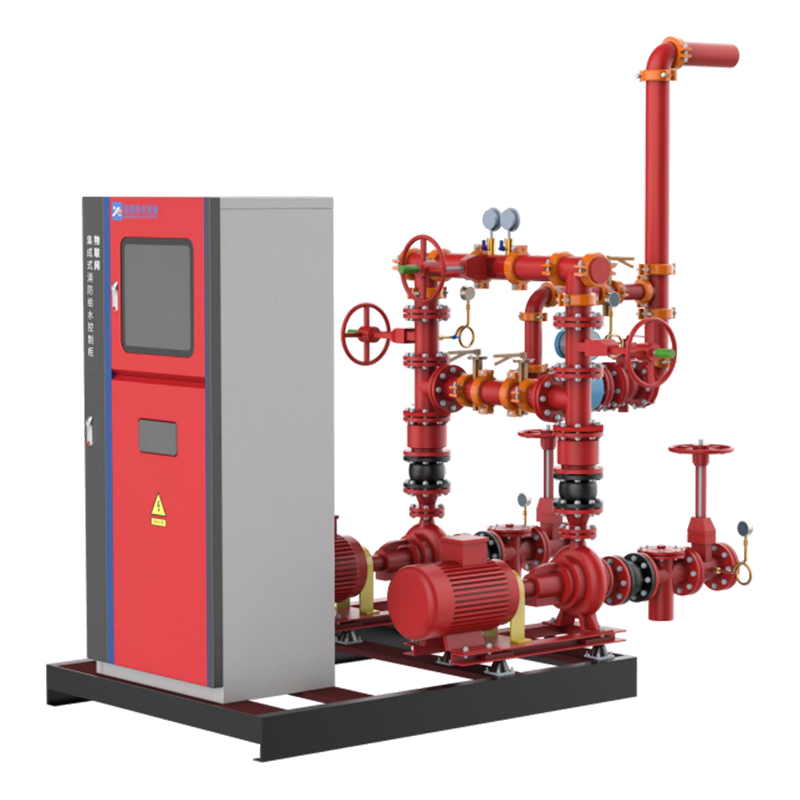
Correct sizing is critical for performance and longevity. The key factors are:
Consulting the pump and VFD manufacturer's guidelines is essential for a correct selection.
Related Products

Contact us
Headquater Address
Room 901, Building 17, Lane 1088, Shen Hong Road, Minhang District, Shanghai
Factory Address
No. 1, Mingxing North Road, Tech Innovation Park, Jianhu County, Yancheng, Jiangsu, P. R. China
Amy@mxwatersupply.com
Amy@mxwatersupply.com
Telephone(Whatsapp/Wechat)
+86-18051685983
QR CODE

 English
 Français