Feb 03, 2026
In the demanding world of industrial fluid handling, selecting the right pump technology is critical for safety, efficiency, and cost-effectiveness. Among the various options available, the pneumatic diaphragm pump stands out as a remarkably versatile and reliable workhorse. Powered by compressed air, these pumps utilize a reciprocating diaphragm to move fluids, offering a unique set of advantages that make them indispensable in harsh or hazardous environments. This article delves deep into the core benefits of pneumatic diaphragm pumps, exploring why they are the preferred choice for applications ranging from chemical transfer and wastewater treatment to paint circulation and abrasive slurry handling. We will examine their inherent safety features, operational flexibility, and robust design, providing a comprehensive understanding of their role in modern industry.
Content
The fundamental design principle of a pneumatic diaphragm pump grants it exceptional safety credentials, which is paramount in industries dealing with volatile, toxic, or expensive fluids. Since the pump is driven by compressed air, there is no direct electrical connection to the fluid chamber, eliminating the risk of sparks that could ignite flammable vapors. This makes them intrinsically safe for use in explosive atmospheres without the need for expensive explosion-proof motor housings. Furthermore, the pump's operation is inherently gentle and controlled. If the discharge line becomes blocked, the pump will simply stall against the air pressure without building up dangerous line pressure or causing catastrophic failure. This feature, known as dead-head capability, protects both the pump and the surrounding piping system. The reliability is further enhanced by the separation of the air drive mechanism from the fluid being pumped by the diaphragm, ensuring that corrosive or abrasive media cannot damage the pump's driving components.
One of the most significant advantages of the pneumatic diaphragm pump is its extraordinary operational flexibility. The flow rate and discharge pressure are not fixed but are directly and easily controlled by two simple factors: the input air pressure and the air volume (CFM). By adjusting the air supply using a regulator, an operator can infinitely vary the pump's output from a trickle to its maximum capacity. This allows for precise metering or rapid transfer using the same pump. Additionally, the self-priming capability of these pumps is exceptional; they can create a strong vacuum to lift fluids from several feet below the pump inlet, even if the suction line is only partially filled. This eliminates the need for complex priming systems. The pumps are also inherently reversible simply by switching the air supply to the opposite port, a feature useful for unloading lines or clearing minor blockages. This level of control and adaptability makes them perfect for applications requiring variable outputs or handling from deep sumps.
The durability of a pneumatic diaphragm pump is legendary, particularly when confronting the most challenging media. These pumps are specifically engineered to handle fluids that would quickly destroy other pump types. The wetted path—comprising the pump body, diaphragms, and ball valves—can be constructed from a vast array of materials to suit the application. For highly corrosive acids or alkalis, components can be made from polypropylene, PVDF, or stainless steel. For pumping abrasive slurries in mining or ceramic industries, the pump can be fitted with ultra-wear-resistant materials like hardened alloys or specialized elastomers. The pumping action is gentle on shear-sensitive materials like polymers or food products, preventing degradation. Furthermore, the simplicity of the design translates to easier maintenance. When wear does occur, typically on the diaphragms or ball valves, these are relatively inexpensive and easy-to-replace parts, minimizing downtime and total cost of ownership.
| Application Challenge | Pneumatic Diaphragm Pump Solution | Typical Industry Use |
| Explosive Atmosphere | Air-powered, no electric motor | Petrochemical, Paint Spraying |
| Abrasive Slurries | Hardened material options, resilient diaphragms | Mining, Ceramics, Wastewater |
| High-Viscosity Fluids | Positive displacement, low shear | Adhesives, Grease, Food Paste |
| Precise Flow Control Needed | Infinitely variable via air pressure | Chemical Dosing, Batch Filling |
| Frequent Maintenance Downtime | Simple design, easy part replacement | General Plant Maintenance, Multi-fluid Stations |
While the initial purchase price of a pneumatic diaphragm pump may be competitive, its true cost-effectiveness is revealed in its total lifecycle cost. The pumps have a remarkably simple design with few moving parts, leading to lower long-term maintenance expenses compared to more complex pump technologies. The ability to run dry, stall under pressure, and handle tough fluids significantly reduces the frequency of catastrophic failures. From an energy perspective, they convert compressed air energy directly into fluid motion with reasonable efficiency, especially when sized correctly for the duty. It's crucial, however, to consider the cost of generating compressed air, which can be less efficient than direct electrical drives for continuous, high-flow applications. Therefore, they are often most economical for intermittent duty, transfer applications, or where the safety and handling benefits outweigh pure energy cost calculations. Their portability, requiring only an air hose, also saves on permanent installation costs.
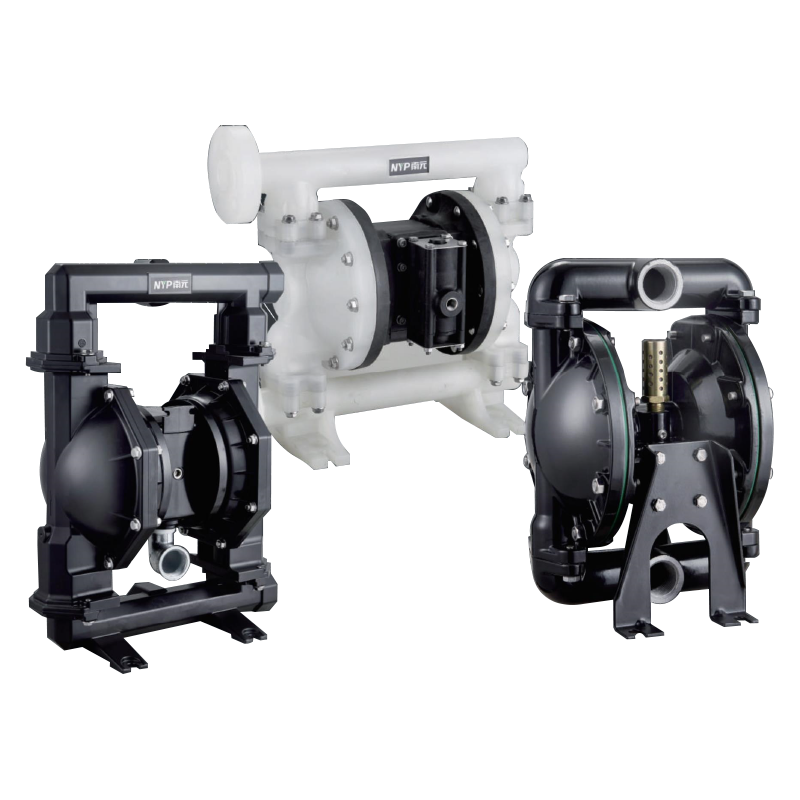
A pneumatic diaphragm pump operates on a simple yet effective reciprocating principle. Compressed air is directed by an internal air valve to one side of a piston or directly to a diaphragm plate, pushing it and the attached flexible diaphragm away from the center. This creates a vacuum on the opposite fluid chamber, drawing liquid in through the inlet check valve. Simultaneously, the diaphragm on the other side is being pulled in, pushing fluid out through its outlet check valve. The air valve then shifts, reversing the action. This alternating cycle creates a smooth, pulsed flow. The two diaphragms are connected by a shaft, ensuring synchronous movement. The complete isolation of the air drive from the pumped fluid by the diaphragms is the key to its safe and leak-resistant operation.
The terms are often used interchangeably, but technically, most industrial "pneumatic diaphragm pumps" are double diaphragm pumps. A single-diaphragm pump has one pumping chamber and typically requires a mechanical linkage or a spring return, leading to uneven stress and pulsation. The double-diaphragm design, with two chambers operating 180 degrees out of phase, is the standard for industrial applications. It balances the load on the air distribution system, reduces vibration, and provides a more consistent flow output. The double design also offers redundancy; if one diaphragm fails, the pump may still operate (though at reduced capacity and with immediate maintenance required), preventing a complete process shutdown.
Yes, within limits. Pneumatic diaphragm pumps are excellent at handling slurries and fluids with suspended solids. Their ability to pass solids depends on the size of the pump's ball valves and the diameter of the internal passages. Many models are specifically designed as slurry pumps with large, free-flowing passages and robust valve designs to prevent clogging. They can easily handle solids with diameters up to the size of the ball (common sizes range from 1/4" to over 1"). However, for fluids with long, stringy solids or fibers, alternative valve designs like flap valves might be recommended to prevent tangling and blockage.
Maintenance is relatively straightforward but crucial for longevity. A core part of any pneumatic diaphragm pump maintenance checklist includes regular inspections. Diaphragms should be checked for cracks, holes, or excessive wear, typically every 3 to 6 months depending on the abrasiveness/corrosiveness of the fluid. The ball valves (or flap valves) and their seats are the next most common wear items and should be inspected for pitting or wear that prevents a proper seal. The air distribution system (spool or pilot valve) should be checked for smooth operation and lubricated if required (using oil mist in the air line or as per manufacturer instructions). Keeping a log of runtime and scheduling preventive maintenance based on fluid characteristics and operating hours is the best practice to avoid unexpected failures.
Sizing involves balancing four key parameters: Flow Rate (GPM or L/min), Total Dynamic Head (pressure required), Fluid Properties (viscosity, abrasiveness, corrosiveness), and available Air Supply (PSI and CFM). First, determine your required flow and pressure. Consult the pump's performance curve, which shows flow vs. pressure for a given air inlet pressure. Remember that viscosity reduces flow; a correction factor is needed for thick fluids. Ensure your air compressor can deliver the necessary CFM at the required PSI to achieve the desired pump performance. Finally, select the wetted materials (pump body, diaphragm, valves) compatible with your fluid. For complex how to control flow rate of a diaphragm pump needs, consider adding an air regulator or electronic control valve for precise adjustment.
Related Products

Contact us
Headquater Address
Room 901, Building 17, Lane 1088, Shen Hong Road, Minhang District, Shanghai
Factory Address
No. 1, Mingxing North Road, Tech Innovation Park, Jianhu County, Yancheng, Jiangsu, P. R. China
Amy@mxwatersupply.com
Amy@mxwatersupply.com
Telephone(Whatsapp/Wechat)
+86-18051685983
QR CODE

 English
 Français