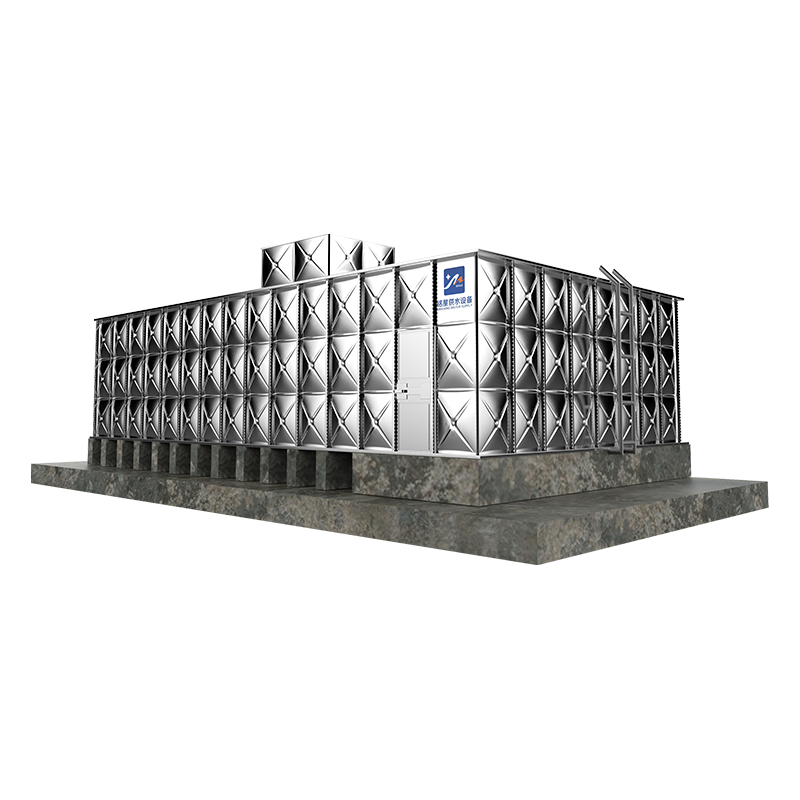
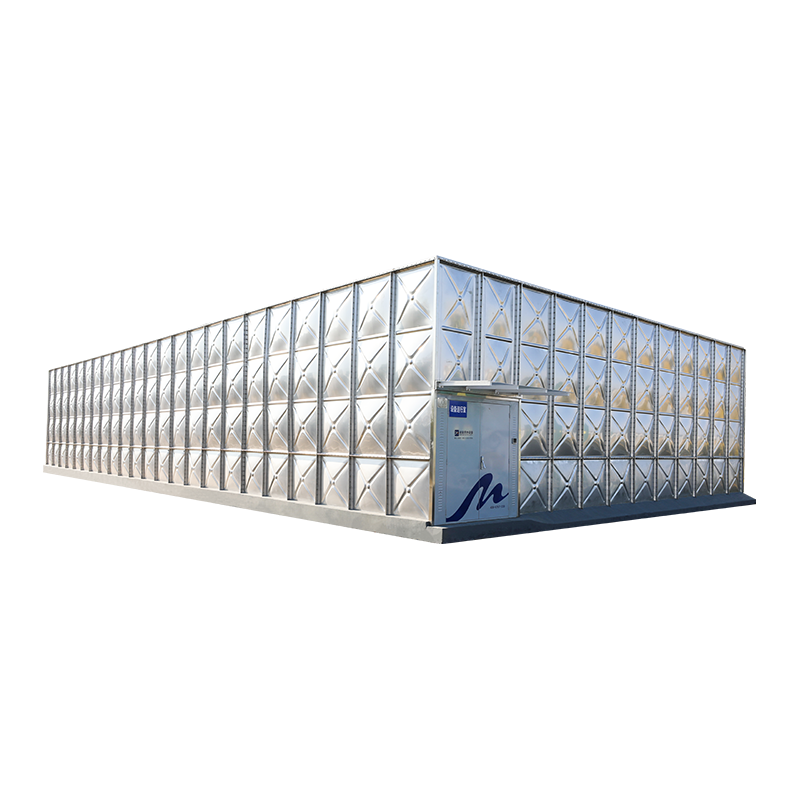
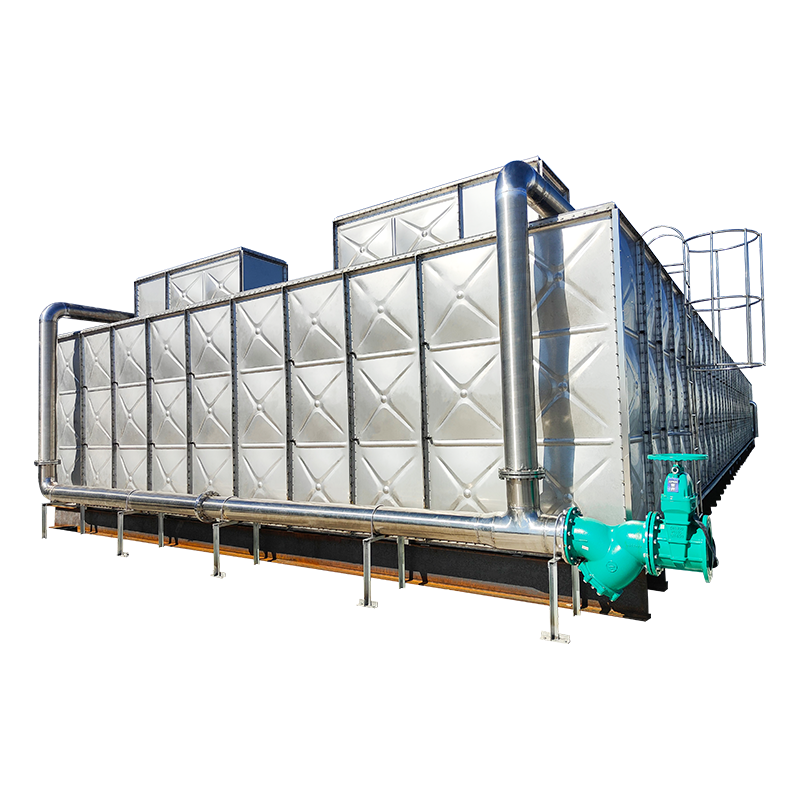
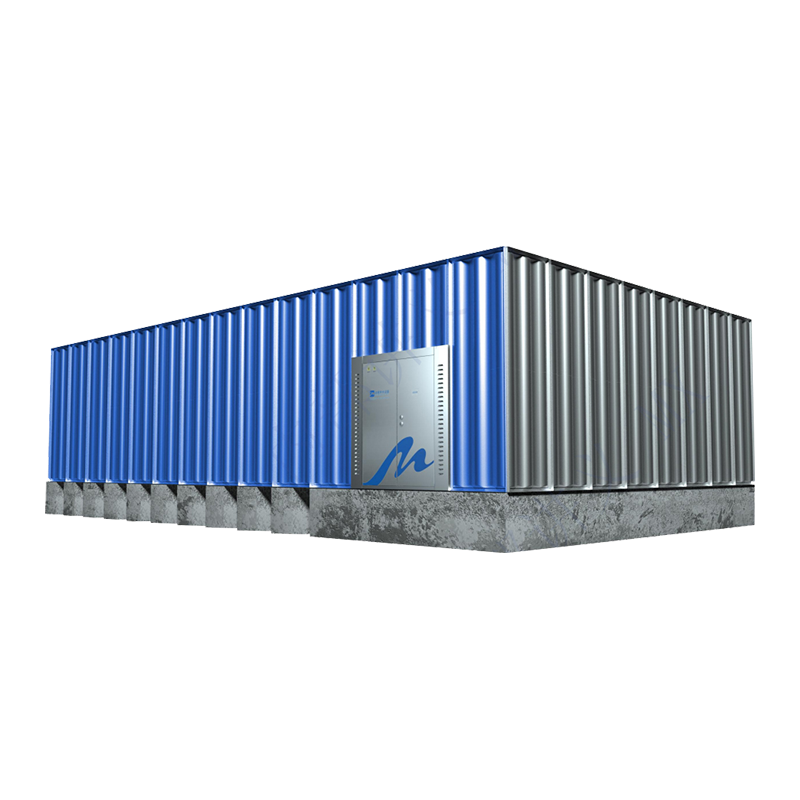
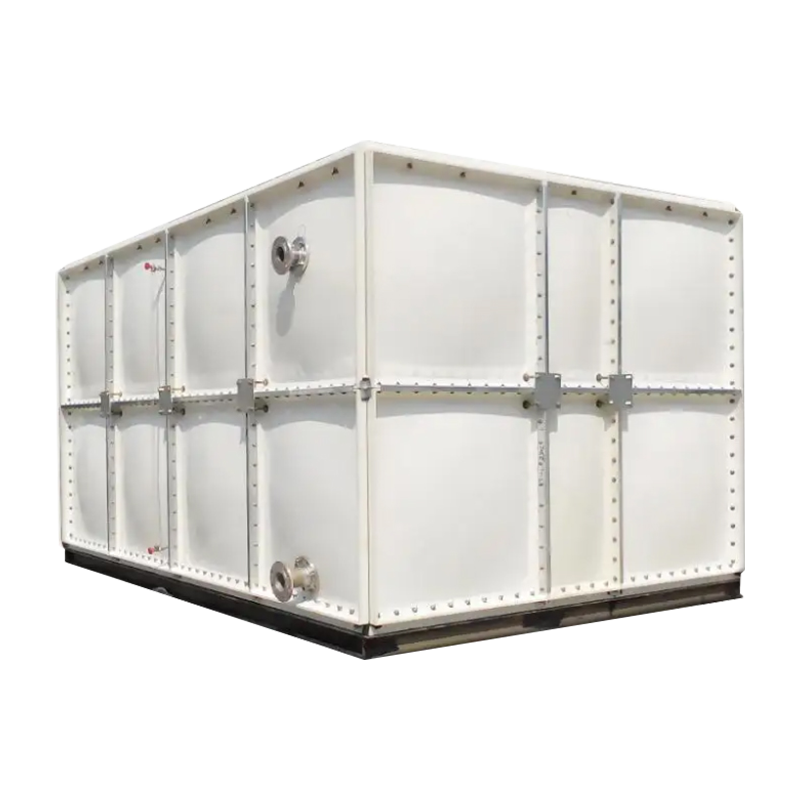
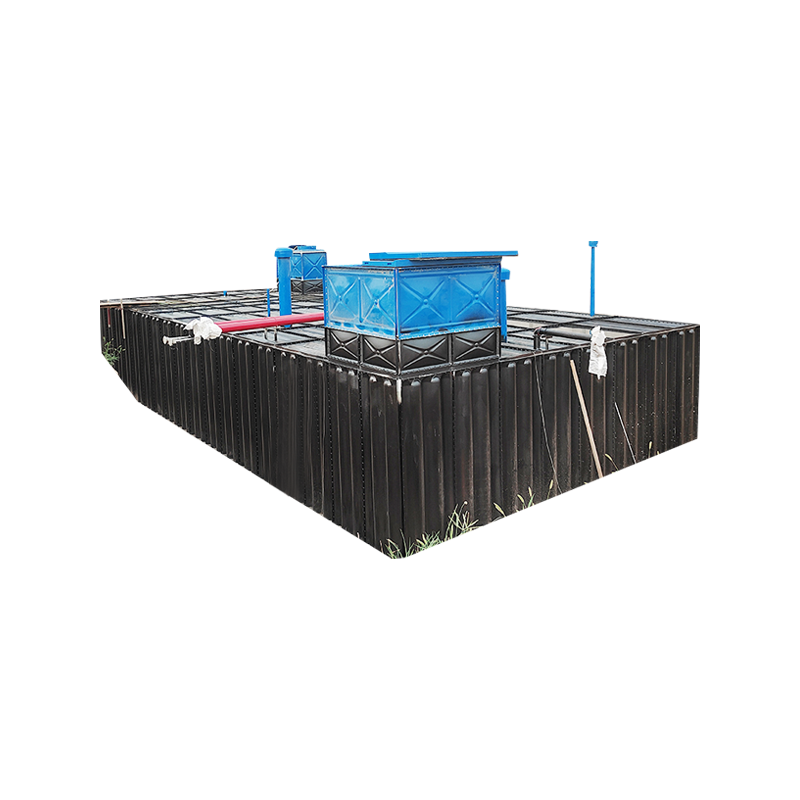
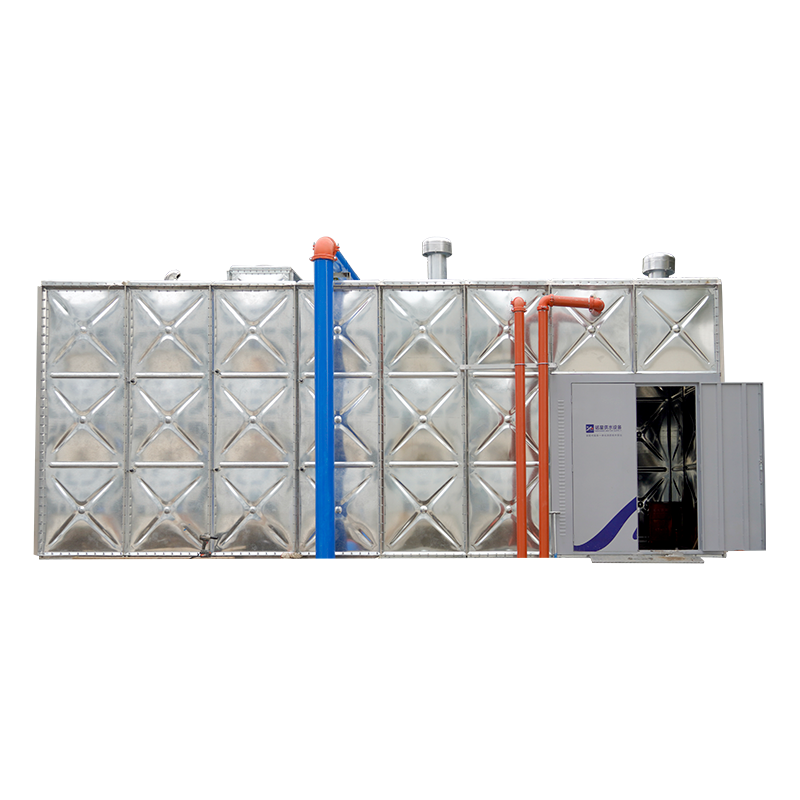
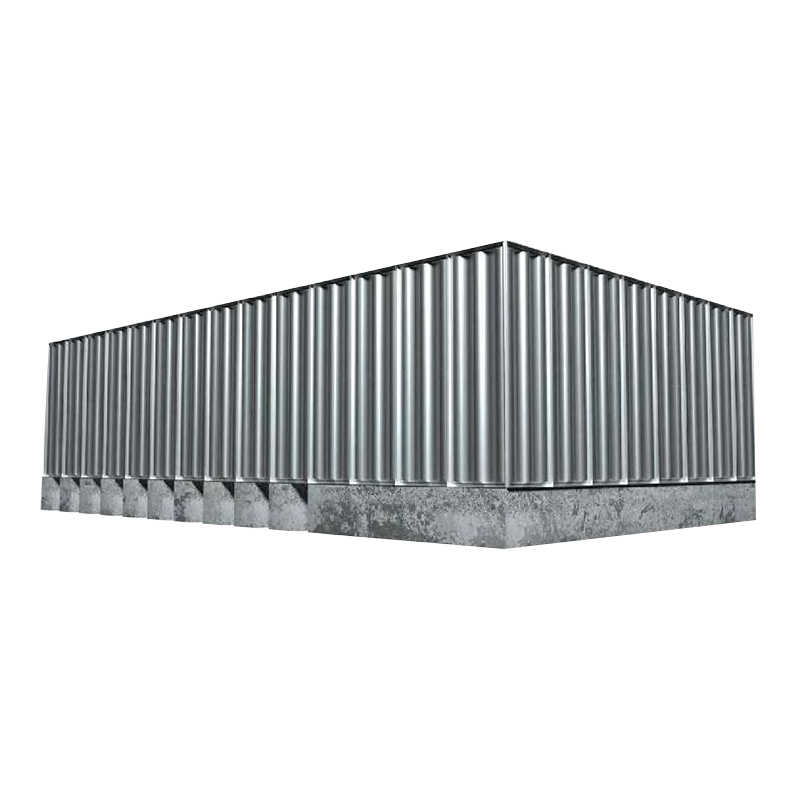
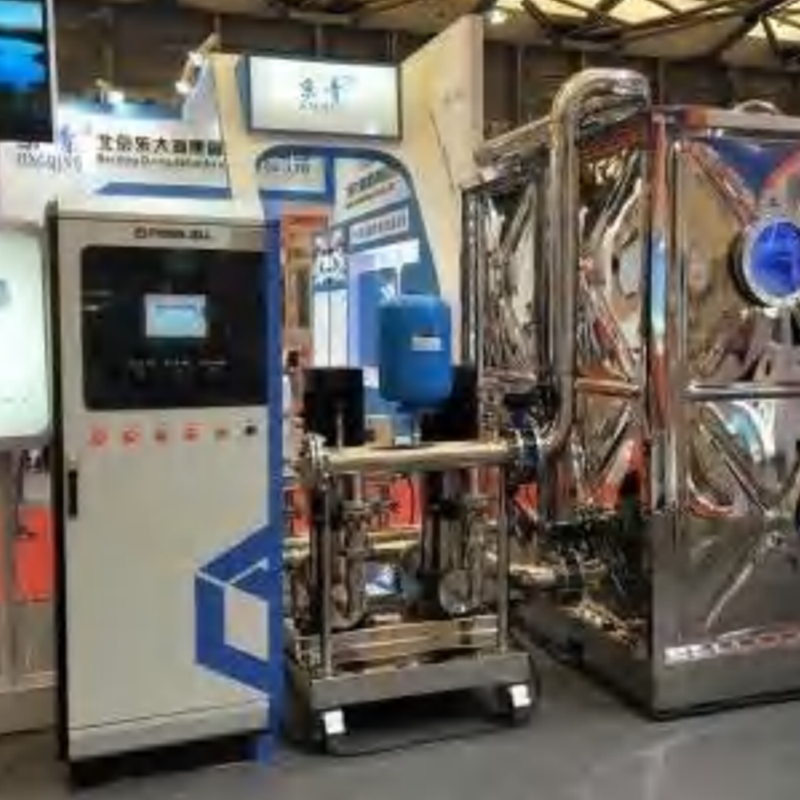
Assembled water tanks are made by combining multiple modules together. Each module can be increased or decreased according to actual needs to adapt to the required water storage capacity. These tanks are generally made of materials such as steel and stainless steel, which provide certain durability and corrosion resistance.
Features of Assembled Water Tanks:
1. Free Combination: Each module of an assembled water tank can be freely combined according to actual needs, and the number of modules can be increased or decreased at any time to meet different water storage requirements.
2. High Space Utilization: Compared to integral tanks, assembled water tanks can be freely combined according to the size of the space, thereby making the utilization rate of water storage and storage space higher.
3. Easy Transportation: Each module of an assembled water tank is smaller than an integral tank, making it easier to transport.
4. Easy Maintenance: If a module of an assembled water tank is damaged or has issues, it can be replaced individually, which is easier to maintain than an integral tank.
Differences Between Assembled and Integral Water Tanks:
The main difference between assembled and integral water tanks lies in the method of manufacture. Integral tanks are formed as a single unit and cannot be disassembled or reassembled. In contrast, assembled water tanks are made up of multiple modules, offering the advantages of free combination and flexibility. Additionally, assembled water tanks are often more suitable for high-rise buildings and other places because they can be flexibly combined according to the physical space of the building without changing the water storage capacity, achieving utilization of space.
A 12-storey residential block with a 0.32 MPa street main looks like the ideal candidate for direc...
READ MOREA 14-story apartment block closed its water-supply contract on a classic imbalance: the municipal ...
READ MOREAt 7:12 a.m. in a 12-story residential building, the shower on the tenth floor turns cold for four...
READ MOREA fire in an electrical cable tunnel is rarely decided by the flames alone — the suppression respo...
READ MOREAt 80 to 200 bar discharge pressure, a high pressure water mist system forces water through sub-mi...
READ MOREJiangsu Mingxing Water Supply Equipment Co., Ltd. adopts a standardized, modular, and precision engineered assembly process for its bolt type sectional water tanks. The main steps are described below.
1. Modular Design
Each panel is developed as an independent module. With precise sizing and standardized production, all modules fit seamlessly during on site assembly.
2. High Precision Manufacturing
All tank modules are manufactured using advanced CNC cutting, bending, welding, surface grinding, and anti corrosion processes. This ensures dimensional accuracy and provides a reliable foundation for fast and secure installation.
3. On Site Assembly with Bolted Structure
Prefabricated modules are transported to the customer site. Technicians assemble the panels using high strength bolts and dedicated sealing components. The assembly does not require large lifting equipment, enabling fast construction even in limited space areas.
4. Full System Debugging and Inspection
After assembly, professional engineers conduct sealing inspection, dimensional accuracy checks, and pressure testing to ensure compliance with national standards and design requirements.
5. High Flexibility and Adaptability
Thanks to the bolted segmented structure, the water tank can be easily expanded, reduced, or relocated. This reduces construction difficulty and cost while adapting to different site conditions.
To ensure long term structural stability and reliable sealing, Jiangsu Mingxing Water Supply Equipment Co., Ltd. applies strict controls in bolt selection, bolt installation, sealing material application, and quality inspections.
Bolt Firmness Assurance Measures
1. Use of High Strength Bolts
The company selects bolt materials that meet or exceed industry standards, ensuring resistance to water pressure, corrosion, and environmental stress.
2. Optimized Bolt Layout Design
Through engineering calculations and stress simulations, bolt specifications, quantity, and distribution are optimized so that all bolts share load evenly.
3. Professional Preload Control
Professional torque tools are used during assembly to reach the required preload. This prevents excessive tightening that may cause bolt fracture and avoids insufficient tightening that reduces structural strength.
4. Strict Quality Inspection
Post assembly inspections include torque verification, visual inspection, and non destructive testing to ensure bolt torque and connection integrity meet design standards.
Sealing Performance Assurance Measures
1. High Quality Sealing Materials
Mingxing selects water resistant, corrosion resistant, and highly elastic sealing gaskets or sealants to maintain long term sealing.
2. Precision Surface Processing
High machining accuracy of connection surfaces ensures close, uniform contact between modules, creating an ideal sealing environment.
3. Comprehensive Sealing Tests
After assembly, water tanks undergo strict air pressure or water tightness testing to confirm that all joints remain fully sealed under operating conditions.
4. Long Term Maintenance and After Sales Support
The company provides regular follow up, maintenance guidance, and emergency troubleshooting, ensuring long term stable sealing performance and extending service life.

Contact us
Headquater Address
Room 901, Building 17, Lane 1088, Shen Hong Road, Minhang District, Shanghai
Factory Address
No. 1, Mingxing North Road, Tech Innovation Park, Jianhu County, Yancheng, Jiangsu, P. R. China
Amy@mxwatersupply.com
Amy@mxwatersupply.com
Telephone(Whatsapp/Wechat)
+86-18051685983
QR CODE

 English
 Français